ProductsBreak N’ BoostCereal bars
Cereal bars
Barcode 3494690060081
Break N’ Boost

Cereal bars

125 g
BARCODE:3494690060081
CATEGORIES:Snacks, Sweet Snacks, Bars, Cereal Bars, Spuntino
LABELS:Made In France, With Sunflower Oil
PACKAGING:Box
ORIGIN:Vegetale
MANUFACTURING:Francia
COUNTRIES:France

Health

Nutrition

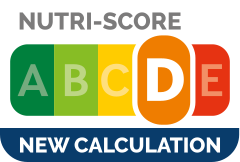
Nutri-Score

DLower nutritional quality

Nutri-Score data warning

Warning: the amount of fruits, vegetables and nuts is not specified on the label, it was estimated from the list of ingredients: 13

Nutrient levels

Fat in moderate quantity (6.67%)
What you need to know • A high consumption of fat, especially saturated fats, can raise cholesterol, which increases the risk of heart diseases. Recommendation: Limit the consumption of fat and saturated fat • Choose products with lower fat and saturated fat content. Source: National Health Service UK (NHS) - Fat: the facts
Saturated fat in high quantity (5.71%)
What you need to know • A high consumption of fat, especially saturated fats, can raise cholesterol, which increases the risk of heart diseases. Recommendation: Limit the consumption of fat and saturated fat • Choose products with lower fat and saturated fat content. Source: National Health Service UK (NHS) - Fat: the facts
Sugars in high quantity (28.6%)
What you need to know • A high consumption of sugar can cause weight gain and tooth decay. It also augments the risk of type 2 diabetes and cardio-vascular diseases. Recommendation: Limit the consumption of sugar and sugary drinks • Sugary drinks (such as sodas, fruit beverages, and fruit juices and nectars) should be limited as much as possible (no more than 1 glass a day). • Choose products with lower sugar content and reduce the consumption of products with added sugars. Source: National Health Service UK (NHS) - Sugar: the facts
Salt in moderate quantity (0.476%)
What you need to know • A high consumption of salt (or sodium) can cause raised blood pressure, which can increase the risk of heart disease and stroke. • Many people who have high blood pressure do not know it, as there are often no symptoms. • Most people consume too much salt (on average 9 to 12 grams per day), around twice the recommended maximum level of intake. Recommendation: Limit the consumption of salt and salted food • Reduce the quantity of salt used when cooking, and don't salt again at the table. • Limit the consumption of salty snacks and choose products with lower salt content. Source: World Health Organization (WHO) - Fact sheet - Salt reduction Source: National Health Service UK (NHS) - Salt: the facts

Nutrition label

Cereal bars nutrition label

Nutrition facts

Nutrition factsAs sold for 100 g / 100 mlCompared to: Cereal bars
Energy~ 1612.85714285714 kJ (380 kcal)1,751.106 kJ (413 kcal) (-8%)
Fat6.66666666666667 g14.434 g (-54%)
Saturated fat5.71428571428571 g4.702 g (+22%)
Carbohydrates73.8095238095238 g59.876 g (+23%)
Sugars28.5714285714286 g24.153 g (+18%)
Dietary fiber3.80952380952381 g?
Proteins4.76190476190476 g8.238 g (-42%)
Salt0.476190476190476 g0.403 g (+18%)
Sodium0.19047619047619 g0.16 g (+19%)
Fruits, vegetables and legumes~ 12.5 %?

Nutrition facts (Detailed data)

Nutrition factsAs sold for 100 g / 100 mlAs sold Per serving (21 g) (packaging)As sold Per 100 g (estimate)
Energy~ 1612.85714285714 kJ (380 kcal)? (80 kcal)?
Fat6.66666666666667 g1.4 g?
Saturated fat5.71428571428571 g1.2 g?
Carbohydrates73.8095238095238 g15.5 g?
Sugars28.5714285714286 g6 g?
Dietary fiber3.80952380952381 g0.8 g?
Proteins4.76190476190476 g1 g?
Salt0.476190476190476 g0.1 g?
Sodium0.19047619047619 g0.04 g?
Fruits, vegetables and legumes~ 12.5 %?~ 12.5 %

Serving size

21 g

Ingredients

Ingredients image

Cereal bars ingredients image

Ingredients list

Céréales 44,5% [flocons d'avoine 10,3%, farine de blé, pétales de maïs (maïs, sel, extrait de malt d'orge), farine de riz], sirop de glucose, fruits 12,5% [pépite fruitée à la fraise 7,5% (sirop de fructose-glucose, humectant: glycérol, sucre, purée de fraise concentrée, fibre de blé, gélifiant : pectine, correcteur d'acidité: acide malique, acide citrique; extrait naturel de végétaux et de fruits, arôme), pépite fruitée à la framboise 5% (sirop de fructose-glucose, sucre, purée de framboise concentrée, fibre de blé, gélifiant : pectine, correcteur d'acidité: acide malique et citrique, extrait naturel de végétaux et de fruits, arôme naturel)], huile de tournesol, stabilisant : sorbitols, dextrose, sucre, arôme, caramel aromatique (sirop de glucose, sucre, eau), sel, émulsifiant : lécithine de soja, antioxydant: extrait riche en tocopherols.

Ingredient information

Cereal
44.5%
Oat Flakes
10.3%
Wheat Flour
17.1% (estimate)
Corn Flakes
8.55% (estimate)
Corn
4.27% (estimate)
Salt
2.14% (estimate)
Barley Malt Extract
2.14% (estimate)
Rice Flour
8.55% (estimate)
Glucose Syrup
27.75% (estimate)
Fruit
12.5%
Pepite Fruitee A La Fraise
7.5%
Glucose Fructose Syrup
3.75% (estimate)
Humectant
1.88% (estimate)
E422
1.88% (estimate)
Sugar
0.94% (estimate)
Concentrated Strawberry Puree
0.47% (estimate)
Wheat Fiber
0.23% (estimate)
Gelling Agent
0.12% (estimate)
E440a
0.12% (estimate)
Acidity Regulator
0.06% (estimate)
E296
0.06% (estimate)
E330
0.03% (estimate)
Natural Extract
0.01% (estimate)
Fruit
0.01% (estimate)
Flavouring
0.01% (estimate)
Pepite Fruitee A La Framboise
5.0%
Glucose Fructose Syrup
2.5% (estimate)
Sugar
1.25% (estimate)
Puree De Framboise Concentree
0.63% (estimate)
Wheat Fiber
0.31% (estimate)
Gelling Agent
0.16% (estimate)
E440a
0.16% (estimate)
Acidity Regulator
0.08% (estimate)
E296
0.04% (estimate)
Citrique
0.04% (estimate)
Natural Extract
0.04% (estimate)
Fruit
0.02% (estimate)
Natural Flavouring
0.02% (estimate)
Sunflower Oil
7.63% (estimate)
Stabiliser
3.81% (estimate)
E420
3.81% (estimate)
Dextrose
1.91% (estimate)
Sugar
0.95% (estimate)
Flavouring
0.48% (estimate)
Aromatic Caramel
0.24% (estimate)
Glucose Syrup
0.12% (estimate)
Sugar
0.06% (estimate)
Water
0.06% (estimate)
Salt
0.12% (estimate)
Emulsifier
0.06% (estimate)
Soya Lecithin
0.06% (estimate)
Antioxidant
0.06% (estimate)
E306
0.06% (estimate)

Added sugars

Contains added sugars (39%) Added sugars: glucose syrup, glucose-fructose syrup, sugar, dextrose Quantity of added sugars: 39%

Allergens

GlutenSoybeans

Traces

NutsPeanuts

Ingredients analysis

Palm oil free
Yes

No ingredients containing palm oil.

Vegan
Unknown

Vegan status unknown

Unrecognized: fr:citrique

Vegetarian
Unknown

Vegetarian status unknown

Unrecognized: fr:citrique


Food Processing

NOVA group

4Ultra-processed food and drink products

Elements that indicate the product is in NOVA group 4

Additives
E322 - Lecithins
Additives
E420 - Sorbitol
Additives
E422 - Glycerol
Additives
E440 - Pectins
Ingredients
Dextrose
Ingredients
Emulsifier
Ingredients
Flavouring
Ingredients
Gelling Agent
Ingredients
Glucose
Ingredients
Glucose Syrup
Ingredients
Humectant
Ingredients
Fructose
Ingredients
Vegetable Fiber

How NOVA works

The NOVA classification assigns food products into 4 groups based on their degree of processing: 1. Unprocessed or minimally processed foods 2. Processed culinary ingredients 3. Processed foods 4. Ultra-processed food and drink products

Additives

E296 - Malic acid

MALIC ACID is an organic compound with the molecular formula C4H6O5. Malic acid has two stereoisomeric forms (L- and D-enantiomers), though only the L-isomer exists naturally.

E306 - Tocopherol-rich extract

No additive description is available yet.

E322 - LecithinsAntioxidantEmulsifier

Lecithins are natural compounds commonly used in the food industry as emulsifiers and stabilizers.

Extracted from sources like soybeans and eggs, lecithins consist of phospholipids that enhance the mixing of oil and water, ensuring smooth textures in various products like chocolates, dressings, and baked goods.

They do not present any known health risks.

E322i - LecithinAntioxidantEmulsifier

Lecithins are natural compounds commonly used in the food industry as emulsifiers and stabilizers.

Extracted from sources like soybeans and eggs, lecithins consist of phospholipids that enhance the mixing of oil and water, ensuring smooth textures in various products like chocolates, dressings, and baked goods.

They do not present any known health risks.

E330 - Citric acidAntioxidantSequestrant

Citric acid is a natural organic acid found in citrus fruits such as lemons, oranges, and limes.

It is widely used in the food industry as a flavor enhancer, acidulant, and preservative due to its tart and refreshing taste.

Citric acid is safe for consumption when used in moderation and is considered a generally recognized as safe (GRAS) food additive by regulatory agencies worldwide.

E420 - SorbitolHumectantSequestrantStabiliserSweetenerThickener

Sorbitol (), less commonly known as glucitol (), is a sugar alcohol with a sweet taste which the human body metabolizes slowly. It can be obtained by reduction of glucose, which changes the aldehyde group to a hydroxyl group. Most sorbitol is made from corn syrup, but it is also found in nature, for example in apples, pears, peaches, and prunes. It is converted to fructose by sorbitol-6-phosphate 2-dehydrogenase. Sorbitol is an isomer of mannitol, another sugar alcohol; the two differ only in the orientation of the hydroxyl group on carbon 2. While similar, the two sugar alcohols have very different sources in nature, melting points, and uses.

E422 - GlycerolHumectantThickener

Glycerol (; also called glycerine or glycerin; see spelling differences) is a simple polyol compound. It is a colorless, odorless, viscous liquid that is sweet-tasting and non-toxic. The glycerol backbone is found in all lipids known as triglycerides. It is widely used in the food industry as a sweetener and humectant and in pharmaceutical formulations. Glycerol has three hydroxyl groups that are responsible for its solubility in water and its hygroscopic nature.

E440 - PectinsEmulsifierStabiliserThickener

Pectins (E440) are natural carbohydrates, predominantly found in fruits, that act as gelling agents in the food industry, creating the desirable jelly-like texture in jams, jellies, and marmalades.

Pectins stabilize and thicken various food products, such as desserts, confectioneries, and beverages, ensuring a uniform consistency and quality.

Recognized as safe by various health authorities, pectins have been widely used without notable adverse effects when consumed in typical dietary amounts.

Environment

Green-Score, origins bonus, and transportation impact are shown for Worldwide .

Green Score

Overall grade

UnknownUnknown environmental impact

About Green-Score

The Green-Score is an experimental score that summarizes the environmental impacts of food products.

Current scope

The Green-Score was initially developed for France and it is being extended to other European countries. The Green-Score formula is subject to change as it is regularly improved to make it more precise and better suited to each country. Select a country to include the full impact of transportation in the final score.

Green-Score availability

We could not compute the Green-Score of this product because some data is missing. A more precise category, ingredients list, origins or packaging data can unlock the computation.

Bonuses and maluses

Declared origins

Origins of ingredients are missing for this product. Ingredients need to be completed before the transportation bonus can be computed precisely.

Packaging impact

Packaging with a medium impact Malus: -10 Packaging score: 0

Packaging

Packaging impact

Packaging with a medium impact Malus: -10 Packaging score: 0

Packaging components

ShapeMaterialRecyclingImpact
BOXUnknownUnknownHigh

Declared packaging

Box

Data precision

The packaging information is not sufficiently precise to compute the most accurate packaging impact. Exact shapes and materials of all packaging components help improve the Green-Score.

Transportation

Manufacturing locations

Francia

Declared origins

Origins of ingredients are missing for this product. Ingredients need to be completed before the transportation bonus can be computed precisely.

Forest footprint

Forest footprint

Forest Footprint not computed Potential deforestation risk but not yet computed. Forest Footprint The Forest Footprint is a methodology developed by the association Envol Vert to estimate the risk of deforestation related to our consumption. → More information on the methodology Forest Footprint not computed Potential deforestation risk but not yet computed.

Deforestation risk details

Other risky ingredients These ingredients are not yet assessed for deforestation risk: corn flakes rice flour corn

Data Source

Product data comes from Open Food Facts. Food Benchmark also adds translations, category comparisons and explanatory calculations.

The database is licensed under ODbL 1.0, individual contents under DbCL 1.0, and product photos under CC BY-SA 3.0.

Product added on November 27, 2017 at 12:21:16 PM UTC by kiliweb .

Last edit on March 14, 2026 at 12:29:50 AM UTC by new-nutrition-bot .

Product page also edited by eugeada65, gmlaa, kiliweb, new-nutrition-bot, openfoodfacts-contributors, packbot, roboto-app, vaporous, yuka.U3BrT09hdGQrZG95djhjbjF5NzY0K2xOMWNlUmZHNnZCTnNNSVE9PQ.