ProductsPicardPastilla poulet legumes
Pastilla poulet legumes
Barcode 3270160475681
Picard

Pastilla poulet legumes

200 g
BARCODE:3270160475681
COMMON NAME:2 Pastillas au Poulet et aux Légumes
CATEGORIES:Meats And Their Products, Frozen Foods, Meals, Meals With Meat, Poultry Meals, Frozen Ready Made Meals, Meals With Chicken
LABELS:Green Dot, Made In France
PACKAGING:Plastic, Cardboard, Frozen, Etui En Carton, Film En Plastique
ORIGIN:France
MANUFACTURING:France
COUNTRIES:France
STORES:Picard

Health

Nutrition

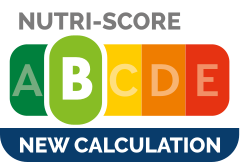
Nutri-Score

BGood nutritional quality

Nutri-Score data warning

Warning: the amount of fruits, vegetables and nuts is not specified on the label, it was estimated from the list of ingredients: 97

Nutrient levels

Fat in moderate quantity (6.6%)
What you need to know • A high consumption of fat, especially saturated fats, can raise cholesterol, which increases the risk of heart diseases. Recommendation: Limit the consumption of fat and saturated fat • Choose products with lower fat and saturated fat content. Source: National Health Service UK (NHS) - Fat: the facts
Saturated fat in moderate quantity (3.1%)
What you need to know • A high consumption of fat, especially saturated fats, can raise cholesterol, which increases the risk of heart diseases. Recommendation: Limit the consumption of fat and saturated fat • Choose products with lower fat and saturated fat content. Source: National Health Service UK (NHS) - Fat: the facts
Sugars in low quantity (3.8%)
What you need to know • A high consumption of sugar can cause weight gain and tooth decay. It also augments the risk of type 2 diabetes and cardio-vascular diseases. Recommendation: Limit the consumption of sugar and sugary drinks • Sugary drinks (such as sodas, fruit beverages, and fruit juices and nectars) should be limited as much as possible (no more than 1 glass a day). • Choose products with lower sugar content and reduce the consumption of products with added sugars. Source: National Health Service UK (NHS) - Sugar: the facts
Salt in moderate quantity (0.68%)
What you need to know • A high consumption of salt (or sodium) can cause raised blood pressure, which can increase the risk of heart disease and stroke. • Many people who have high blood pressure do not know it, as there are often no symptoms. • Most people consume too much salt (on average 9 to 12 grams per day), around twice the recommended maximum level of intake. Recommendation: Limit the consumption of salt and salted food • Reduce the quantity of salt used when cooking, and don't salt again at the table. • Limit the consumption of salty snacks and choose products with lower salt content. Source: World Health Organization (WHO) - Fact sheet - Salt reduction Source: National Health Service UK (NHS) - Salt: the facts

Nutrition label

Pastilla poulet legumes nutrition label

Nutrition facts

Nutrition factsAs sold for 100 g / 100 ml
Energy~ 668 kJ (158 kcal)
Fat6.6 g
Saturated fat3.1 g
Carbohydrates14 g
Sugars3.8 g
Dietary fiber2.4 g
Proteins9.8 g
Salt0.68 g
Sodium0.272 g
Fruits, vegetables and legumes~ 67.265625 %

Nutrition facts (Detailed data)

Nutrition factsAs sold for 100 g / 100 mlAs sold Per 100 g (packaging)As sold Per 100 g (estimate)
Energy~ 668 kJ (158 kcal)? (158 kcal)?
Fat6.6 g6.6 g?
Saturated fat3.1 g3.1 g?
Carbohydrates14 g14 g?
Sugars3.8 g3.8 g?
Dietary fiber2.4 g2.4 g?
Proteins9.8 g9.8 g?
Salt0.68 g0.68 g?
Sodium0.272 g0.272 g?
Fruits, vegetables and legumes~ 67.265625 %?~ 67.265625 %

Serving size

80 g

Ingredients

Ingredients image

Pastilla poulet legumes ingredients image

Ingredients list

Légumes 30 % (brocolis, carotte, tomate confite (tomate semi-séchée (tomate, sel), huile de tournesol, ail, origan, thym), champignon de Paris cuit, tomate pelée, poivron rouge, céleri), viande de poulet saumurée (filet de poulet (France)* 20,9 %, eau, sel), pâte filo 22 % (farine de blé (gluten), eau, amidon de maïs, sel, conservateur : sorbate de potassium, agent de traitement de la farine : L-cystéine), fond de volaille (eau, carcasse de volaille, carotte, oignon, poireau, sel, poivre, clou de girofle), crème fraîche (lait), beurre (lait), ananas, sauce Worcester (vinaigre de malt d'orge (gluten), vinaigre d'alcool, mélasse, sucre, sel, anchois (poisson), tamarin, oignon, ail, épices, arômes), échalote, huile d'olive vierge extra, ail, zeste de citron, coriandre, persil, citronnelle, amidon de riz, curry, poivre.

Ingredient information

Vegetable
30.0%
Broccoli
35% (estimate)
Carrot
17.5% (estimate)
Tomato
8.75% (estimate)
Tomates Semi Sechees
4.38% (estimate)
Tomato
2.19% (estimate)
Salt
2.19% (estimate)
Sunflower Oil
2.19% (estimate)
Garlic
1.09% (estimate)
Oregano
0.55% (estimate)
Thyme
0.55% (estimate)
Cultivated Mushroom
4.38% (estimate)
Peeled Tomatoes
2.19% (estimate)
Red Bell Pepper
1.09% (estimate)
Celery
0.55% (estimate)
Chicken Meat
0.27% (estimate)
Chicken Fillet
0.14% (estimate)
Water
0.07% (estimate)
Salt
0.07% (estimate)
Pate Filo
22.0%
Wheat Flour
0.14% (estimate)
Water
0.07% (estimate)
Corn Starch
0.03% (estimate)
Salt
0.02% (estimate)
Preservative
0.01% (estimate)
E202
0.01% (estimate)
Flour Treatment Agent
0.01% (estimate)
E920
0.01% (estimate)

Allergens

CeleryFishGlutenMilk

Traces

CrustaceansEggsMolluscsMustardNutsSesame SeedsSoybeans

Ingredients analysis

Palm oil free
Yes

No ingredients containing palm oil.

Vegan
No

Contains non-vegan ingredients.

Unrecognized: fr:carcasse-de-volaille

Vegetarian
No

Contains non-vegetarian ingredients.

Unrecognized: fr:carcasse-de-volaille


Food Processing

NOVA group

4Ultra-processed food and drink products

Elements that indicate the product is in NOVA group 4

Ingredients
Flavouring

How NOVA works

The NOVA classification assigns food products into 4 groups based on their degree of processing: 1. Unprocessed or minimally processed foods 2. Processed culinary ingredients 3. Processed foods 4. Ultra-processed food and drink products

Additives

E202 - Potassium sorbate EFSA overexposure risk: highPreservative

Potassium sorbate (E202) is a synthetic food preservative commonly used to extend the shelf life of various food products.

It works by inhibiting the growth of molds, yeast, and some bacteria, preventing spoilage. When added to foods, it helps maintain their freshness and quality.

Some studies have shown that when combined with nitrites, potassium sorbate have genotoxic activity in vitro. However, potassium sorbate is generally recognized as safe (GRAS) by regulatory authorities.

E920 - l-cysteine

Cysteine (symbol Cys or C; ) is a semi-essential proteinogenic amino acid with the formula HO2CCH(NH2)CH2SH. The thiol side chain in cysteine often participates in enzymatic reactions, as a nucleophile. The thiol is susceptible to oxidation to give the disulfide derivative cystine, which serves an important structural role in many proteins. When used as a food additive, it has the E number E920. It is encoded by the codons UGU and UGC. Cysteine has the same structure as serine, but with one of its oxygen atoms replaced by sulfur; replacing it with selenium gives selenocysteine. (Like other natural proteinogenic amino acids cysteine has (L) chirality in the older D/L notation based on homology to D and L glyceraldehyde. In the newer R/S system of designating chirality, based on the atomic numbers of atoms near the asymmetric carbon, cysteine (and selenocysteine) have R chirality, because of the presence of sulfur (resp. selenium) as a second neighbor to the asymmetric carbon. The remaining chiral amino acids, having lighter atoms in that position, have S chirality.)

Environment

Green-Score, origins bonus, and transportation impact are shown for Worldwide .

Green Score

Overall grade

DHigh environmental impact

About Green-Score

The Green-Score is an experimental score that summarizes the environmental impacts of food products.

Current scope

The Green-Score was initially developed for France and it is being extended to other European countries. The Green-Score formula is subject to change as it is regularly improved to make it more precise and better suited to each country. Select a country to include the full impact of transportation in the final score.

Life cycle analysis

Average impact of the category

DChicken, Basque style • Score: 40/100

Life-cycle reference

Category: Chicken, Basque style PEF environmental score: 0.74 Climate change impact: 4.48 kg CO2 eq / kg product The overall environmental impact figure (PEF) comes from ADEME's Agribalyse database, for the category: Chicken, Basque style. Source: ADEME Agribalyse Database.

Overall environmental impact by stage (PEF)

The overall environmental impact figure (PEF) comes from ADEME's Agribalyse database, for the category: Chicken, Basque style. Source: ADEME Agribalyse Database.

StageImpact
Agriculture76.1 %
Processing13.6 %
Packaging4.6 %
Transportation3.5 %
Distribution1.3 %
Consumption0.9 %

Bonuses and maluses

Origins of ingredients

Declared origins: France Origins bonus: +4 Transportation (Worldwide): 0 Environmental policy adjustment: +4 Select a country to include the full impact of transportation.

Packaging impact

Packaging with a low impact Malus: -2 Packaging score: +82

Green-Score for this product

Green-Score for this product

DFinal score: 42/100

Final score breakdown

Life cycle analysis score: 40 Sum of bonuses and maluses: +2 Final score: 42/100

Carbon footprint

Carbon footprint

Equivalent to driving 2.3 km in a petrol car. 448 g CO2e per 100g of product. Reference category: Chicken, Basque style. The carbon emission figure comes from ADEME's Agribalyse database, for the category: Chicken, Basque style. Source: ADEME Agribalyse Database.

Climate impact by stage (CO2e)

The carbon emission figure comes from ADEME's Agribalyse database, for the category: Chicken, Basque style. Source: ADEME Agribalyse Database.

StageImpact
Agriculture60.7 %
Processing20.5 %
Packaging10.1 %
Transportation7.4 %
Distribution0.9 %
Consumption0.4 %

Packaging

Pastilla poulet legumes packaging image

Packaging impact

Packaging with a low impact Malus: -2 Packaging score: +82

Packaging components

ShapeMaterialRecyclingImpact
FilmPlasticUnknownHigh
SleeveCardboardUnknownLow

Declared packaging

Plastic, Cardboard, Frozen, Etui En Carton, Film En Plastique

Transportation

Manufacturing locations

France

Origins of ingredients

Declared origins: France Origins bonus: +4 Transportation (Worldwide): 0 Environmental policy adjustment: +4 Select a country to include the full impact of transportation.

Origins breakdown

OriginPercent of ingredientsImpact
France100 %Medium

Forest footprint

Forest footprint

Total forest footprint: 0.00 m2 per kg of food This estimate highlights ingredients that depend on soy-linked animal feed and deforestation risk.

Ingredients linked to forest pressure

IngredientTypePercent in productForest footprint
Chicken FilletPoulet Standard0.14 %0.00

Data Source

Product data comes from Open Food Facts. Food Benchmark also adds translations, category comparisons and explanatory calculations.

The database is licensed under ODbL 1.0, individual contents under DbCL 1.0, and product photos under CC BY-SA 3.0.

Product added on June 4, 2015 at 5:59:28 PM UTC by openfoodfacts-contributors .

Last edit on March 17, 2026 at 2:02:46 AM UTC by new-nutrition-bot .

Product page also edited by beniben, date-limite-app, foodless, foodvisor, kiliweb, new-nutrition-bot, openfoodfacts-contributors, packbot, quechoisir, quentinbrd, roboto-app, yuka.Vks4Q1QvUWFtOEkwcDhjbjFDckYrY3BUeG8rd2ZtYThOdG9PSWc9PQ, yuka.VzRNNUlwa3Y5OW8zaXNBZDd5N3NvYzlUOWFhcGNrMllDdGNvSVE9PQ, yuka.ZjVJaUxxOHFvTVFrbC9FRzhpMzEwL0orNDVTWWQwTzRHN3N2SVE9PQ, yuka.sY2b0xO6T85zoF3NwEKvlnIZAtbGmxv9DAXjqG2V2PTeJZbxQ9xA85rED6s.