

Galak shake
Health
Nutrition
Nutri-Score
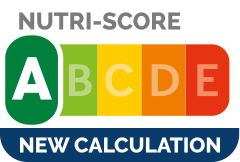 Very good nutritional quality
Nutri-Score data warning
Nutrient levels
Fat in low quantity (0.2%)
Saturated fat in low quantity (0.1%)
Sugars in low quantity (3.1%)
Salt in low quantity (0.1%)
Nutrition facts
| Nutrition facts | As sold for 100 g / 100 ml | Compared to: Quarks |
|---|---|---|
| Energy | ~ 253.9 kJ (60 kcal) | 424.563 kJ (102 kcal) (-40%) |
| Fat | 0.2 g | 3.829 g (-95%) |
| Saturated fat | 0.1 g | 2.396 g (-96%) |
| Carbohydrates | 3.5 g | 6.558 g (-47%) |
| Sugars | 3.1 g | 6.1 g (-49%) |
| Dietary fiber | ? | ? |
| Proteins | 11 g | 9.744 g (+13%) |
| Salt | 0.1 g | 0.149 g (-33%) |
| Sodium | 0.04 g | 0.06 g (-33%) |
| Fruits, vegetables and legumes | ~ 0 % | ? |
Nutrition facts (Detailed data)
| Nutrition facts | As sold for 100 g / 100 ml | As sold Per 100 g (packaging) | As sold Per 100 g (estimate) |
|---|---|---|---|
| Energy | ~ 253.9 kJ (60 kcal) | ? (60 kcal) | ? |
| Fat | 0.2 g | 0.2 g | ? |
| Saturated fat | 0.1 g | 0.1 g | ? |
| Carbohydrates | 3.5 g | 3.5 g | ? |
| Sugars | 3.1 g | 3.1 g | ? |
| Dietary fiber | ? | ? | ? |
| Proteins | 11 g | 11 g | ? |
| Salt | 0.1 g | 0.1 g | ? |
| Sodium | 0.04 g | 0.04 g | ? |
| Fruits, vegetables and legumes | ~ 0 % | ? | ~ 0 % |
Ingredients
Ingredients image

Ingredients list
Ingredient information
Allergens
Ingredients analysis
Palm oil content unknown
Contains non-vegan ingredients.
Vegetarian status unknown
Food Processing
NOVA group
 Ultra-processed food and drink products
Elements that indicate the product is in NOVA group 4
How NOVA works
Additives
E14XX - Modified StarchEmulsifierStabiliserThickener
No additive description is available yet.
E160a - caroteneColour
β-Carotene is an organic, strongly colored red-orange pigment abundant in plants and fruits. It is a member of the carotenes, which are terpenoids (isoprenoids), synthesized biochemically from eight isoprene units and thus having 40 carbons. Among the carotenes, β-carotene is distinguished by having beta-rings at both ends of the molecule. β-Carotene is biosynthesized from geranylgeranyl pyrophosphate.β-Carotene is the most common form of carotene in plants. When used as a food coloring, it has the E number E160a. The structure was deduced by Karrer et al. in 1930. In nature, β-carotene is a precursor (inactive form) to vitamin A via the action of beta-carotene 15,15'-monooxygenase.Isolation of β-carotene from fruits abundant in carotenoids is commonly done using column chromatography. It can also be extracted from the beta-carotene rich algae, Dunaliella salina. The separation of β-carotene from the mixture of other carotenoids is based on the polarity of a compound. β-Carotene is a non-polar compound, so it is separated with a non-polar solvent such as hexane. Being highly conjugated, it is deeply colored, and as a hydrocarbon lacking functional groups, it is very lipophilic.
E160ai - Beta-caroteneColour
No additive description is available yet.
E330 - Citric acidAntioxidantSequestrant
Citric acid is a natural organic acid found in citrus fruits such as lemons, oranges, and limes.
It is widely used in the food industry as a flavor enhancer, acidulant, and preservative due to its tart and refreshing taste.
Citric acid is safe for consumption when used in moderation and is considered a generally recognized as safe (GRAS) food additive by regulatory agencies worldwide.
E950 - Acesulfame kSweetener
Acesulfame potassium ( AY-see-SUL-faym), also known as acesulfame K (K is the symbol for potassium) or Ace K, is a calorie-free sugar substitute (artificial sweetener) often marketed under the trade names Sunett and Sweet One. In the European Union, it is known under the E number (additive code) E950. It was discovered accidentally in 1967 by German chemist Karl Clauss at Hoechst AG (now Nutrinova). In chemical structure, acesulfame potassium is the potassium salt of 6-methyl-1,2,3-oxathiazine-4(3H)-one 2,2-dioxide. It is a white crystalline powder with molecular formula C4H4KNO4S and a molecular weight of 201.24 g/mol.
E951 - Aspartame EFSA overexposure risk: noSweetener
Aspartame (E951) is a low-calorie artificial sweetener composed of two amino acids.
It is used as a sugar substitute in thousands of "sugar-free" or "diet" products, such as carbonated soft drinks, chewing gum, yogurts, and tabletop sweeteners, to provide sweetness without the calories of sugar.
Despite being one of the most rigorously tested food additives, its safety remains controversial. While major regulatory bodies like the FDA and EFSA deem it safe for the general public, the IARC has classified it as "possibly carcinogenic to humans" (Group 2B). It must also be avoided by individuals with the genetic condition phenylketonuria (PKU).
Environment
Green-Score, origins bonus, and transportation impact are shown for Worldwide .
Green Score
Overall grade
 Low environmental impact
About Green-Score
Current scope
Life cycle analysis
Average impact of the category
 Yogurt, fermented milk or dairy specialty, plain • Score: 91/100
Life-cycle reference
Overall environmental impact by stage (PEF)
The overall environmental impact figure (PEF) comes from ADEME's Agribalyse database, for the category: Yogurt, fermented milk or dairy specialty, plain. Source: ADEME Agribalyse Database.
| Stage | Impact |
|---|---|
| Agriculture | 51.4 % |
| Processing | 15.5 % |
| Packaging | 17.2 % |
| Transportation | 9.6 % |
| Distribution | 4.9 % |
| Consumption | 1.4 % |
Bonuses and maluses
Declared origins
Packaging impact
Green-Score for this product
Green-Score for this product
Final score: 71/100Final score breakdown
Carbon footprint
Carbon footprint
Climate impact by stage (CO2e)
The carbon emission figure comes from ADEME's Agribalyse database, for the category: Yogurt, fermented milk or dairy specialty, plain. Source: ADEME Agribalyse Database.
| Stage | Impact |
|---|---|
| Agriculture | 54.5 % |
| Processing | 8.0 % |
| Packaging | 22.3 % |
| Transportation | 13.1 % |
| Distribution | 2.0 % |
| Consumption | 0.4 % |
Packaging
Packaging impact
Data precision
Transportation
Declared origins
Forest footprint
Forest footprint
Deforestation risk details
Data Source
Product data comes from Open Food Facts. Food Benchmark also adds translations, category comparisons and explanatory calculations.
The database is licensed under ODbL 1.0, individual contents under DbCL 1.0, and product photos under CC BY-SA 3.0.
Product added on March 22, 2019 at 1:46:37 PM UTC by kiliweb .
Last edit on March 2, 2026 at 4:59:18 PM UTC by new-nutrition-bot .
Product page also edited by charlesnepote, kiliweb, moon-rabbit, new-nutrition-bot, openfoodfacts-contributors, quentinbrd, roboto-app, yuka.SHAwaE5wWW4vOXhhaDhFWncwUHA4ZHRweDc2M0J6bm9CdU1kSVE9PQ, yuka.VzY1UlBhQU9tZGRTdjhFNHdRNzF4OVpMNjhHR1hrT05OL0JNSUE9PQ.