

6 nigiris, 6 california roll
Health
Nutrition
Nutri-Score
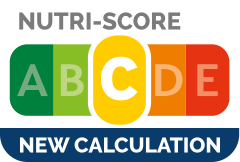 Average nutritional quality
Nutri-Score data warning
Nutrient levels
Fat in moderate quantity (4.3%)
Saturated fat in low quantity (0.7%)
Sugars in low quantity (2.5%)
Salt in moderate quantity (0.9%)
Nutrition facts
| Nutrition facts | As sold for 100 g / 100 ml | Compared to: Sushis |
|---|---|---|
| Energy | ~ 626.6 kJ (154 kcal) | 682.301 kJ (163 kcal) (-8%) |
| Fat | 4.3 g | 4.496 g (-4%) |
| Saturated fat | 0.7 g | 0.904 g (-23%) |
| Carbohydrates | 20.8 g | 24.082 g (-14%) |
| Sugars | 2.5 g | 4.278 g (-42%) |
| Dietary fiber | ~ 0.533125 g | ? |
| Proteins | 6.7 g | 5.682 g (+18%) |
| Salt | 0.9 g | 1.296 g (-31%) |
| Sodium | 0.36 g | 0.517 g (-30%) |
| Fruits, vegetables and legumes | ~ 2 % | ? |
Nutrition facts (Detailed data)
| Nutrition facts | As sold for 100 g / 100 ml | As sold Per 100 g (packaging) | As sold Per 100 g (estimate) |
|---|---|---|---|
| Energy | ~ 626.6 kJ (154 kcal) | ? (154 kcal) | ~ 287.2875 kJ (67 kcal) |
| Fat | 4.3 g | 4.3 g | ~ 1.255 g |
| Saturated fat | 0.7 g | 0.7 g | ~ 0.134375 g |
| Carbohydrates | 20.8 g | 20.8 g | ~ 51.63 g |
| Sugars | 2.5 g | 2.5 g | ~ 12.565 g |
| Dietary fiber | ~ 0.533125 g | ? | ~ 0.533125 g |
| Proteins | 6.7 g | 6.7 g | ~ 4.81125 g |
| Salt | 0.9 g | 0.9 g | ~ 6.134475 g |
| Sodium | 0.36 g | 0.36 g | ~ 2.45127375 g |
| Fruits, vegetables and legumes | ~ 2 % | ? | ~ 2 % |
Ingredients
Ingredients image

Ingredients list
Ingredient information
Added sugars
Allergens
Ingredients analysis
Palm oil content unknown
Contains non-vegan ingredients.
Contains non-vegetarian ingredients.
Food Processing
NOVA group
 Ultra-processed food and drink products
Elements that indicate the product is in NOVA group 4
How NOVA works
Additives
E120 - CochinealColour
Cochineal extract or carmine (E120) is a natural red colorant derived from the dried bodies of the female cochineal insect.
It is widely used to impart a pink, red, or purple hue to various food and beverage products, including yogurts, ice creams, confectionery, and fruit juices.
Although it is a natural additive, E120 is known to cause severe allergic reactions, including anaphylaxis, in some individuals. It is also not suitable for vegetarians or vegans due to its insect origin.
E170 - Calcium carbonates EFSA overexposure risk: no
CALCIUM CARBONATE is a chemical compound with the formula CaCO3.
E170i - Calcium carbonate EFSA overexposure risk: noColourStabiliser
No additive description is available yet.
E301 - Sodium ascorbateAntioxidant
SODIUM ASCORBATE is one of a number of mineral salts of ascorbic acid (vitamin C).
E306 - Tocopherol-rich extract
No additive description is available yet.
E307 - Alpha-tocopherol
α-Tocopherol is a type of vitamin E. It has E number "E307". Vitamin E exists in eight different forms, four tocopherols and four tocotrienols. All feature a chromane ring, with a hydroxyl group that can donate a hydrogen atom to reduce free radicals and a hydrophobic side chain which allows for penetration into biological membranes. Compared to the others, α-tocopherol is preferentially absorbed and accumulated in humans.
E325 - sodium lactateAntioxidantEmulsifierHumectantThickener
SODIUM LACTATE is the sodium salt of lactic acid, and has a mild saline taste. It is produced by fermentation of a sugar source, such as corn or beets. It acts as a preservative, acidity regulator, and bulking agent.
E331 - Sodium citratesEmulsifierSequestrantStabiliser
DISODIUM CITRATE, more properly, disodium hydrogen citrate, is an acid salt of citric acid with the chemical formula Na2C6H6O7. It is used as an antioxidant in food and to improve the effects of other antioxidants. It is also used as an acidity regulator and sequestrant. Typical products include gelatin, jam, sweets, ice cream, carbonated beverages, milk powder, wine, and processed cheeses.
E420 - SorbitolHumectantSequestrantStabiliserSweetenerThickener
Sorbitol (), less commonly known as glucitol (), is a sugar alcohol with a sweet taste which the human body metabolizes slowly. It can be obtained by reduction of glucose, which changes the aldehyde group to a hydroxyl group. Most sorbitol is made from corn syrup, but it is also found in nature, for example in apples, pears, peaches, and prunes. It is converted to fructose by sorbitol-6-phosphate 2-dehydrogenase. Sorbitol is an isomer of mannitol, another sugar alcohol; the two differ only in the orientation of the hydroxyl group on carbon 2. While similar, the two sugar alcohols have very different sources in nature, melting points, and uses.
E472a - Acetic acid esters of mono- and diglycerides of fatty acidsEmulsifierSequestrantStabiliser
No additive description is available yet.
Environment
Green-Score, origins bonus, and transportation impact are shown for Worldwide .
Green Score
Overall grade
 Unknown environmental impact
About Green-Score
Current scope
Green-Score availability
Bonuses and maluses
Declared origins
Packaging impact
Packaging
Packaging impact
Data precision
Transportation
Declared origins
Forest footprint
Forest footprint
Ingredients linked to forest pressure
| Ingredient | Type | Percent in product | Forest footprint |
|---|---|---|---|
| EGG White | Oeufs Importés | 0.00 % | 0.00 |
Data Source
Product data comes from Open Food Facts. Food Benchmark also adds translations, category comparisons and explanatory calculations.
The database is licensed under ODbL 1.0, individual contents under DbCL 1.0, and product photos under CC BY-SA 3.0.
Product added on September 27, 2018 at 10:35:46 AM UTC by kiliweb .
Last edit on March 17, 2026 at 5:28:31 AM UTC by new-nutrition-bot .
Product page also edited by acuario, date-limite-app, elcoco, inf, kiliweb, naruyoko, new-nutrition-bot, openfoodfacts-contributors, roboto-app, tacite-mass-editor, thaialagata, yuka.U1B3T0RQVXcvZVlodGMwZm9SWHkrWWx4M3BpU1kyK3ZEZkZCSUE9PQ.