ProductsBio sonnePalmiers Feuilletés Bio
Palmiers Feuilletés Bio
Barcode 20079246
Bio sonne

Palmiers Feuilletés Bio

BARCODE:20079246
CATEGORIES:Snacks, Sweet Snacks, Biscuits And Cakes, Biscuits, Flaky Biscuits, Palmiers
LABELS:Organic, Eu Organic, Ab Agriculture Biologique
COUNTRIES:France

Labels

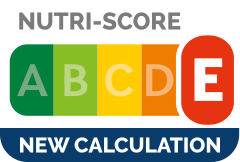
Nutri-Score
Nutri-ScoreBad nutritional quality
NOVA Group
NOVA GroupUltra-processed food and drink products
Environmental Score
Environmental ScoreNot computed

Health

Nutrition

Label

EBad nutritional quality

Nutrient levels

Fat in high quantity (29%)
What you need to know • A high consumption of fat, especially saturated fats, can raise cholesterol, which increases the risk of heart diseases. Recommendation: Limit the consumption of fat and saturated fat • Choose products with lower fat and saturated fat content. Source: National Health Service UK (NHS) - Fat: the facts
Saturated fat in high quantity (14%)
What you need to know • A high consumption of fat, especially saturated fats, can raise cholesterol, which increases the risk of heart diseases. Recommendation: Limit the consumption of fat and saturated fat • Choose products with lower fat and saturated fat content. Source: National Health Service UK (NHS) - Fat: the facts
Sugars in high quantity (20%)
What you need to know • A high consumption of sugar can cause weight gain and tooth decay. It also augments the risk of type 2 diabetes and cardio-vascular diseases. Recommendation: Limit the consumption of sugar and sugary drinks • Sugary drinks (such as sodas, fruit beverages, and fruit juices and nectars) should be limited as much as possible (no more than 1 glass a day). • Choose products with lower sugar content and reduce the consumption of products with added sugars. Source: National Health Service UK (NHS) - Sugar: the facts
Salt in moderate quantity (1.11%)
What you need to know • A high consumption of salt (or sodium) can cause raised blood pressure, which can increase the risk of heart disease and stroke. • Many people who have high blood pressure do not know it, as there are often no symptoms. • Most people consume too much salt (on average 9 to 12 grams per day), around twice the recommended maximum level of intake. Recommendation: Limit the consumption of salt and salted food • Reduce the quantity of salt used when cooking, and don't salt again at the table. • Limit the consumption of salty snacks and choose products with lower salt content. Source: World Health Organization (WHO) - Fact sheet - Salt reduction Source: National Health Service UK (NHS) - Salt: the facts

Nutrition facts

Nutrition factsAs sold for 100 g / 100 ml
Energy~ 2,259.4 kJ (540 kcal)
FAT29 g
Saturated fat14 g
Carbohydrates62 g
Sugars20 g
Dietary fiber2.1 g
Proteins6.8 g
Salt1.11 g
Sodium0.44 g
Minerals
Fruits, vegetables and legumes~ 0.64 %

Nutrition facts (Detailed data)

Nutrition factsAs sold for 100 g / 100 mlAs sold Per 100 g (packaging)As sold Per 100 g (estimate)
Energy~ 2,259.4 kJ (540 kcal)? (540 kcal)?
FAT29 g29 g?
Saturated fat14 g14 g?
Carbohydrates62 g62 g?
Sugars20 g20 g?
Added sugars~ 10.25 g?~ 10.25 g
Dietary fiber2.1 g2.1 g?
Proteins6.8 g6.8 g?
Salt1.11 g1.11 g?
Sodium0.44 g0.44 g?
Minerals
Fruits, vegetables and legumes~ 0.64 %?~ 0.64 %

Estimated Activity Time

Approximate time needed to burn the energy in 100 g / 100 ml: 2,259 kJ. Reference adult weight: 70 kg. Energy density: High.

Walking
132 min (~13,174 steps)
Swimming
80 min
Bicycling
61 min
Running
46 min

Ingredients

Ingredients image

Palmiers Feuilletés Bio ingredients image

Ingredients list

*Farine de blé 59%, *margarine (*graisse de palme et *huile de tournesol, eau, sel, émulsifiant : lécithines, *jus de carotte, *jus de citron concentré), *sucre de canne, sel, poudre à lever : carbonates de sodium, levure désactivée, *extrait de vanille. (*) 99,8% des ingrédients d'origine agricole ont été obtenus selon les règles de la production biologique. Contient du gluten. Peut contenir des traces de produits laitiers.

Ingredient information

Wheat Flour
59.0%
Margarine
20.5% (estimate)
Palm Fat
10.25% (estimate)
Sunflower Oil
5.13% (estimate)
Water
2.56% (estimate)
Salt
1.28% (estimate)
Emulsifier
0.64% (estimate)
E322
0.64% (estimate)
Carrot Juice
0.32% (estimate)
Concentrated Lemon Juice
0.32% (estimate)
Cane Sugar
10.25% (estimate)
Salt
5.13% (estimate)
Raising Agent
2.56% (estimate)
E500
2.56% (estimate)
Deactivated Yeast
1.28% (estimate)
Vanilla Extract
0.64% (estimate)
Ingredients
99.8%

Allergens

Gluten

Traces

Milk

Ingredients analysis

Palm oil free
No

Contains ingredients containing palm oil.

Vegan
Unknown

Vegan status unknown

Unrecognized: fr:ingredients

Vegetarian
Unknown

Vegetarian status unknown

Unrecognized: fr:ingredients


Food Processing

NOVA group

4Ultra-processed food and drink products

Elements that indicate the product is in NOVA group 4

Additives
E322 - Lecithins
Ingredients
Emulsifier

How NOVA works

The NOVA classification assigns food products into 4 groups based on their degree of processing: 1. Unprocessed or minimally processed foods 2. Processed culinary ingredients 3. Processed foods 4. Ultra-processed food and drink products

Additives

E322 - LecithinsAntioxidantEmulsifier

Lecithins are natural compounds commonly used in the food industry as emulsifiers and stabilizers.

Extracted from sources like soybeans and eggs, lecithins consist of phospholipids that enhance the mixing of oil and water, ensuring smooth textures in various products like chocolates, dressings, and baked goods.

They do not present any known health risks.

E500 - Sodium carbonatesStabiliserThickener

Sodium carbonates (E500) are compounds commonly used in food preparation as leavening agents, helping baked goods rise by releasing carbon dioxide when they interact with acids.

Often found in baking soda, they regulate the pH of food, preventing it from becoming too acidic or too alkaline. In the culinary world, sodium carbonates can also enhance the texture and structure of foods, such as noodles, by modifying the gluten network.

Generally recognized as safe, sodium carbonates are non-toxic when consumed in typical amounts found in food.

Environment

Carbon footprint

No carbon footprint data is available for this product. Estimated coverage of known ingredients: 59%

Threatened species

1 ingredient(s) may be linked to palm oil supply chains.

Forest footprint

1 ingredient(s) explicitly contain palm oil.

Environmental labels

OrganicEu Organic

Data Source

Data presented on this page is sourced from the Open Food Facts database. This platform does not alter the original dataset; its purpose is solely to enhance data visualization and user accessibility.

Product added on February 19, 2017 at 12:01:32 PM UTC by kiliweb .

Last edit on March 17, 2026 at 12:31:35 PM UTC by new-nutrition-bot .

Product page also edited by autorotate-bot, desan, kiliweb, moon-rabbit, new-nutrition-bot, openfoodfacts-contributors, yuka.IrlgJIKAMt0aBveD6L5k8xTnG8q8GvBLSGxXog, yuka.YkxrUERhSXFsNmt0d2RveHhSaUs0dDRsbjZDTFpFbXNjN29PSVE9PQ.