

Raspberry blueberry performance recovery drink, raspberry blueberry
Health
Nutrition
Nutri-Score
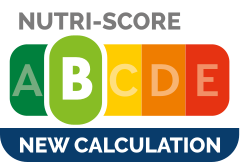 Good nutritional quality
Nutri-Score data warning
Nutrient levels
Fat in low quantity (0%)
Saturated fat in low quantity (0%)
Sugars in low quantity (0%)
Salt in low quantity (0.07%)
Nutrition facts
| Nutrition facts | As sold for 100 g / 100 ml | Compared to: Beverages and beverages preparations |
|---|---|---|
| Energy | 17 kcal (4 kcal) | 216.075 kJ (51 kcal) |
| Fat | 0 g | 0.48 g (-100%) |
| Saturated fat | 0 | 0.164 g (-100%) |
| Carbohydrates | 3.66 g | 8.167 g (-55%) |
| Sugars | 0 g | 5.989 g (-100%) |
| Dietary fiber | ? | ? |
| Proteins | 0 g | 0.737 g (-100%) |
| Salt | 0.07 mg | 0.049 g (-100%) |
| Sodium | 0.028 mg | 0.02 g (-100%) |
| Vitamin B2 | 0.000169 mg | ? |
| Vitamin PP | 0.001972 mg | ? |
| Vitamin B12 | 0.00000068 µg | ? |
| Pantothenic acid | 0.001127 mg | ? |
| Fruits, vegetables and legumes | ? | ? |
Nutrition facts (Detailed data)
| Nutrition facts | As sold for 100 g / 100 ml | As sold Per serving (legacy) |
|---|---|---|
| Energy | 17 kcal (4 kcal) | 60.4 kcal (14 kcal) |
| Fat | 0 g | 0 g |
| Saturated fat | 0 | 0 |
| Carbohydrates | 3.66 g | 13 g |
| Sugars | 0 g | 0 g |
| Dietary fiber | ? | ? |
| Proteins | 0 g | 0 g |
| Salt | 0.07 mg | 0.249 mg |
| Sodium | 0.028 mg | 0.0994 mg |
| Vitamin B2 | 0.000169 mg | 0.0006 mg |
| Vitamin PP | 0.001972 mg | 0.007 mg |
| Vitamin B12 | 0.00000068 µg | 0.00000241 µg |
| Pantothenic acid | 0.001127 mg | 0.004 mg |
| Fruits, vegetables and legumes | ? | ? |
Serving size
Ingredients
Ingredients list
Ingredient information
Ingredients analysis
Palm oil content unknown
Unrecognized: en:plant-extract-blend, en:d-glucuronolactone, en:egcg, en:ginseng-root-powder, en:panax, en:vita
Vegan status unknown
Unrecognized: en:plant-extract-blend, en:d-glucuronolactone, en:sodium-citrate, en:egcg, en:ginseng-root-powder, en:panax, en:vita
Vegetarian status unknown
Unrecognized: en:plant-extract-blend, en:d-glucuronolactone, en:sodium-citrate, en:egcg, en:ginseng-root-powder, en:panax, en:vita
Food Processing
NOVA group
 Ultra-processed food and drink products
Elements that indicate the product is in NOVA group 4
How NOVA works
Additives
E331 - Sodium citratesEmulsifierSequestrantStabiliser
DISODIUM CITRATE, more properly, disodium hydrogen citrate, is an acid salt of citric acid with the chemical formula Na2C6H6O7. It is used as an antioxidant in food and to improve the effects of other antioxidants. It is also used as an acidity regulator and sequestrant. Typical products include gelatin, jam, sweets, ice cream, carbonated beverages, milk powder, wine, and processed cheeses.
E340 - Potassium phosphates EFSA overexposure risk: highEmulsifierHumectantSequestrantStabiliserThickener
Potassium phosphate is a generic term for the salts of potassium and phosphate ions including: Monopotassium phosphate (KH2PO4) (Molar mass approx: 136 g/mol) Dipotassium phosphate (K2HPO4) (Molar mass approx: 174 g/mol) Tripotassium phosphate (K3PO4) (Molar mass approx: 212.27 g/mol)As food additives, potassium phosphates have the E number E340.
E340i - Monopotassium phosphateEmulsifierHumectantSequestrantStabiliserThickener
No additive description is available yet.
E968 - ErythritolHumectantSweetener
Erythritol ((2R,3S)-butane-1,2,3,4-tetrol) is a sugar alcohol (or polyol) that has been approved for use as a food additive in the United States and throughout much of the world. It was discovered in 1848 by Scottish chemist John Stenhouse. It occurs naturally in some fruit and fermented foods. At the industrial level, it is produced from glucose by fermentation with a yeast, Moniliella pollinis. Erythritol is 60–70% as sweet as sucrose (table sugar) yet it is almost noncaloric, does not affect blood sugar, does not cause tooth decay, and is partially absorbed by the body, excreted in urine and feces. Under U.S. Food and Drug Administration (FDA) labeling requirements, it has a caloric value of 0.2 kilocalories per gram (95% less than sugar and other carbohydrates), though nutritional labeling varies from country to country. Some countries, such as Japan and the United States, label it as zero-calorie; the European Union labels it 0 kcal/g.
Environment
Green-Score, origins bonus, and transportation impact are shown for Worldwide .
Green Score
Overall grade
 Unknown environmental impact
About Green-Score
Current scope
Green-Score availability
Bonuses and maluses
Declared origins
Packaging impact
Packaging
Packaging impact
Data precision
Transportation
Declared origins
Forest footprint
Forest footprint
Deforestation risk details
Data Source
Product data comes from Open Food Facts. Food Benchmark also adds translations, category comparisons and explanatory calculations.
The database is licensed under ODbL 1.0, individual contents under DbCL 1.0, and product photos under CC BY-SA 3.0.
Product added on April 16, 2018 at 8:13:58 PM UTC by kiliweb .
Last edit on April 23, 2020 at 7:34:22 PM UTC by org-database-usda .
Product page also edited by org-database-usda, roboto-app, yuka.U0xnSkFxSXRtZlJXdzhVaDNBdk1wZk4ybnJyeUIwU1hOTTlOSVE9PQ, openfoodfacts-contributors, kiliweb.
Source List
- database-usda