
Fudge bars
Health
Nutrition
Nutri-Score
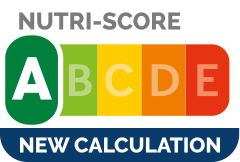 Very good nutritional quality
Nutri-Score data warning
Nutrient levels
Fat in low quantity (0%)
Saturated fat in low quantity (0%)
Sugars in moderate quantity (6.78%)
Salt in low quantity (0.105%)
Nutrition facts
| Nutrition facts | As sold for 100 g / 100 ml | Compared to: Frozen desserts |
|---|---|---|
| Energy | 213 kcal (51 kcal) | 892.449 kJ (214 kcal) |
| Fat | 0 g | 9.568 g (-100%) |
| Saturated fat | 0 g | 6.273 g (-100%) |
| Trans fat | 0 g | 0.061 g (-100%) |
| Cholesterol | 0 mg | 20.57 mg (-100%) |
| Carbohydrates | 16.95 g | 27.934 g (-39%) |
| Sugars | 6.78 g | 22.919 g (-70%) |
| Dietary fiber | 1.7 g | ? |
| Proteins | 5.08 g | 2.816 g (+80%) |
| Salt | 0.105 mg | 0.138 g (-100%) |
| Sodium | 0.042 mg | 0.055 g (-100%) |
| Vitamin A | 0 IU | 36.451 µg |
| Vitamin C | 0 mg | ? |
| Calcium | 0.136 mg | 72.813 mg (-100%) |
| Iron | 0.00122 mg | 0.48 mg (-100%) |
| Fruits, vegetables and legumes | ? | ? |
Nutrition facts (Detailed data)
| Nutrition facts | As sold for 100 g / 100 ml | As sold Per serving (legacy) |
|---|---|---|
| Energy | 213 kcal (51 kcal) | 126 kcal (30 kcal) |
| Fat | 0 g | 0 g |
| Saturated fat | 0 g | 0 g |
| Trans fat | 0 g | 0 g |
| Cholesterol | 0 mg | 0 mg |
| Carbohydrates | 16.95 g | 10 g |
| Sugars | 6.78 g | 4 g |
| Dietary fiber | 1.7 g | 1 g |
| Proteins | 5.08 g | 3 g |
| Salt | 0.105 mg | 0.0619 mg |
| Sodium | 0.042 mg | 0.0248 mg |
| Vitamin A | 0 IU | 0 IU |
| Vitamin C | 0 mg | 0 mg |
| Calcium | 0.136 mg | 0.0802 mg |
| Iron | 0.00122 mg | 0.00072 mg |
| Fruits, vegetables and legumes | ? | ? |
Serving size
Ingredients
Ingredients list
Ingredient information
Added sugars
Allergens
Ingredients analysis
No ingredients containing palm oil.
Contains non-vegan ingredients.
No non-vegetarian ingredients.
Food Processing
NOVA group
 Ultra-processed food and drink products
Elements that indicate the product is in NOVA group 4
How NOVA works
Additives
E410 - Locust bean gumEmulsifierStabiliserThickener
Locust bean gum (LBG, also known as carob gum, carob bean gum, carobin, E410) is a thickening agent and a gelling agent used in food technology.
E412 - Guar gumEmulsifierStabiliserThickener
Guar gum (E412) is a natural food additive derived from guar beans.
This white, odorless powder is valued for its remarkable thickening and stabilizing properties, making it a common ingredient in various food products, including sauces, dressings, and ice creams.
When used in moderation, guar gum is considered safe for consumption, with no known adverse health effects.
E968 - ErythritolHumectantSweetener
Erythritol ((2R,3S)-butane-1,2,3,4-tetrol) is a sugar alcohol (or polyol) that has been approved for use as a food additive in the United States and throughout much of the world. It was discovered in 1848 by Scottish chemist John Stenhouse. It occurs naturally in some fruit and fermented foods. At the industrial level, it is produced from glucose by fermentation with a yeast, Moniliella pollinis. Erythritol is 60–70% as sweet as sucrose (table sugar) yet it is almost noncaloric, does not affect blood sugar, does not cause tooth decay, and is partially absorbed by the body, excreted in urine and feces. Under U.S. Food and Drug Administration (FDA) labeling requirements, it has a caloric value of 0.2 kilocalories per gram (95% less than sugar and other carbohydrates), though nutritional labeling varies from country to country. Some countries, such as Japan and the United States, label it as zero-calorie; the European Union labels it 0 kcal/g.
Environment
Green-Score, origins bonus, and transportation impact are shown for Worldwide .
Green Score
Overall grade
 Unknown environmental impact
About Green-Score
Current scope
Green-Score availability
Bonuses and maluses
Declared origins
Packaging impact
Packaging
Packaging impact
Data precision
Transportation
Declared origins
Data Source
Product data comes from Open Food Facts. Food Benchmark also adds translations, category comparisons and explanatory calculations.
The database is licensed under ODbL 1.0, individual contents under DbCL 1.0, and product photos under CC BY-SA 3.0.
Product added on March 9, 2017 at 8:41:34 PM UTC by usda-ndb-import .
Last edit on April 22, 2020 at 9:50:23 PM UTC by org-database-usda .
Product page also edited by usda-ndb-import, org-database-usda.
Source List
- usda-ndb
- database-usda