

Orange Zero Sugar Nutrient Enhanced Water Beverage
Health
Nutrition
Nutri-Score
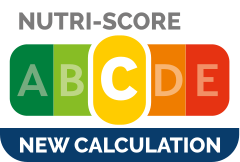 Average nutritional quality
Nutri-Score data warning
Nutrient levels
Fat in low quantity (0%)
Saturated fat in low quantity (0%)
Sugars in low quantity (0%)
Salt in low quantity (0%)
Nutrition facts
| Nutrition facts | As sold for 100 g / 100 ml | Compared to: Vitamin waters |
|---|---|---|
| Energy | 0 kcal (0 kcal) | 43.243 kJ (10 kcal) |
| Fat | 0 g | 0.000115 g (-100%) |
| Saturated fat | 0 g | 0.000013 g (-100%) |
| Carbohydrates | 0.677 g | 2.569 g (-74%) |
| Sugars | 0 g | 2.17 g (-100%) |
| Erythritol | 0.508 g | ? |
| Dietary fiber | 0 g | ? |
| Proteins | 0 g | 0.008 g (-100%) |
| Salt | 0 mg | 0.022 g (-100%) |
| Sodium | 0 mg | 0.009 g (-100%) |
| Vitamin E | 0.000575 mg | 1.358 mg (-100%) |
| Vitamin C | 0.0102 mg | ? |
| Vitamin PP | 0.000846 mg | ? |
| Vitamin B6 | 0.0000846 mg | ? |
| Vitamin B12 | 0.000000102 µg | ? |
| Pantothenic acid | 0.000423 mg | ? |
| Calcium | 0.0296 mg | 17.484 mg (-100%) |
| Fruits, vegetables and legumes | ? | ? |
Nutrition facts (Detailed data)
| Nutrition facts | As sold for 100 g / 100 ml | As sold Per serving (legacy) |
|---|---|---|
| Energy | 0 kcal (0 kcal) | 0 kcal (0 kcal) |
| Fat | 0 g | 0 g |
| Saturated fat | 0 g | 0 g |
| Carbohydrates | 0.677 g | 4 g |
| Sugars | 0 g | 0 g |
| Erythritol | 0.508 g | 3 g |
| Dietary fiber | 0 g | 0 g |
| Proteins | 0 g | 0 g |
| Salt | 0 mg | 0 mg |
| Sodium | 0 mg | 0 mg |
| Vitamin E | 0.000575 mg | 0.0034 mg |
| Vitamin C | 0.0102 mg | 0.06 mg |
| Vitamin PP | 0.000846 mg | 0.005 mg |
| Vitamin B6 | 0.0000846 mg | 0.0005 mg |
| Vitamin B12 | 0.000000102 µg | 0.0000006 µg |
| Pantothenic acid | 0.000423 mg | 0.0025 mg |
| Calcium | 0.0296 mg | 0.175 mg |
| Fruits, vegetables and legumes | ? | ? |
Serving size
Ingredients
Ingredients list
Ingredient information
Ingredients analysis
No ingredients containing palm oil.
Unrecognized: en:reverse-osmosis-water, en:calcium-d-pantothenate
Vegan status unknown
Unrecognized: en:reverse-osmosis-water, en:calcium, en:vitamin-c, en:dl-alpha-tocopheryl-acetate, en:vitamin-e, en:calcium-d-pantothenate, en:cyanocobalamin, en:vitamin-b12
Vegetarian status unknown
Unrecognized: en:reverse-osmosis-water, en:calcium, en:vitamin-c, en:dl-alpha-tocopheryl-acetate, en:vitamin-e, en:calcium-d-pantothenate, en:cyanocobalamin, en:vitamin-b12
Food Processing
NOVA group
 Ultra-processed food and drink products
Elements that indicate the product is in NOVA group 4
How NOVA works
Additives
E330 - Citric acidAntioxidantSequestrant
Citric acid is a natural organic acid found in citrus fruits such as lemons, oranges, and limes.
It is widely used in the food industry as a flavor enhancer, acidulant, and preservative due to its tart and refreshing taste.
Citric acid is safe for consumption when used in moderation and is considered a generally recognized as safe (GRAS) food additive by regulatory agencies worldwide.
E341 - Calcium phosphates EFSA overexposure risk: highEmulsifierHumectantSequestrantStabiliserThickener
Calcium phosphate is a family of materials and minerals containing calcium ions (Ca2+) together with inorganic phosphate anions. Some so-called calcium phosphates contain oxide and hydroxide as well. They are white solids of nutritious value.
E341i - Monocalcium phosphateEmulsifierHumectantSequestrantStabiliserThickener
No additive description is available yet.
E960 - Steviol glycosides EFSA overexposure risk: moderateSweetener
Steviol glycosides are the chemical compounds responsible for the sweet taste of the leaves of the South American plant Stevia rebaudiana (Asteraceae) and the main ingredients (or precursors) of many sweeteners marketed under the generic name stevia and several trade names. They also occur in the related species Stevia phlebophylla (but in no other species of Stevia) and in the plant Rubus chingii (Rosaceae).Steviol glycosides from Stevia rebaudiana have been reported to be between 30 and 320 times sweeter than sucrose, although there is some disagreement in the technical literature about these numbers. They are heat-stable, pH-stable, and do not ferment. Additionally, they do not induce a glycemic response when ingested, because humans can not metabolize stevia. This makes them attractive as natural sugar substitutes for diabetics and other people on carbohydrate-controlled diets. Steviol glycosides stimulate the insulin secretion through potentiation of the β-cell, preventing high blood glucose after a meal. The acceptable daily intake (ADI) for steviol glycosides, expressed as steviol equivalents, has been established to be 4 mg/kg body weight/day, and is based on no observed effects of a 100 fold higher dose in a rat study.
E968 - ErythritolHumectantSweetener
Erythritol ((2R,3S)-butane-1,2,3,4-tetrol) is a sugar alcohol (or polyol) that has been approved for use as a food additive in the United States and throughout much of the world. It was discovered in 1848 by Scottish chemist John Stenhouse. It occurs naturally in some fruit and fermented foods. At the industrial level, it is produced from glucose by fermentation with a yeast, Moniliella pollinis. Erythritol is 60–70% as sweet as sucrose (table sugar) yet it is almost noncaloric, does not affect blood sugar, does not cause tooth decay, and is partially absorbed by the body, excreted in urine and feces. Under U.S. Food and Drug Administration (FDA) labeling requirements, it has a caloric value of 0.2 kilocalories per gram (95% less than sugar and other carbohydrates), though nutritional labeling varies from country to country. Some countries, such as Japan and the United States, label it as zero-calorie; the European Union labels it 0 kcal/g.
Environment
Green-Score, origins bonus, and transportation impact are shown for Worldwide .
Green Score
Overall grade
About Green-Score
Current scope
Green-Score availability
Bonuses and maluses
Declared origins
Packaging impact
Packaging
Packaging impact
Packaging components
| Shape | Material | Recycling | Impact |
|---|---|---|---|
| Bottle | Plastic | Unknown | Unknown |
Declared packaging
Transportation
Declared origins
Data Source
Product data comes from Open Food Facts. Food Benchmark also adds translations, category comparisons and explanatory calculations.
The database is licensed under ODbL 1.0, individual contents under DbCL 1.0, and product photos under CC BY-SA 3.0.
Product added on January 1, 2020 at 11:28:36 PM UTC by kiliweb .
Last edit on July 29, 2024 at 9:15:36 AM UTC by anonymous-s7co2zv64u .
Product page also edited by anonymous-s7co2zv64u, charlesnepote, cliveptr, kiliweb, openfoodfacts-contributors, packbot, yuka.UnFrTUx2azV2TXRWdjhNQjdBcmt3OEo0K0tHcFZrU3VMOEJNSUE9PQ, yuka.sY2b0xO6T85zoF3NwEKvlmhJc-eA-QPeGRjfu3HWntKAfq3ZMIl3-pT6aqo.