
Samarco's bakery, white bread
Health
Nutrition
Nutri-Score
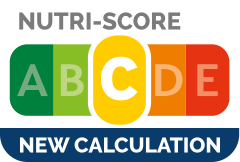 Average nutritional quality
Nutri-Score data warning
Nutrient levels
Fat in moderate quantity (3.91%)
Saturated fat in low quantity (0.78%)
Sugars in moderate quantity (6.25%)
Salt in moderate quantity (1.09%)
Nutrition facts
| Nutrition facts | As sold for 100 g / 100 ml | Compared to: White breads |
|---|---|---|
| Energy | ~ 1112 kJ (250 kcal) | 1,183.387 kJ (276 kcal) (-6%) |
| Fat | 3.91 g | 4.759 g (-18%) |
| Saturated fat | 0.78 g | 1.013 g (-23%) |
| Trans fat | 0 g | 0 g |
| Cholesterol | 0 g | 0.014 mg (-100%) |
| Carbohydrates | 46.88 g | 48.646 g (-4%) |
| Sugars | 6.25 g | 3.089 g (+102%) |
| Dietary fiber | 4.7 g | ? |
| Proteins | 7.81 g | 8.775 g (-11%) |
| Salt | 1.095 g | 1.155 g (-5%) |
| Sodium | 0.438 g | 0.461 g (-5%) |
| Vitamin A | 0 g | 0.19 µg (-100%) |
| Vitamin C | 0 g | ? |
| Calcium | 0.031 g | 64.473 mg (-52%) |
| Iron | 0.00169 g | 1.964 mg (-14%) |
| Fruits, vegetables and legumes | ~ 0 % | ? |
Nutrition facts (Detailed data)
| Nutrition facts | As sold for 100 g / 100 ml | As sold Per 100 g (packaging) | As sold Per 100 g (estimate) |
|---|---|---|---|
| Energy | ~ 1112 kJ (250 kcal) | ? (250 kcal) | ~ 721.125 kJ (171 kcal) |
| Fat | 3.91 g | 3.91 g | ~ 3.7859375 g |
| Saturated fat | 0.78 g | 0.78 g | ~ 0.57525 g |
| Trans fat | 0 g | 0 g | ? |
| Cholesterol | 0 g | 0 g | ~ 0.00000984375 g |
| Carbohydrates | 46.88 g | 46.88 g | ~ 28.170625 g |
| Sugars | 6.25 g | 6.25 g | ~ 3.7590625 g |
| Dietary fiber | 4.7 g | 4.7 g | ~ 3.0553125 g |
| Proteins | 7.81 g | 7.81 g | ~ 4.5598125 g |
| Salt | 1.095 g | 1.095 g | ~ 0.57190125 g |
| Sodium | 0.438 g | 0.438 g | ~ 0.2202740625 g |
| Vitamin A | 0 g | 0 g | ~ 0.0000002953125 g |
| Vitamin C | 0 g | 0 g | ~ 0.00009609375 g |
| Calcium | 0.031 g | 0.031 g | ~ 0.0172466925 g |
| Iron | 0.00169 g | 0.00169 g | ~ 0.00092008775 g |
| Fruits, vegetables and legumes | ~ 0 % | ? | ~ 0 % |
Serving size
Ingredients
Ingredients list
Ingredient information
Added sugars
Allergens
Ingredients analysis
Palm oil content unknown
Vegan status unknown
Unrecognized: en:reduced-iron, en:mononitrate, en:riboglavin, en:ssl, en:as-mold-inhibitor, en:reduced-iron, en:reduced-iron
Vegetarian status unknown
Unrecognized: en:reduced-iron, en:mononitrate, en:riboglavin, en:ssl, en:as-mold-inhibitor, en:reduced-iron, en:reduced-iron
Food Processing
NOVA group
 Ultra-processed food and drink products
Elements that indicate the product is in NOVA group 4
How NOVA works
Additives
E281 - Sodium propionatePreservative
Sodium propanoate or SODIUM PROPIONATE is the sodium salt of propionic acid.
E282 - calcium propionatePreservative
CALCIUM PROPIONATE has the formula Ca(C2H5COO)2. Calcium propionate is used as a preservative in a wide variety of products, including but not limited to:bread, other baked goods, processed meat, whey, and other dairy products.
E338 - Phosphoric acid EFSA overexposure risk: highAntioxidantSequestrant
Phosphoric acid (also known as orthophosphoric acid or phosphoric(V) acid) is a weak acid with the chemical formula H3PO4. Orthophosphoric acid refers to phosphoric acid, which is the IUPAC name for this compound. The prefix ortho- is used to distinguish the acid from related phosphoric acids, called polyphosphoric acids. Orthophosphoric acid is a non-toxic acid, which, when pure, is a solid at room temperature and pressure. The conjugate base of phosphoric acid is the dihydrogen phosphate ion, H2PO−4, which in turn has a conjugate base of hydrogen phosphate, HPO2−4, which has a conjugate base of phosphate, PO3−4. Phosphates are essential for life.The most common source of phosphoric acid is an 85% aqueous solution; such solutions are colourless, odourless, and non-volatile. The 85% solution is a syrupy liquid, but still pourable. Although phosphoric acid does not meet the strict definition of a strong acid, the 85% solution is acidic enough to be corrosive. Because of the high percentage of phosphoric acid in this reagent, at least some of the orthophosphoric acid is condensed into polyphosphoric acids; for the sake of labeling and simplicity, the 85% represents H3PO4 as if it were all in the ortho form. Dilute aqueous solutions of phosphoric acid exist in the ortho form.
E435 - Polyoxyethylene sorbitan monostearate EFSA overexposure risk: moderateEmulsifierStabiliser
No additive description is available yet.
E471 - Mono- and diglycerides of fatty acidsEmulsifierStabiliser
Mono- and diglycerides of fatty acids (E471), are food additives commonly used as emulsifiers in various processed foods.
These compounds consist of glycerol molecules linked to one or two fatty acid chains, which help stabilize and blend water and oil-based ingredients. E471 enhances the texture and shelf life of products like margarine, baked goods, and ice cream, ensuring a smooth and consistent texture.
It is generally considered safe for consumption within established regulatory limits.
E481 - Sodium stearoyl-2-lactylate EFSA overexposure risk: highEmulsifierStabiliser
Sodium stearoyl-2-lactylate (sodium stearoyl lactylate or SSL) is a versatile, FDA approved food additive used to improve the mix tolerance and volume of processed foods. It is one type of a commercially available lactylate. SSL is non-toxic, biodegradable, and typically manufactured using biorenewable feedstocks. Because SSL is a safe and highly effective food additive, it is used in a wide variety of products ranging from baked goods and desserts to pet foods.As described by the Food Chemicals Codex 7th edition, SSL is a cream-colored powder or brittle solid. SSL is currently manufactured by the esterification of stearic acid with lactic acid and partially neutralized with either food-grade soda ash (sodium carbonate) or caustic soda (concentrated sodium hydroxide). Commercial grade SSL is a mixture of sodium salts of stearoyl lactylic acids and minor proportions of other sodium salts of related acids. The HLB for SSL is 10-12. SSL is slightly hygroscopic, soluble in ethanol and in hot oil or fat, and dispersible in warm water. These properties are the reason that SSL is an excellent emulsifier for fat-in-water emulsions and can also function as a humectant.
Environment
Green-Score, origins bonus, and transportation impact are shown for Worldwide .
Green Score
Overall grade
 Unknown environmental impact
About Green-Score
Current scope
Green-Score availability
Bonuses and maluses
Declared origins
Packaging impact
Packaging
Packaging impact
Data precision
Transportation
Declared origins
Data Source
Product data comes from Open Food Facts. Food Benchmark also adds translations, category comparisons and explanatory calculations.
The database is licensed under ODbL 1.0, individual contents under DbCL 1.0, and product photos under CC BY-SA 3.0.
Product added on March 9, 2017 at 5:12:22 PM UTC by usda-ndb-import .
Last edit on February 26, 2026 at 6:13:21 PM UTC by new-nutrition-bot .
Product page also edited by new-nutrition-bot, org-database-usda, roboto-app, usda-ndb-import.
Source List
- usda-ndb
- database-usda