
Deep Dish Pizza
Health
Nutrition
Nutri-Score
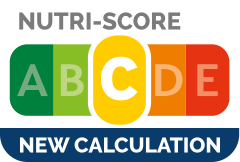 Average nutritional quality
Nutri-Score data warning
Nutrient levels
Fat in moderate quantity (9.93%)
Saturated fat in moderate quantity (3.31%)
Sugars in low quantity (1.32%)
Salt in moderate quantity (0.538%)
Nutrition facts
| Nutrition facts | As sold for 100 g / 100 ml |
|---|---|
| Energy | 833 kcal (199 kcal) |
| Fat | 9.93 g |
| Saturated fat | 3.31 g |
| Trans fat | 0 g |
| Cholesterol | 0.001 mg |
| Carbohydrates | 15.23 g |
| Sugars | 1.32 g |
| Dietary fiber | 0.7 g |
| Proteins | 9.93 g |
| Salt | 0.53848 g |
| Sodium | 0.215392 g |
| Vitamin A | 0 IU |
| Vitamin C | 0 mg |
| Calcium | 0.132 mg |
| Iron | 0.00095 mg |
| Fruits, vegetables and legumes | ? |
Nutrition facts (Detailed data)
| Nutrition facts | As sold for 100 g / 100 ml | As sold Per serving (legacy) |
|---|---|---|
| Energy | 833 kcal (199 kcal) | 1260 kcal (300 kcal) |
| Fat | 9.93 g | 15 g |
| Saturated fat | 3.31 g | 5 g |
| Trans fat | 0 g | 0 g |
| Cholesterol | 0.001 mg | 0.00151 mg |
| Carbohydrates | 15.23 g | 23 g |
| Sugars | 1.32 g | 1.99 g |
| Dietary fiber | 0.7 g | 1.06 g |
| Proteins | 9.93 g | 15 g |
| Salt | 0.53848 g | 0.813 g |
| Sodium | 0.215392 g | 0.325 g |
| Vitamin A | 0 IU | 0 IU |
| Vitamin C | 0 mg | 0 mg |
| Calcium | 0.132 mg | 0.199 mg |
| Iron | 0.00095 mg | 0.00143 mg |
| Fruits, vegetables and legumes | ? | ? |
Serving size
Ingredients
Ingredients list
Ingredient information
Added sugars
Allergens
Ingredients analysis
No ingredients containing palm oil.
Unrecognized: en:vine-ripened-fresh-peeled-ground-tomatoes, en:light-tomato-puree, en:vine-ripened-tomato-puree, en:cooked-italian-sausage-topping, en:spice-topping
Contains non-vegan ingredients.
Unrecognized: en:vine-ripened-fresh-peeled-ground-tomatoes, en:light-tomato-puree, en:vine-ripened-tomato-puree, en:cooked-italian-sausage-topping, en:spice-topping
Contains non-vegetarian ingredients.
Unrecognized: en:vine-ripened-fresh-peeled-ground-tomatoes, en:light-tomato-puree, en:vine-ripened-tomato-puree, en:cooked-italian-sausage-topping, en:spice-topping
Food Processing
NOVA group
 Ultra-processed food and drink products
Elements that indicate the product is in NOVA group 4
How NOVA works
Additives
E160a - caroteneColour
β-Carotene is an organic, strongly colored red-orange pigment abundant in plants and fruits. It is a member of the carotenes, which are terpenoids (isoprenoids), synthesized biochemically from eight isoprene units and thus having 40 carbons. Among the carotenes, β-carotene is distinguished by having beta-rings at both ends of the molecule. β-Carotene is biosynthesized from geranylgeranyl pyrophosphate.β-Carotene is the most common form of carotene in plants. When used as a food coloring, it has the E number E160a. The structure was deduced by Karrer et al. in 1930. In nature, β-carotene is a precursor (inactive form) to vitamin A via the action of beta-carotene 15,15'-monooxygenase.Isolation of β-carotene from fruits abundant in carotenoids is commonly done using column chromatography. It can also be extracted from the beta-carotene rich algae, Dunaliella salina. The separation of β-carotene from the mixture of other carotenoids is based on the polarity of a compound. β-Carotene is a non-polar compound, so it is separated with a non-polar solvent such as hexane. Being highly conjugated, it is deeply colored, and as a hydrocarbon lacking functional groups, it is very lipophilic.
E160ai - Beta-caroteneColour
No additive description is available yet.
E320 - Butylated hydroxyanisole (bha)Antioxidant
Butylated hydroxyanisole (BHA) is an antioxidant consisting of a mixture of two isomeric organic compounds, 2-tert-butyl-4-hydroxyanisole and 3-tert-butyl-4-hydroxyanisole. It is prepared from 4-methoxyphenol and isobutylene. It is a waxy solid used as a food additive with the E number E320. The primary use for BHA is as an antioxidant and preservative in food, food packaging, animal feed, cosmetics, rubber, and petroleum products. BHA also is commonly used in medicines, such as isotretinoin, lovastatin, and simvastatin, among others.
E321 - Butylated hydroxytolueneAntioxidant
Butylated hydroxytoluene (BHT), also known as dibutylhydroxytoluene, is a lipophilic organic compound, chemically a derivative of phenol, that is useful for its antioxidant properties. European and U.S. regulations allow small amounts to be used as a food additive. In addition to this use, BHT is widely used to prevent oxidation in fluids (e.g. fuel, oil) and other materials where free radicals must be controlled.
E336 - Potassium tartrates
POTASSIUM BITARTRATE, also known as potassium hydrogen tartrate, with formula KC4H5O6, is a byproduct of winemaking.
E336i - Monopotassium tartrate
No additive description is available yet.
E460 - CelluloseCarrierEmulsifierHumectantStabiliserThickener
CELLULOSE is an organic compound with the formula (C6H10O5)n, a polysaccharide consisting of a linear chain of several hundred to many thousands of linked D-glucose units. Cellulose is used as emulsifier, thickener and stabilizer in processed foods. Cellulose powder is, for example, used in processed cheese to prevent caking inside the package.
E460ii - Powdered celluloseCarrierEmulsifierHumectantStabiliserThickener
No additive description is available yet.
Environment
Green-Score, origins bonus, and transportation impact are shown for Worldwide .
Green Score
Overall grade
 Unknown environmental impact
About Green-Score
Current scope
Green-Score availability
Bonuses and maluses
Declared origins
Packaging impact
Packaging
Packaging impact
Data precision
Transportation
Declared origins
Data Source
Product data comes from Open Food Facts. Food Benchmark also adds translations, category comparisons and explanatory calculations.
The database is licensed under ODbL 1.0, individual contents under DbCL 1.0, and product photos under CC BY-SA 3.0.
Product added on March 9, 2017 at 9:47:13 AM UTC by usda-ndb-import .
Product page also edited by openfoodfacts-contributors, usda-ndb-import.
Source List