
Randy Lee's Bbq Sauce
Health
Nutrition
Nutri-Score
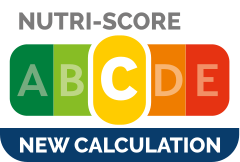 Average nutritional quality
Nutri-Score data warning
Nutrient levels
Fat in low quantity (0%)
Saturated fat in low quantity (0%)
Sugars in high quantity (12.9%)
Salt in moderate quantity (1.13%)
Nutrition facts
| Nutrition facts | As sold for 100 g / 100 ml | Compared to: Sauces |
|---|---|---|
| Energy | 339 kcal (81 kcal) | 878.145 kJ (214 kcal) |
| Fat | 0 g | 15.725 g (-100%) |
| Saturated fat | 0 g | 2.068 g (-100%) |
| Trans fat | 0 g | 0.001 g (-100%) |
| Cholesterol | 0 mg | 7.348 mg (-100%) |
| Carbohydrates | 16.13 g | 10.937 g (+47%) |
| Sugars | 12.9 g | 6.737 g (+91%) |
| Dietary fiber | 0 g | ? |
| Proteins | 0 g | 2.6 g (-100%) |
| Salt | 1.13 mg | 2.014 g (-100%) |
| Sodium | 0.452 mg | 0.805 g (-100%) |
| Vitamin A | 0 IU | 5.614 µg |
| Vitamin C | 0.0039 mg | ? |
| Calcium | 0 mg | 27.603 mg (-100%) |
| Iron | 0.00116 mg | 0.585 mg (-100%) |
| Fruits, vegetables and legumes | ? | ? |
Nutrition facts (Detailed data)
| Nutrition facts | As sold for 100 g / 100 ml | As sold Per serving (legacy) |
|---|---|---|
| Energy | 339 kcal (81 kcal) | 105 kcal (25 kcal) |
| Fat | 0 g | 0 g |
| Saturated fat | 0 g | 0 g |
| Trans fat | 0 g | 0 g |
| Cholesterol | 0 mg | 0 mg |
| Carbohydrates | 16.13 g | 5 g |
| Sugars | 12.9 g | 4 g |
| Dietary fiber | 0 g | 0 g |
| Proteins | 0 g | 0 g |
| Salt | 1.13 mg | 0.35 mg |
| Sodium | 0.452 mg | 0.14 mg |
| Vitamin A | 0 IU | 0 IU |
| Vitamin C | 0.0039 mg | 0.00121 mg |
| Calcium | 0 mg | 0 mg |
| Iron | 0.00116 mg | 0.00036 mg |
| Fruits, vegetables and legumes | ? | ? |
Serving size
Ingredients
Ingredients list
Ingredient information
Added sugars
Allergens
Ingredients analysis
No ingredients containing palm oil.
Unrecognized: en:apple-sauce, en:hydrolyzed-soy-protien, en:beef-base
Contains non-vegan ingredients.
Unrecognized: en:apple-sauce, en:vitamin-c, en:hydrolyzed-soy-protien, en:mustard, en:beef-base, en:vegetable-extract
Contains non-vegetarian ingredients.
Unrecognized: en:apple-sauce, en:vitamin-c, en:hydrolyzed-soy-protien, en:mustard, en:beef-base, en:vegetable-extract
Food Processing
NOVA group
 Ultra-processed food and drink products
Elements that indicate the product is in NOVA group 4
How NOVA works
Additives
E150c - Ammonia caramel EFSA overexposure risk: moderateColour
No additive description is available yet.
E296 - Malic acid
MALIC ACID is an organic compound with the molecular formula C4H6O5. Malic acid has two stereoisomeric forms (L- and D-enantiomers), though only the L-isomer exists naturally.
E315 - Erythorbic acid EFSA overexposure risk: noAntioxidant
Erythorbic acid (isoascorbic acid, D-araboascorbic acid) is a stereoisomer of ascorbic acid (vitamin C). It is synthesized by a reaction between methyl 2-keto-D-gluconate and sodium methoxide. It can also be synthesized from sucrose or by strains of Penicillium that have been selected for this feature. It is denoted by E number E315, and is widely used as an antioxidant in processed foods.Clinical trials have been conducted to investigate aspects of the nutritional value of erythorbic acid. One such trial investigated the effects of erythorbic acid on vitamin C metabolism in young women; no effect on vitamin C uptake or clearance from the body was found. A later study found that erythorbic acid is a potent enhancer of nonheme-iron absorption.Since the U.S. Food and Drug Administration banned the use of sulfites as a preservative in foods intended to be eaten fresh (such as salad bar ingredients), the use of erythorbic acid as a food preservative has increased. It is also used as a preservative in cured meats and frozen vegetables.It was first synthesized in 1933 by the German chemists Kurt Maurer and Bruno Schiedt.
E330 - Citric acidAntioxidantSequestrant
Citric acid is a natural organic acid found in citrus fruits such as lemons, oranges, and limes.
It is widely used in the food industry as a flavor enhancer, acidulant, and preservative due to its tart and refreshing taste.
Citric acid is safe for consumption when used in moderation and is considered a generally recognized as safe (GRAS) food additive by regulatory agencies worldwide.
E334 - L(+)-tartaric acidAntioxidantSequestrant
TARTARIC ACID is a white, crystalline organic acid that occurs naturally in many fruits, most notably in grapes, but also in bananas, tamarinds, and citrus
Environment
Green-Score, origins bonus, and transportation impact are shown for Worldwide .
Green Score
Overall grade
 Unknown environmental impact
About Green-Score
Current scope
Green-Score availability
Bonuses and maluses
Declared origins
Packaging impact
Packaging
Packaging impact
Data precision
Transportation
Declared origins
Data Source
Product data comes from Open Food Facts. Food Benchmark also adds translations, category comparisons and explanatory calculations.
The database is licensed under ODbL 1.0, individual contents under DbCL 1.0, and product photos under CC BY-SA 3.0.
Product added on March 10, 2017 at 9:15:35 AM UTC by usda-ndb-import .
Last edit on April 23, 2020 at 8:11:24 AM UTC by org-database-usda .
Product page also edited by usda-ndb-import, org-database-usda.
Source List
- usda-ndb
- database-usda