

Almond Butter Clusters
Health
Nutrition
Nutri-Score
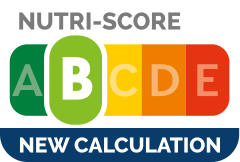 Good nutritional quality
Nutri-Score data warning
Nutrient levels
Fat in moderate quantity (7.69%)
Saturated fat in low quantity (0.769%)
Sugars in high quantity (16.9%)
Salt in moderate quantity (0.481%)
Nutrition label

Nutrition facts
| Nutrition facts | As sold for 100 g / 100 ml | Compared to: Breakfast cereals |
|---|---|---|
| Energy | ~ 1655.38461538462 kJ (384 kcal) | 1,669.435 kJ (394 kcal) (-1%) |
| Fat | 7.69230769230769 g | 8.407 g (-9%) |
| Saturated fat | 0.769230769230769 g | 1.939 g (-60%) |
| Monounsaturated fat | 4.61538461538461 g | ? |
| Polyunsaturated fat | 2.30769230769231 g | ? |
| Carbohydrates | 63.0769230769231 g | 65.425 g (-4%) |
| Sugars | 16.9230769230769 g | 14.728 g (+15%) |
| Added sugars | 16.9230769230769 g | 8.96 g (+89%) |
| Starch | 0 g | 33.261 g (-100%) |
| Dietary fiber | 4.61538461538461 g | ? |
| Proteins | 15.3846153846154 g | 9.868 g (+56%) |
| Salt | 0.480769230769231 g | 0.378 g (+27%) |
| Sodium | 0.192307692307692 g | 0.151 g (+27%) |
| Vitamin A | 0 g | ? |
| Vitamin E | 0 g | ? |
| Vitamin K | 0 g | ? |
| Vitamin C | 0 g | ? |
| Potassium | 0.233846153846154 g | 313.449 mg (-25%) |
| Calcium | 0.0938461538461538 g | 79.942 mg (+17%) |
| Phosphorus | 0 g | ? |
| Iron | 0.00307692307692308 g | 5.352 mg (-43%) |
| Magnesium | 0 g | ? |
| Zinc | 0 g | ? |
| Copper | 0 g | ? |
| Manganese | 0 g | ? |
| Selenium | 0 g | ? |
| Caffeine | 0 g | ? |
| Fruits, vegetables and legumes | ~ 0 % | ? |
| Choline | 0 g | 0 g |
Nutrition facts (Detailed data)
| Nutrition facts | As sold for 100 g / 100 ml | As sold Per 100 g (packaging) | As sold Per serving (65 g) (packaging) | As sold Per 100 g (estimate) |
|---|---|---|---|---|
| Energy | ~ 1655.38461538462 kJ (384 kcal) | ? (384 kcal) | ? (250 kcal) | ? |
| Fat | 7.69230769230769 g | ? | 5 g | ? |
| Saturated fat | 0.769230769230769 g | ? | 0.5 g | ? |
| Monounsaturated fat | 4.61538461538461 g | ? | 3 g | ? |
| Polyunsaturated fat | 2.30769230769231 g | ? | 1.5 g | ? |
| Carbohydrates | 63.0769230769231 g | ? | 41 g | ? |
| Sugars | 16.9230769230769 g | ? | 11 g | ? |
| Added sugars | 16.9230769230769 g | 16.9230769230769 g | 0 g | ~ 31.0960243626645 g |
| Starch | 0 g | ? | 0 g | ? |
| Dietary fiber | 4.61538461538461 g | ? | 3 g | ? |
| Proteins | 15.3846153846154 g | ? | 10 g | ? |
| Salt | 0.480769230769231 g | ? | 0.3125 g | ? |
| Sodium | 0.192307692307692 g | ? | 0.125 g | ? |
| Vitamin A | 0 g | ? | 0 g | ? |
| Vitamin E | 0 g | ? | 0 g | ? |
| Vitamin K | 0 g | ? | 0 g | ? |
| Vitamin C | 0 g | ? | 0 g | ? |
| Potassium | 0.233846153846154 g | ? | 0.152 g | ? |
| Calcium | 0.0938461538461538 g | ? | 0.061 g | ? |
| Phosphorus | 0 g | ? | 0 g | ? |
| Iron | 0.00307692307692308 g | 3.07692307692308 mg | 0.00307692307692308 g | ? |
| Magnesium | 0 g | ? | 0 g | ? |
| Zinc | 0 g | ? | 0 g | ? |
| Copper | 0 g | ? | 0 g | ? |
| Manganese | 0 g | ? | 0 g | ? |
| Selenium | 0 g | ? | 0 g | ? |
| Caffeine | 0 g | ? | 0 g | ? |
| Fruits, vegetables and legumes | ~ 0 % | ? | ? | ~ 0 % |
| Choline | 0 g | ? | 0 g | ? |
Serving size
Ingredients
Ingredients image

Ingredients list
Ingredient information
Added sugars
Allergens
Ingredients analysis
No ingredients containing palm oil.
Contains non-vegan ingredients.
Unrecognized: en:tocopherols-to-maintain-freshness
Vegetarian status unknown
Unrecognized: en:tocopherols-to-maintain-freshness
Food Processing
NOVA group
 Processed foods
Elements that indicate the product is in NOVA group 3
How NOVA works
Additives
Environment
Green-Score, origins bonus, and transportation impact are shown for Worldwide .
Green Score
Overall grade
 High environmental impact
About Green-Score
Current scope
Life cycle analysis
Average impact of the category
 Breakfast cereals, mix of puffed or extruded cereals, fortified with vitamins and chemical elements • Score: 61/100
Life-cycle reference
Overall environmental impact by stage (PEF)
The overall environmental impact figure (PEF) comes from ADEME's Agribalyse database, for the category: Breakfast cereals, mix of puffed or extruded cereals, fortified with vitamins and chemical elements. Source: ADEME Agribalyse Database.
| Stage | Impact |
|---|---|
| Agriculture | 72.1 % |
| Processing | 10.9 % |
| Packaging | 9.6 % |
| Transportation | 6.1 % |
| Distribution | 1.3 % |
| Consumption | 0.0 % |
Bonuses and maluses
Declared origins
Packaging impact
Green-Score for this product
Green-Score for this product
Final score: 41/100Final score breakdown
Carbon footprint
Carbon footprint
Climate impact by stage (CO2e)
The carbon emission figure comes from ADEME's Agribalyse database, for the category: Breakfast cereals, mix of puffed or extruded cereals, fortified with vitamins and chemical elements. Source: ADEME Agribalyse Database.
| Stage | Impact |
|---|---|
| Agriculture | 62.4 % |
| Processing | 9.7 % |
| Packaging | 18.5 % |
| Transportation | 8.4 % |
| Distribution | 0.8 % |
| Consumption | 0.0 % |
Packaging
Packaging impact
Data precision
Transportation
Declared origins
Forest footprint
Forest footprint
Deforestation risk details
Data Source
Product data comes from Open Food Facts. Food Benchmark also adds translations, category comparisons and explanatory calculations.
The database is licensed under ODbL 1.0, individual contents under DbCL 1.0, and product photos under CC BY-SA 3.0.
Product added on September 29, 2018 at 7:07:01 AM UTC by openfoodfacts-contributors .
Last edit on March 10, 2026 at 4:05:05 AM UTC by municorn-calorie-counter-app .
Product page also edited by ecoscore-impact-estimator, inf, kiliweb, lukasday, macrofactor, municorn-calorie-counter-app, new-nutrition-bot, openfoodfacts-contributors, org-database-usda, org-label-non-gmo-project, roboto-app, yuka.Vm9JTFBLWWh2S0picXN3YzVBN2IvczFaMW9LNGZtaTVFZlE0SUE9PQ, yuka.sY2b0xO6T85zoF3NwEKvlkF9DermvxedDRjjiEul2NqNB57hZOhK5KqlHqs, yuka.sY2b0xO6T85zoF3NwEKvlkN7DsPaqR7ZGiPhi2Cgn8aALofWTvhW2IPrCas, yuka.sY2b0xO6T85zoF3NwEKvlkd2Y_SCmDuVPT3TsFa6_PmtC524R-1oyKqjE6s, yuka.sY2b0xO6T85zoF3NwEKvllAfA97hiBXiZjrUvW2nl9iqCoz1TM57zNmmMqg.
Source List
- database-usda
- label-non-gmo-project