

Mug Root Beer
Health
Nutrition
Nutri-Score
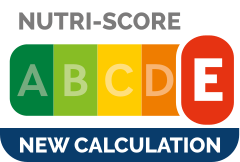 Lower nutritional quality
Nutri-Score data warning
Nutrient levels
Fat in low quantity (0%)
Saturated fat in low quantity (0%)
Sugars in high quantity (12.1%)
Salt in moderate quantity (0.163%)
Nutrition label

Nutrition facts
| Nutrition facts | As sold for 100 g / 100 ml | Compared to: Root beers |
|---|---|---|
| Energy | 189 kcal (45 kcal) | 164.592 kJ (35 kcal) |
| Fat | 0 g | 0 g |
| Saturated fat | 0 g | 0 g |
| Carbohydrates | 12.112676056338 g | 9.034 g (+34%) |
| Sugars | 12.112676056338 g | 8.705 g (+39%) |
| Dietary fiber | 0 g | ? |
| Proteins | 0 g | 0.025 g (-100%) |
| Salt | 0.1625 mg | 0.031 g (-99%) |
| Sodium | 0.065 mg | 0.013 g (-99%) |
| Alcohol | 0 % vol | ? |
| Potassium | 0.015 g | ? |
| Phosphorus | 0 mg | ? |
| Caffeine | 0 mg | ? |
| Fruits, vegetables and legumes | ? | ? |
Nutrition facts (Detailed data)
| Nutrition facts | As sold for 100 g / 100 ml | As sold Per serving (legacy) |
|---|---|---|
| Energy | 189 kcal (45 kcal) | 643 kcal (153 kcal) |
| Fat | 0 g | 0 g |
| Saturated fat | 0 g | 0 g |
| Carbohydrates | 12.112676056338 g | 41.2 g |
| Sugars | 12.112676056338 g | 41.2 g |
| Dietary fiber | 0 g | 0 g |
| Proteins | 0 g | 0 g |
| Salt | 0.1625 mg | 0.553 mg |
| Sodium | 0.065 mg | 0.221 mg |
| Alcohol | 0 % vol | 0 % vol |
| Potassium | 0.015 g | 0.051 g |
| Phosphorus | 0 mg | 0 mg |
| Caffeine | 0 mg | 0 mg |
| Fruits, vegetables and legumes | ? | ? |
Serving size
Ingredients
Ingredients image

Ingredients list
Ingredient information
Added sugars
Traces
Ingredients analysis
No ingredients containing palm oil.
Unrecognized: en:preserves-freshness
Vegan status unknown
Unrecognized: en:preserves-freshness
Vegetarian status unknown
Unrecognized: en:preserves-freshness
Food Processing
NOVA group
 Ultra-processed food and drink products
Elements that indicate the product is in NOVA group 4
How NOVA works
Additives
E150c - Ammonia caramel EFSA overexposure risk: moderateColour
No additive description is available yet.
E211 - Sodium benzoate EFSA overexposure risk: highPreservative
SODIUM BENZOATE is a substance which has the chemical formula NaC7H5O2
E330 - Citric acidAntioxidantSequestrant
Citric acid is a natural organic acid found in citrus fruits such as lemons, oranges, and limes.
It is widely used in the food industry as a flavor enhancer, acidulant, and preservative due to its tart and refreshing taste.
Citric acid is safe for consumption when used in moderation and is considered a generally recognized as safe (GRAS) food additive by regulatory agencies worldwide.
E385 - Calcium disodium ethylenediaminetetraacetateAntioxidantPreservativeSequestrant
No additive description is available yet.
E999 - Quillaia extractEmulsifier
Quillaia is the milled inner bark or small stems and branches of the soapbark (Quillaja saponaria, Molina). Other names include Murillo bark extract, Panama bark extract, Vanilla extract, Quillaia extract, Quillay bark extract, and Soapbark extract. It contains a high concentration of saponins which is increased by processing; highly purified quillaia is used to enhance vaccines. Other compounds in the extract include tannins and other polyphenols, and calcium oxalate. It is listed as an ingredient in root beer and cream soda. The extract of quillaia is used in the manufacture of food additives (E number 999). It is used as a humectant in baked goods, frozen dairy products, and puddings and as a foaming agent in soft drinks. It is also applied in some "natural" spray adjuvant formulations for agriculture. In particular, the saponins from Quillaja saponaria are used in veterinary vaccines as adjuvant (e.g., foot-and-mouth disease vaccines, helping to enhance the immune response). Initially the crude fraction was used. Later on, a purified mixture called Quil A was developed by Dalsgaard, which was more effective and caused fewer local side reactions. Quil A is still a mixture of more than 25 different saponin molecules. One of them, the saponin QS21, is being investigated for possible beneficial adjuvant effects on the human immune system.
Environment
Green-Score, origins bonus, and transportation impact are shown for Worldwide .
Green Score
Overall grade
About Green-Score
Current scope
Green-Score availability
Bonuses and maluses
Declared origins
Packaging impact
Packaging
Packaging impact
Packaging components
| Shape | Material | Recycling | Impact |
|---|---|---|---|
| CAN | Metal | Recycle | High |
Declared packaging
Data precision
Transportation
Manufacturing locations
Declared origins
Data Source
Product data comes from Open Food Facts. Food Benchmark also adds translations, category comparisons and explanatory calculations.
The database is licensed under ODbL 1.0, individual contents under DbCL 1.0, and product photos under CC BY-SA 3.0.
Product added on October 28, 2018 at 9:43:18 AM UTC by kiliweb .
Last edit on April 6, 2025 at 11:48:41 PM UTC by squallstorm7458 .
Product page also edited by anonymous-pqbiozpbxq, danis1597, ehuana, inf, kiliweb, marilyn, openfoodfacts-contributors, packbot, skeletor, squallstorm7458, yuka.XKlYON-3Ffc7PPTQ7rA9xiaaRba6LMBBPXASoQ, yuka.YS84S1Q1c2FpZlVQc2ZJaXJ3S04yc0JsbUp5MWREdnJkZmdJSVE9PQ, yuka.sY2b0xO6T85zoF3NwEKvlkcccuX3hyDUaQ3Ro0mv--2VcJH5RItrv6rjP6s.