
Fudgsicle, fudge pops
Health
Nutrition
Nutri-Score
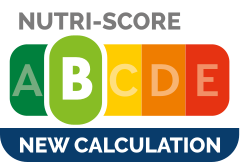 Good nutritional quality
Nutri-Score data warning
Nutrient levels
Fat in low quantity (2.53%)
Saturated fat in low quantity (1.27%)
Sugars in moderate quantity (6.33%)
Salt in low quantity (0.285%)
Nutrition facts
| Nutrition facts | As sold for 100 g / 100 ml | Compared to: Frozen desserts |
|---|---|---|
| Energy | 423 kcal (101 kcal) | 892.408 kJ (214 kcal) |
| Fat | 2.53 g | 9.567 g (-74%) |
| Saturated fat | 1.27 g | 6.273 g (-80%) |
| Trans fat | 0 g | 0.061 g (-100%) |
| Cholesterol | 0.006 mg | 20.576 mg (-100%) |
| Carbohydrates | 22.78 g | 27.935 g (-18%) |
| Sugars | 6.33 g | 22.919 g (-72%) |
| Polyols | 6 g | ? |
| Dietary fiber | 5.1 g | ? |
| Proteins | 3.8 g | 2.816 g (+35%) |
| Salt | 0.285 mg | 0.138 g (-100%) |
| Sodium | 0.114 mg | 0.055 g (-100%) |
| Vitamin A | 0 IU | 36.464 µg |
| Vitamin C | 0 mg | ? |
| Calcium | 0.253 mg | 72.811 mg (-100%) |
| Iron | 0.00091 mg | 0.48 mg (-100%) |
| Fruits, vegetables and legumes | ? | ? |
Nutrition facts (Detailed data)
| Nutrition facts | As sold for 100 g / 100 ml | As sold Per serving (legacy) |
|---|---|---|
| Energy | 423 kcal (101 kcal) | 334 kcal (79 kcal) |
| Fat | 2.53 g | 2 g |
| Saturated fat | 1.27 g | 1 g |
| Trans fat | 0 g | 0 g |
| Cholesterol | 0.006 mg | 0.00474 mg |
| Carbohydrates | 22.78 g | 18 g |
| Sugars | 6.33 g | 5 g |
| Polyols | 6 g | 4.74 g |
| Dietary fiber | 5.1 g | 4.03 g |
| Proteins | 3.8 g | 3 g |
| Salt | 0.285 mg | 0.225 mg |
| Sodium | 0.114 mg | 0.0901 mg |
| Vitamin A | 0 IU | 0 IU |
| Vitamin C | 0 mg | 0 mg |
| Calcium | 0.253 mg | 0.2 mg |
| Iron | 0.00091 mg | 0.000719 mg |
| Fruits, vegetables and legumes | ? | ? |
Serving size
Ingredients
Ingredients list
Ingredient information
Allergens
Ingredients analysis
Contains ingredients containing palm oil.
Contains non-vegan ingredients.
Unrecognized: en:less-than-1-of, en:cellulose-gel
Vegetarian status unknown
Unrecognized: en:less-than-1-of, en:cellulose-gel
Food Processing
NOVA group
 Ultra-processed food and drink products
Elements that indicate the product is in NOVA group 4
How NOVA works
Additives
E1200 - PolydextroseHumectantStabiliserThickener
Polydextrose is a synthetic polymer of glucose. It is a food ingredient classified as soluble fiber by the U.S. Food and Drug Administration (FDA) as well as Health Canada, as of April 2013. It is frequently used to increase the dietary fiber content of food, to replace sugar, and to reduce calories and fat content. It is a multi-purpose food ingredient synthesized from dextrose (glucose), plus about 10 percent sorbitol and 1 percent citric acid. Its E number is E1200. The FDA approved it in 1981. It is 0.1 times as sweet as sugar.
E150c - Ammonia caramel EFSA overexposure risk: moderateColour
No additive description is available yet.
E330 - Citric acidAntioxidantSequestrant
Citric acid is a natural organic acid found in citrus fruits such as lemons, oranges, and limes.
It is widely used in the food industry as a flavor enhancer, acidulant, and preservative due to its tart and refreshing taste.
Citric acid is safe for consumption when used in moderation and is considered a generally recognized as safe (GRAS) food additive by regulatory agencies worldwide.
E341 - Calcium phosphates EFSA overexposure risk: highEmulsifierHumectantSequestrantStabiliserThickener
Calcium phosphate is a family of materials and minerals containing calcium ions (Ca2+) together with inorganic phosphate anions. Some so-called calcium phosphates contain oxide and hydroxide as well. They are white solids of nutritious value.
E341iii - Tricalcium phosphateEmulsifierHumectantSequestrantStabiliserThickener
No additive description is available yet.
E407 - Carrageenan EFSA overexposure risk: highCarrierEmulsifierHumectantStabiliserThickener
Carrageenan (E407), derived from red seaweed, is widely employed in the food industry as a gelling, thickening, and stabilizing agent, notably in dairy and meat products.
It can exist in various forms, each imparting distinct textural properties to food.
However, its degraded form, often referred to as poligeenan, has raised health concerns due to its potential inflammatory effects and its classification as a possible human carcinogen (Group 2B) by the International Agency for Research on Cancer (IARC).
Nevertheless, food-grade carrageenan has been deemed safe by various regulatory bodies when consumed in amounts typically found in food.
E410 - Locust bean gumEmulsifierStabiliserThickener
Locust bean gum (LBG, also known as carob gum, carob bean gum, carobin, E410) is a thickening agent and a gelling agent used in food technology.
E412 - Guar gumEmulsifierStabiliserThickener
Guar gum (E412) is a natural food additive derived from guar beans.
This white, odorless powder is valued for its remarkable thickening and stabilizing properties, making it a common ingredient in various food products, including sauces, dressings, and ice creams.
When used in moderation, guar gum is considered safe for consumption, with no known adverse health effects.
E420 - SorbitolHumectantSequestrantStabiliserSweetenerThickener
Sorbitol (), less commonly known as glucitol (), is a sugar alcohol with a sweet taste which the human body metabolizes slowly. It can be obtained by reduction of glucose, which changes the aldehyde group to a hydroxyl group. Most sorbitol is made from corn syrup, but it is also found in nature, for example in apples, pears, peaches, and prunes. It is converted to fructose by sorbitol-6-phosphate 2-dehydrogenase. Sorbitol is an isomer of mannitol, another sugar alcohol; the two differ only in the orientation of the hydroxyl group on carbon 2. While similar, the two sugar alcohols have very different sources in nature, melting points, and uses.
E433 - Polyoxyethylene sorbitan monooleate EFSA overexposure risk: moderateEmulsifierStabiliser
Polysorbate 80 is a nonionic surfactant and emulsifier often used in foods and cosmetics. This synthetic compound is a viscous, water-soluble yellow liquid.
E436 - Polyoxyethylene sorbitan tristearate EFSA overexposure risk: moderateEmulsifierStabiliser
No additive description is available yet.
E466 - Sodium carboxy methyl celluloseEmulsifierHumectantStabiliserThickener
Carboxymethyl cellulose (CMC) or cellulose gum or tylose powder is a cellulose derivative with carboxymethyl groups (-CH2-COOH) bound to some of the hydroxyl groups of the glucopyranose monomers that make up the cellulose backbone. It is often used as its sodium salt, sodium carboxymethyl cellulose.
E471 - Mono- and diglycerides of fatty acidsEmulsifierStabiliser
Mono- and diglycerides of fatty acids (E471), are food additives commonly used as emulsifiers in various processed foods.
These compounds consist of glycerol molecules linked to one or two fatty acid chains, which help stabilize and blend water and oil-based ingredients. E471 enhances the texture and shelf life of products like margarine, baked goods, and ice cream, ensuring a smooth and consistent texture.
It is generally considered safe for consumption within established regulatory limits.
E950 - Acesulfame kSweetener
Acesulfame potassium ( AY-see-SUL-faym), also known as acesulfame K (K is the symbol for potassium) or Ace K, is a calorie-free sugar substitute (artificial sweetener) often marketed under the trade names Sunett and Sweet One. In the European Union, it is known under the E number (additive code) E950. It was discovered accidentally in 1967 by German chemist Karl Clauss at Hoechst AG (now Nutrinova). In chemical structure, acesulfame potassium is the potassium salt of 6-methyl-1,2,3-oxathiazine-4(3H)-one 2,2-dioxide. It is a white crystalline powder with molecular formula C4H4KNO4S and a molecular weight of 201.24 g/mol.
E951 - Aspartame EFSA overexposure risk: noSweetener
Aspartame (E951) is a low-calorie artificial sweetener composed of two amino acids.
It is used as a sugar substitute in thousands of "sugar-free" or "diet" products, such as carbonated soft drinks, chewing gum, yogurts, and tabletop sweeteners, to provide sweetness without the calories of sugar.
Despite being one of the most rigorously tested food additives, its safety remains controversial. While major regulatory bodies like the FDA and EFSA deem it safe for the general public, the IARC has classified it as "possibly carcinogenic to humans" (Group 2B). It must also be avoided by individuals with the genetic condition phenylketonuria (PKU).
Environment
Green-Score, origins bonus, and transportation impact are shown for Worldwide .
Green Score
Overall grade
 Unknown environmental impact
About Green-Score
Current scope
Green-Score availability
Bonuses and maluses
Declared origins
Threatened species risk
Packaging impact
Packaging
Packaging impact
Data precision
Transportation
Declared origins
Data Source
Product data comes from Open Food Facts. Food Benchmark also adds translations, category comparisons and explanatory calculations.
The database is licensed under ODbL 1.0, individual contents under DbCL 1.0, and product photos under CC BY-SA 3.0.
Product added on March 9, 2017 at 12:52:33 PM UTC by usda-ndb-import .
Last edit on April 22, 2020 at 6:09:49 PM UTC by org-database-usda .
Product page also edited by usda-ndb-import, org-database-usda.
Source List
- usda-ndb
- database-usda