

14 Grains Bread
Health
Nutrition
Nutri-Score
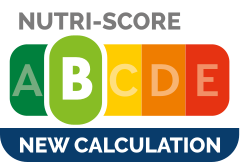 Good nutritional quality
Nutri-Score data warning
Nutrient levels
Fat in moderate quantity (4%)
Saturated fat in low quantity (0.9%)
Sugars in moderate quantity (5%)
Salt in moderate quantity (0.75%)
Nutrition label

Nutrition facts
| Nutrition facts | As sold for 100 g / 100 ml | Compared to: Sliced breads |
|---|---|---|
| Energy | ~ 936 kJ (280 kcal) | 1,087.295 kJ (258 kcal) (-14%) |
| Fat | 4 g | 4.106 g (-3%) |
| Saturated fat | 0.9 g | 0.649 g (+39%) |
| Monounsaturated fat | ? | 1.183 g |
| Polyunsaturated fat | ? | 1.466 g |
| Trans fat | 0 g | 0.000339 g (-100%) |
| Cholesterol | 0 g | 0.646 mg (-100%) |
| Carbohydrates | 36 g | 44.108 g (-18%) |
| Sugars | 5 g | 4.037 g (+24%) |
| Starch | 0 g | 26.662 g (-100%) |
| Dietary fiber | 5 g | ? |
| Soluble fiber | 1 g | 2.262 g (-56%) |
| Insoluble fiber | 4 g | 3.796 g (+5%) |
| Proteins | 8 g | 8.952 g (-11%) |
| Salt | 0.75 g | 1.076 g (-30%) |
| Sodium | 0.3 g | 0.43 g (-30%) |
| Vitamin E | 0.000125 g | 1.459 mg (-91%) |
| Vitamin B1 | 0.0003 g | ? |
| Vitamin B2 | 0.0000666666666666667 g | ? |
| Vitamin PP | 0.004 g | ? |
| Vitamin B6 | 0.000166666666666667 g | ? |
| Vitamin B9 | 0.00004 g | ? |
| Folates | 0.00003 g | ? |
| Potassium | 0.175 g | 240.64 mg (-27%) |
| Calcium | 0.1 g | 36.126 mg (+177%) |
| Phosphorus | 0.233333333333333 g | 158.939 mg (+47%) |
| Iron | 0.00233333333333333 g | 1.693 mg (+38%) |
| Magnesium | 0.08 g | 47.958 mg (+67%) |
| Zinc | 0.002 g | 1.36 mg (+47%) |
| Copper | 0.000266666666666667 g | 0.179 mg (+49%) |
| Manganese | 0.00173333333333333 g | 1.203 mg (+44%) |
| Selenium | 0.0000266666666666667 g | 5.849 µg (+356%) |
| Molybdenum | 0.000029 g | 31.809 µg (-9%) |
| Fruits, vegetables and legumes | ~ 0.000704251802885025 % | ? |
| Choline | 0 g | 0 g |
Nutrition facts (Detailed data)
| Nutrition facts | As sold for 100 g / 100 ml | As sold Per 100 g (packaging) | As sold Per serving (75 g) (packaging) | As sold Per 100 g (estimate) |
|---|---|---|---|---|
| Energy | ~ 936 kJ (280 kcal) | ? (280 kcal) | ? (210 kcal) | ? |
| Fat | 4 g | 4 g | 4 g | ? |
| Saturated fat | 0.9 g | 0.9 g | 1 g | ? |
| Monounsaturated fat | ? | ? | ? | ? |
| Polyunsaturated fat | ? | ? | ? | ? |
| Trans fat | 0 g | 0 g | ? | ? |
| Cholesterol | 0 g | 0 g | ? | ? |
| Carbohydrates | 36 g | 36 g | 36 g | ? |
| Sugars | 5 g | 5 g | 5 g | ? |
| Starch | 0 g | 0 g | ? | ? |
| Dietary fiber | 5 g | 5 g | 5 g | ? |
| Soluble fiber | 1 g | 1 g | ? | ? |
| Insoluble fiber | 4 g | 4 g | ? | ? |
| Proteins | 8 g | 8 g | 8 g | ? |
| Salt | 0.75 g | 0.75 g | ? | ? |
| Sodium | 0.3 g | 0.3 g | 0.31 g | ? |
| Vitamin E | 0.000125 g | 0.000125 g | ? | ? |
| Vitamin B1 | 0.0003 g | 0.3 mg | 0.0003 g | ? |
| Vitamin B2 | 0.0000666666666666667 g | 0.0666666666666667 mg | ? | ? |
| Vitamin PP | 0.004 g | 0.004 g | ? | ? |
| Vitamin B6 | 0.000166666666666667 g | 0.166666666666667 mg | 0.00017 g | ? |
| Vitamin B9 | 0.00004 g | ? | 0.00003 g | ? |
| Folates | 0.00003 g | 0.00003 g | ? | ? |
| Potassium | 0.175 g | 0.175 g | 0.2 g | ? |
| Calcium | 0.1 g | 0.1 g | 0.075 g | ? |
| Phosphorus | 0.233333333333333 g | 233.333333333333 mg | ? | ? |
| Iron | 0.00233333333333333 g | 2.33333333333333 mg | 0.0023 g | ? |
| Magnesium | 0.08 g | 80 mg | 0.08 g | ? |
| Zinc | 0.002 g | 2 mg | 0.002 g | ? |
| Copper | 0.000266666666666667 g | 0.266666666666667 mg | 0.00027 g | ? |
| Manganese | 0.00173333333333333 g | 1.73333333333333 mg | 0.00173 g | ? |
| Selenium | 0.0000266666666666667 g | ? | 0.00002 g | ? |
| Molybdenum | 0.000029 g | 0.000029 g | ? | ? |
| Fruits, vegetables and legumes | ~ 0.000704251802885025 % | ? | ? | ~ 0.000704251802885025 % |
| Choline | 0 g | 0 g | ? | ? |
Serving size
Ingredients
Ingredients image

Ingredients list
Ingredient information
Added sugars
Allergens
Traces
Ingredients analysis
Palm oil content unknown
Vegan status unknown
Unrecognized: en:farro-flakes
Vegetarian status unknown
Unrecognized: en:farro-flakes
Food Processing
NOVA group
 Ultra-processed food and drink products
Elements that indicate the product is in NOVA group 4
How NOVA works
Additives
E200 - Sorbic acid EFSA overexposure risk: highPreservative
SORBIC ACID, or 2,4-hexadienoic acid, is a natural organic compound used as a food preservative. It has the chemical formula CH3(CH)4CO2H.
E270 - Lactic acid
LACTIC ACID is an organic compound with the formula CH3CH(OH)CO2H. In the form of its conjugate base called lactate (this is thus different and kept as a separate ingredient). Lactic acid is chiral, consisting of two optical isomers. One is known as L-(+)-lactic acid or (S)-lactic acid and the other, its mirror image, is D-(−)-lactic acid or (R)-lactic acid in food the L-variant is used
E282 - calcium propionatePreservative
CALCIUM PROPIONATE has the formula Ca(C2H5COO)2. Calcium propionate is used as a preservative in a wide variety of products, including but not limited to:bread, other baked goods, processed meat, whey, and other dairy products.
E322 - LecithinsAntioxidantEmulsifier
Lecithins are natural compounds commonly used in the food industry as emulsifiers and stabilizers.
Extracted from sources like soybeans and eggs, lecithins consist of phospholipids that enhance the mixing of oil and water, ensuring smooth textures in various products like chocolates, dressings, and baked goods.
They do not present any known health risks.
E322i - LecithinAntioxidantEmulsifier
Lecithins are natural compounds commonly used in the food industry as emulsifiers and stabilizers.
Extracted from sources like soybeans and eggs, lecithins consist of phospholipids that enhance the mixing of oil and water, ensuring smooth textures in various products like chocolates, dressings, and baked goods.
They do not present any known health risks.
Environment
Green-Score, origins bonus, and transportation impact are shown for Worldwide .
Green Score
Overall grade
 Low environmental impact
About Green-Score
Current scope
Life cycle analysis
Average impact of the category
 Sandwich loaf • Score: 92/100
Life-cycle reference
Overall environmental impact by stage (PEF)
The overall environmental impact figure (PEF) comes from ADEME's Agribalyse database, for the category: Sandwich loaf. Source: ADEME Agribalyse Database.
| Stage | Impact |
|---|---|
| Agriculture | 68.4 % |
| Processing | 20.0 % |
| Packaging | 4.0 % |
| Transportation | 7.1 % |
| Distribution | 0.7 % |
| Consumption | 0.0 % |
Bonuses and maluses
Declared origins
Packaging impact
Green-Score for this product
Green-Score for this product
Final score: 72/100Final score breakdown
Carbon footprint
Carbon footprint
Climate impact by stage (CO2e)
The carbon emission figure comes from ADEME's Agribalyse database, for the category: Sandwich loaf. Source: ADEME Agribalyse Database.
| Stage | Impact |
|---|---|
| Agriculture | 70.3 % |
| Processing | 11.9 % |
| Packaging | 7.1 % |
| Transportation | 10.5 % |
| Distribution | 0.8 % |
| Consumption | 0.0 % |
Packaging

Packaging impact
Data precision
Transportation
Manufacturing locations
Declared origins
Forest footprint
Forest footprint
Deforestation risk details
Data Source
Product data comes from Open Food Facts. Food Benchmark also adds translations, category comparisons and explanatory calculations.
The database is licensed under ODbL 1.0, individual contents under DbCL 1.0, and product photos under CC BY-SA 3.0.
Product added on April 7, 2019 at 5:17:53 PM UTC by openfoodfacts-contributors .
Last edit on March 17, 2026 at 6:34:46 PM UTC by municorn-calorie-counter-app .
Product page also edited by anonymous-s7co2zv64u, foodif9s1, inf, kiliweb, macrofactor, magician, municorn-calorie-counter-app, narvath, openfoodfacts-contributors, yuka.ZW8wa05xWTRsTmxhbHZNUTd6THF3dmRUNXJ1dlJFeVhBTTlNSUE9PQ, yuka.sY2b0xO6T85zoF3NwEKvlhZGat3RoRDpGAbQml3S5PmBF7XneNZX8pGgEao.