

GIUSEPPE PIZZERIA PANINI
Health
Nutrition
Nutri-Score
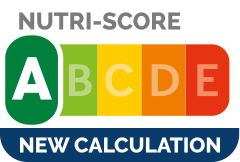 Very good nutritional quality
Nutri-Score data warning
Nutrient levels
Fat in moderate quantity (4.51%)
Saturated fat in low quantity (0.808%)
Sugars in low quantity (1.3%)
Salt in low quantity (0.266%)
Nutrition label

Nutrition facts
| Nutrition facts | As sold for 100 g / 100 ml | Compared to: Pizzas |
|---|---|---|
| Energy | ~ 916.538388206845 kJ (228 kcal) | 973.994 kJ (232 kcal) (-6%) |
| Fat | ~ 4.5072992234003 g | 8.406 g (-46%) |
| Saturated fat | ~ 0.80793207077753 g | 3.707 g (-78%) |
| Trans fat | 0.16 g | 0.065 g (+146%) |
| Carbohydrates | ~ 36.4243280319941 g | 27.967 g (+30%) |
| Sugars | ~ 1.29832589285714 g | 2.877 g (-55%) |
| Dietary fiber | ~ 3.78717680431548 g | ? |
| Proteins | ~ 5.82599644252232 g | 10.112 g (-42%) |
| Salt | ~ 0.265591761997768 g | 1.213 g (-78%) |
| Iron | 0.0026 g | 1.241 mg (+110%) |
| Fruits, vegetables and legumes | ~ 17.9559616815476 % | ? |
Nutrition facts (Detailed data)
| Nutrition facts | As sold for 100 g / 100 ml | As sold Per 100 g (packaging) | As sold Per 100 g (estimate) | As sold Per serving (250 g) (packaging) |
|---|---|---|---|---|
| Energy | ~ 916.538388206845 kJ (228 kcal) | ? (228 kcal) | ~ 916.538388206845 kJ (217 kcal) | ? (570 kcal) |
| Fat | ~ 4.5072992234003 g | ? | ~ 4.5072992234003 g | 21 g |
| Saturated fat | ~ 0.80793207077753 g | ? | ~ 0.80793207077753 g | 6 g |
| Trans fat | 0.16 g | ? | ? | 0.4 g |
| Carbohydrates | ~ 36.4243280319941 g | ? | ~ 36.4243280319941 g | 72 g |
| Sugars | ~ 1.29832589285714 g | ? | ~ 1.29832589285714 g | 8 g |
| Dietary fiber | ~ 3.78717680431548 g | ? | ~ 3.78717680431548 g | 4 g |
| Proteins | ~ 5.82599644252232 g | ? | ~ 5.82599644252232 g | 19 g |
| Salt | ~ 0.265591761997768 g | ? | ~ 0.265591761997768 g | 2.925 g |
| Iron | 0.0026 g | 2.6 mg | ~ 0.00118882998511905 g | 0.0065 g |
| Fruits, vegetables and legumes | ~ 17.9559616815476 % | ? | ~ 17.9559616815476 % | ? |
Serving size
Ingredients
Ingredients image

Ingredients list
Ingredient information
Added sugars
Allergens
Ingredients analysis
Palm oil content unknown
Contains non-vegan ingredients.
Unrecognized: en:bacterial-culture, en:bacterial-culture, en:bacterial-culture, en:glucoamylase
Vegetarian status unknown
Unrecognized: en:bacterial-culture, en:bacterial-culture, en:bacterial-culture, en:glucoamylase
Food Processing
NOVA group
 Ultra-processed food and drink products
Elements that indicate the product is in NOVA group 4
How NOVA works
Additives
E1100 - Alpha-Amylase
An amylase () is an enzyme that catalyses the hydrolysis of starch into sugars. Amylase is present in the saliva of humans and some other mammals, where it begins the chemical process of digestion. Foods that contain large amounts of starch but little sugar, such as rice and potatoes, may acquire a slightly sweet taste as they are chewed because amylase degrades some of their starch into sugar. The pancreas and salivary gland make amylase (alpha amylase) to hydrolyse dietary starch into disaccharides and trisaccharides which are converted by other enzymes to glucose to supply the body with energy. Plants and some bacteria also produce amylase. As diastase, amylase was the first enzyme to be discovered and isolated (by Anselme Payen in 1833). Specific amylase proteins are designated by different Greek letters. All amylases are glycoside hydrolases and act on α-1,4-glycosidic bonds.
E330 - Citric acidAntioxidantSequestrant
Citric acid is a natural organic acid found in citrus fruits such as lemons, oranges, and limes.
It is widely used in the food industry as a flavor enhancer, acidulant, and preservative due to its tart and refreshing taste.
Citric acid is safe for consumption when used in moderation and is considered a generally recognized as safe (GRAS) food additive by regulatory agencies worldwide.
E471 - Mono- and diglycerides of fatty acidsEmulsifierStabiliser
Mono- and diglycerides of fatty acids (E471), are food additives commonly used as emulsifiers in various processed foods.
These compounds consist of glycerol molecules linked to one or two fatty acid chains, which help stabilize and blend water and oil-based ingredients. E471 enhances the texture and shelf life of products like margarine, baked goods, and ice cream, ensuring a smooth and consistent texture.
It is generally considered safe for consumption within established regulatory limits.
Environment
Green-Score, origins bonus, and transportation impact are shown for Worldwide .
Green Score
Overall grade
 Unknown environmental impact
About Green-Score
Current scope
Green-Score availability
Bonuses and maluses
Declared origins
Packaging impact
Packaging
Packaging impact
Data precision
Transportation
Declared origins
Data Source
Product data comes from Open Food Facts. Food Benchmark also adds translations, category comparisons and explanatory calculations.
The database is licensed under ODbL 1.0, individual contents under DbCL 1.0, and product photos under CC BY-SA 3.0.
Product added on December 29, 2019 at 11:29:27 PM UTC by kiliweb .
Last edit on February 22, 2026 at 8:15:47 PM UTC by municorn-calorie-counter-app .
Product page also edited by anonymous-s7co2zv64u, kiliweb, municorn-calorie-counter-app, roboto-app, yuka.ZWJncUFmNGttdFl0dlBFSDFCT0wvTXB5d0o2a2JGdUdMK0JCSUE9PQ, yuka.sY2b0xO6T85zoF3NwEKvlh0ZToLUnz__bzLQpxCazeueAYPuOegozNT6Fas.