
Reduced Calorie Rice Pudding Snacks
Health
Nutrition
Nutri-Score
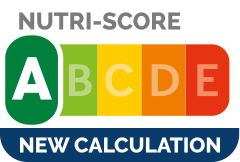 Very good nutritional quality
Nutri-Score data warning
Nutrient levels
Fat in low quantity (1.88%)
Saturated fat in low quantity (0.942%)
Sugars in low quantity (0%)
Salt in low quantity (0.0004%)
Nutrition facts
| Nutrition facts | As sold for 100 g / 100 ml |
|---|---|
| Energy | 291 kcal (69 kcal) |
| Fat | 1.88 g |
| Saturated fat | 0.942 g |
| Monounsaturated fat | 0 g |
| Polyunsaturated fat | 0 g |
| Omega 3 fat | 0 g |
| Omega 6 fat | 0 g |
| Trans fat | 0 g |
| Cholesterol | 0.00485 mg |
| Carbohydrates | 11.3 g |
| Sugars | 0 g |
| Glucose | 0 g |
| Fructose | 0 g |
| Lactose | 0 g |
| Dietary fiber | 0 g |
| Proteins | 1.88 g |
| Salt | 0.0004 mg |
| Sodium | 0.00016 mg |
| Alcohol | 0 % vol |
| Vitamin A | 0 µg |
| Vitamin D | 0 µg |
| Vitamin E | 0 mg |
| Vitamin K | 0 µg |
| Vitamin C | 0 mg |
| Vitamin B1 | 0 mg |
| Vitamin B2 | 0 mg |
| Vitamin PP | 0 mg |
| Vitamin B6 | 0 mg |
| Vitamin B9 | 0 µg |
| Vitamin B12 | 0 µg |
| Pantothenic acid | 0 mg |
| Potassium | 0 mg |
| Calcium | 0.0000942 mg |
| Phosphorus | 0 mg |
| Iron | 0 mg |
| Magnesium | 0 mg |
| Zinc | 0 mg |
| Copper | 0 mg |
| Manganese | 0 mg |
| Fluoride | 0 µg |
| Selenium | 0 µg |
| Iodine | 0 µg |
| Caffeine | 0 mg |
| Fruits, vegetables and legumes | ? |
Nutrition facts (Detailed data)
| Nutrition facts | As sold for 100 g / 100 ml | As sold Per serving (legacy) |
|---|---|---|
| Energy | 291 kcal (69 kcal) | 300 kcal (71 kcal) |
| Fat | 1.88 g | 1.94 g |
| Saturated fat | 0.942 g | 0.97 g |
| Monounsaturated fat | 0 g | 0 g |
| Polyunsaturated fat | 0 g | 0 g |
| Omega 3 fat | 0 g | 0 g |
| Omega 6 fat | 0 g | 0 g |
| Trans fat | 0 g | 0 g |
| Cholesterol | 0.00485 mg | 0.005 mg |
| Carbohydrates | 11.3 g | 11.65 g |
| Sugars | 0 g | 0 g |
| Glucose | 0 g | 0 g |
| Fructose | 0 g | 0 g |
| Lactose | 0 g | 0 g |
| Dietary fiber | 0 g | 0 g |
| Proteins | 1.88 g | 1.94 g |
| Salt | 0.0004 mg | 0.0004125 mg |
| Sodium | 0.00016 mg | 0.000165 mg |
| Alcohol | 0 % vol | 0 % vol |
| Vitamin A | 0 µg | 0 µg |
| Vitamin D | 0 µg | 0 µg |
| Vitamin E | 0 mg | 0 mg |
| Vitamin K | 0 µg | 0 µg |
| Vitamin C | 0 mg | 0 mg |
| Vitamin B1 | 0 mg | 0 mg |
| Vitamin B2 | 0 mg | 0 mg |
| Vitamin PP | 0 mg | 0 mg |
| Vitamin B6 | 0 mg | 0 mg |
| Vitamin B9 | 0 µg | 0 µg |
| Vitamin B12 | 0 µg | 0 µg |
| Pantothenic acid | 0 mg | 0 mg |
| Potassium | 0 mg | 0 mg |
| Calcium | 0.0000942 mg | 0.000097 mg |
| Phosphorus | 0 mg | 0 mg |
| Iron | 0 mg | 0 mg |
| Magnesium | 0 mg | 0 mg |
| Zinc | 0 mg | 0 mg |
| Copper | 0 mg | 0 mg |
| Manganese | 0 mg | 0 mg |
| Fluoride | 0 µg | 0 µg |
| Selenium | 0 µg | 0 µg |
| Iodine | 0 µg | 0 µg |
| Caffeine | 0 mg | 0 mg |
| Fruits, vegetables and legumes | ? | ? |
Serving size
Ingredients
Ingredients list
Ingredient information
Allergens
Ingredients analysis
No ingredients containing palm oil.
Unrecognized: en:for-smooth-texture
Contains non-vegan ingredients.
Unrecognized: en:for-smooth-texture
Vegetarian status unknown
Unrecognized: en:for-smooth-texture
Food Processing
NOVA group
 Ultra-processed food and drink products
Elements that indicate the product is in NOVA group 4
How NOVA works
Additives
E102 - TartrazineColour
Tartrazine (E102) is a synthetic lemon-yellow azo dye used as a food coloring.
It is found in a wide range of products such as soft drinks, desserts, candies, and snack foods to give them a vibrant yellow appearance.
While approved by many regulatory agencies, tartrazine has been linked to allergic reactions, such as hives, in a small portion of the population. Some studies have also suggested a link to increased hyperactivity in children, particularly when consumed with other additives like benzoates.
E110 - Sunset yellow FCFColour
Sunset Yellow FCF (also known as Orange Yellow S, or C.I. 15985) is a petroleum-derived orange azo dye with a pH dependent maximum absorption at about 480 nm at pH 1 and 443 nm at pH 13 with a shoulder at 500 nm. When added to foods sold in the US it is known as FD&C Yellow 6; when sold in Europe, it is denoted by E Number E110.
E407 - Carrageenan EFSA overexposure risk: highCarrierEmulsifierHumectantStabiliserThickener
Carrageenan (E407), derived from red seaweed, is widely employed in the food industry as a gelling, thickening, and stabilizing agent, notably in dairy and meat products.
It can exist in various forms, each imparting distinct textural properties to food.
However, its degraded form, often referred to as poligeenan, has raised health concerns due to its potential inflammatory effects and its classification as a possible human carcinogen (Group 2B) by the International Agency for Research on Cancer (IARC).
Nevertheless, food-grade carrageenan has been deemed safe by various regulatory bodies when consumed in amounts typically found in food.
E481 - Sodium stearoyl-2-lactylate EFSA overexposure risk: highEmulsifierStabiliser
Sodium stearoyl-2-lactylate (sodium stearoyl lactylate or SSL) is a versatile, FDA approved food additive used to improve the mix tolerance and volume of processed foods. It is one type of a commercially available lactylate. SSL is non-toxic, biodegradable, and typically manufactured using biorenewable feedstocks. Because SSL is a safe and highly effective food additive, it is used in a wide variety of products ranging from baked goods and desserts to pet foods.As described by the Food Chemicals Codex 7th edition, SSL is a cream-colored powder or brittle solid. SSL is currently manufactured by the esterification of stearic acid with lactic acid and partially neutralized with either food-grade soda ash (sodium carbonate) or caustic soda (concentrated sodium hydroxide). Commercial grade SSL is a mixture of sodium salts of stearoyl lactylic acids and minor proportions of other sodium salts of related acids. The HLB for SSL is 10-12. SSL is slightly hygroscopic, soluble in ethanol and in hot oil or fat, and dispersible in warm water. These properties are the reason that SSL is an excellent emulsifier for fat-in-water emulsions and can also function as a humectant.
E950 - Acesulfame kSweetener
Acesulfame potassium ( AY-see-SUL-faym), also known as acesulfame K (K is the symbol for potassium) or Ace K, is a calorie-free sugar substitute (artificial sweetener) often marketed under the trade names Sunett and Sweet One. In the European Union, it is known under the E number (additive code) E950. It was discovered accidentally in 1967 by German chemist Karl Clauss at Hoechst AG (now Nutrinova). In chemical structure, acesulfame potassium is the potassium salt of 6-methyl-1,2,3-oxathiazine-4(3H)-one 2,2-dioxide. It is a white crystalline powder with molecular formula C4H4KNO4S and a molecular weight of 201.24 g/mol.
E955 - SucraloseSweetener
Sucralose is an artificial sweetener and sugar substitute. The majority of ingested sucralose is not broken down by the body, so it is noncaloric. In the European Union, it is also known under the E number E955. It is produced by chlorination of sucrose. Sucralose is about 320 to 1,000 times sweeter than sucrose, three times as sweet as both aspartame and acesulfame potassium, and twice as sweet as sodium saccharin. Evidence of benefit is lacking for long-term weight loss with some data supporting weight gain and heart disease risks.It is stable under heat and over a broad range of pH conditions. Therefore, it can be used in baking or in products that require a long shelf life. The commercial success of sucralose-based products stems from its favorable comparison to other low-calorie sweeteners in terms of taste, stability, and safety. Common brand names of sucralose-based sweeteners are Splenda, Zerocal, Sukrana, SucraPlus, Candys, Cukren, and Nevella. Canderel Yellow also contains sucralose, but the original Canderel and Green Canderel do not.
E967 - XylitolEmulsifierHumectantStabiliserSweetenerThickener
Xylitol is a sugar alcohol used as a sweetener. The name derives from Ancient Greek: ξύλον, xyl[on], "wood" + suffix -itol, used to denote sugar alcohols. Xylitol is categorized as a polyalcohol or sugar alcohol (specifically an alditol). It has the formula CH2OH(CHOH)3CH2OH. It is a colorless or white solid that is soluble in water. Use of manufactured products containing xylitol may reduce tooth decay.
Environment
Green-Score, origins bonus, and transportation impact are shown for Worldwide .
Green Score
Overall grade
 Unknown environmental impact
About Green-Score
Current scope
Green-Score availability
Bonuses and maluses
Declared origins
Packaging impact
Packaging
Packaging impact
Data precision
Transportation
Declared origins
Data Source
Product data comes from Open Food Facts. Food Benchmark also adds translations, category comparisons and explanatory calculations.
The database is licensed under ODbL 1.0, individual contents under DbCL 1.0, and product photos under CC BY-SA 3.0.
Product added on March 9, 2017 at 2:49:11 PM UTC by usda-ndb-import .
Product page also edited by openfoodfacts-contributors, usda-ndb-import.
Source List