
Bubble gumballs
Health
Nutrition
Nutri-Score
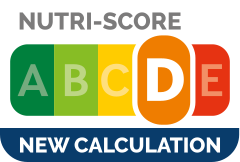 Lower nutritional quality
Nutri-Score data warning
Nutrient levels
Fat in low quantity (0%)
Sugars in high quantity (66.7%)
Salt in low quantity (0%)
Nutrition facts
| Nutrition facts | As sold for 100 g / 100 ml | Compared to: Confectioneries |
|---|---|---|
| Energy | 1046 kcal (250 kcal) | 1,789.083 kJ (424 kcal) |
| Fat | 0 g | 15.45 g (-100%) |
| Saturated fat | ? | 7.146 g |
| Carbohydrates | 83.33 g | 65.562 g (+27%) |
| Sugars | 66.67 g | 46.99 g (+42%) |
| Dietary fiber | ? | ? |
| Proteins | 0 g | 4.399 g (-100%) |
| Salt | 0 mg | 0.162 g (-100%) |
| Sodium | 0 mg | 0.065 g (-100%) |
| Fruits, vegetables and legumes | ? | ? |
Nutrition facts (Detailed data)
| Nutrition facts | As sold for 100 g / 100 ml | As sold Per serving (legacy) |
|---|---|---|
| Energy | 1046 kcal (250 kcal) | 62.8 kcal (15 kcal) |
| Fat | 0 g | 0 g |
| Saturated fat | ? | ? |
| Carbohydrates | 83.33 g | 5 g |
| Sugars | 66.67 g | 4 g |
| Dietary fiber | ? | ? |
| Proteins | 0 g | 0 g |
| Salt | 0 mg | 0 mg |
| Sodium | 0 mg | 0 mg |
| Fruits, vegetables and legumes | ? | ? |
Serving size
Ingredients
Ingredients list
Ingredient information
Added sugars
Allergens
Ingredients analysis
No ingredients containing palm oil.
Unrecognized: en:less-than-2-of
Vegan status unknown
Unrecognized: en:gum-base, en:less-than-2-of
Vegetarian status unknown
Unrecognized: en:gum-base, en:less-than-2-of
Food Processing
NOVA group
 Ultra-processed food and drink products
Elements that indicate the product is in NOVA group 4
How NOVA works
Additives
E129 - Allura red EFSA overexposure risk: noColour
Allura Red AC is a red azo dye that goes by several names, including FD&C Red 40. It is used as a food dye and has the E number E129. It is usually supplied as its red sodium salt, but can also be used as the calcium and potassium salts. These salts are soluble in water. In solution, its maximum absorbance lies at about 504 nm.
E321 - Butylated hydroxytolueneAntioxidant
Butylated hydroxytoluene (BHT), also known as dibutylhydroxytoluene, is a lipophilic organic compound, chemically a derivative of phenol, that is useful for its antioxidant properties. European and U.S. regulations allow small amounts to be used as a food additive. In addition to this use, BHT is widely used to prevent oxidation in fluids (e.g. fuel, oil) and other materials where free radicals must be controlled.
E322 - LecithinsAntioxidantEmulsifier
Lecithins are natural compounds commonly used in the food industry as emulsifiers and stabilizers.
Extracted from sources like soybeans and eggs, lecithins consist of phospholipids that enhance the mixing of oil and water, ensuring smooth textures in various products like chocolates, dressings, and baked goods.
They do not present any known health risks.
E322i - LecithinAntioxidantEmulsifier
Lecithins are natural compounds commonly used in the food industry as emulsifiers and stabilizers.
Extracted from sources like soybeans and eggs, lecithins consist of phospholipids that enhance the mixing of oil and water, ensuring smooth textures in various products like chocolates, dressings, and baked goods.
They do not present any known health risks.
E422 - GlycerolHumectantThickener
Glycerol (; also called glycerine or glycerin; see spelling differences) is a simple polyol compound. It is a colorless, odorless, viscous liquid that is sweet-tasting and non-toxic. The glycerol backbone is found in all lipids known as triglycerides. It is widely used in the food industry as a sweetener and humectant and in pharmaceutical formulations. Glycerol has three hydroxyl groups that are responsible for its solubility in water and its hygroscopic nature.
E951 - Aspartame EFSA overexposure risk: noSweetener
Aspartame (E951) is a low-calorie artificial sweetener composed of two amino acids.
It is used as a sugar substitute in thousands of "sugar-free" or "diet" products, such as carbonated soft drinks, chewing gum, yogurts, and tabletop sweeteners, to provide sweetness without the calories of sugar.
Despite being one of the most rigorously tested food additives, its safety remains controversial. While major regulatory bodies like the FDA and EFSA deem it safe for the general public, the IARC has classified it as "possibly carcinogenic to humans" (Group 2B). It must also be avoided by individuals with the genetic condition phenylketonuria (PKU).
E962 - Salt of aspartame-acesulfameSweetener
Aspartame-acesulfame salt is an artificial sweetener marketed under the name Twinsweet. It is produced by soaking a 2-1 mixture of aspartame and acesulfame potassium in an acidic solution and allowing it to crystallize; moisture and potassium are removed during this process. It is approximately 350 times as sweet as sucrose. It has been given the E number E962.
Environment
Green-Score, origins bonus, and transportation impact are shown for Worldwide .
Green Score
Overall grade
 Unknown environmental impact
About Green-Score
Current scope
Green-Score availability
Bonuses and maluses
Declared origins
Packaging impact
Packaging
Packaging impact
Data precision
Transportation
Declared origins
Data Source
Product data comes from Open Food Facts. Food Benchmark also adds translations, category comparisons and explanatory calculations.
The database is licensed under ODbL 1.0, individual contents under DbCL 1.0, and product photos under CC BY-SA 3.0.
Product added on March 9, 2017 at 2:59:02 PM UTC by usda-ndb-import .
Last edit on April 22, 2020 at 7:48:30 PM UTC by org-database-usda .
Product page also edited by org-database-usda, usda-ndb-import.
Source List
- usda-ndb
- database-usda