
Fudge Pops
Health
Nutrition
Nutri-Score
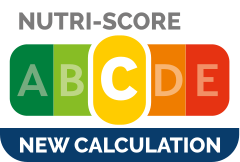 Average nutritional quality
Nutri-Score data warning
Nutrient levels
Fat in moderate quantity (6.25%)
Saturated fat in moderate quantity (3.12%)
Sugars in moderate quantity (12.5%)
Salt in low quantity (0.000387%)
Nutrition facts
| Nutrition facts | As sold for 100 g / 100 ml |
|---|---|
| Energy | 1380 kcal (331 kcal) |
| Fat | 6.25 g |
| Saturated fat | 3.12 g |
| Monounsaturated fat | 0 g |
| Polyunsaturated fat | 0 g |
| Omega 3 fat | 0 g |
| Omega 6 fat | 0 g |
| Trans fat | 0 g |
| Cholesterol | 0.03 mg |
| Carbohydrates | 56.2 g |
| Sugars | 12.5 g |
| Glucose | 0 g |
| Fructose | 0 g |
| Lactose | 0 g |
| Dietary fiber | 0 g |
| Proteins | 12.5 g |
| Salt | 0.000387 mg |
| Sodium | 0.000155 mg |
| Alcohol | 0 % vol |
| Vitamin A | 0 µg |
| Vitamin D | 0 µg |
| Vitamin E | 0 mg |
| Vitamin K | 0 µg |
| Vitamin C | 0 mg |
| Vitamin B1 | 0 mg |
| Vitamin B2 | 0 mg |
| Vitamin PP | 0 mg |
| Vitamin B6 | 0 mg |
| Vitamin B9 | 0 µg |
| Vitamin B12 | 0 µg |
| Pantothenic acid | 0 mg |
| Potassium | 0 mg |
| Calcium | 0.000375 mg |
| Phosphorus | 0 mg |
| Iron | 0 mg |
| Magnesium | 0 mg |
| Zinc | 0 mg |
| Copper | 0 mg |
| Manganese | 0 mg |
| Fluoride | 0 µg |
| Selenium | 0 µg |
| Iodine | 0 µg |
| Caffeine | 0 mg |
| Fruits, vegetables and legumes | ? |
Nutrition facts (Detailed data)
| Nutrition facts | As sold for 100 g / 100 ml | As sold Per serving (legacy) |
|---|---|---|
| Energy | 1380 kcal (331 kcal) | 554 kcal (132 kcal) |
| Fat | 6.25 g | 2.5 g |
| Saturated fat | 3.12 g | 1.25 g |
| Monounsaturated fat | 0 g | 0 g |
| Polyunsaturated fat | 0 g | 0 g |
| Omega 3 fat | 0 g | 0 g |
| Omega 6 fat | 0 g | 0 g |
| Trans fat | 0 g | 0 g |
| Cholesterol | 0.03 mg | 0.012 mg |
| Carbohydrates | 56.2 g | 22.5 g |
| Sugars | 12.5 g | 5 g |
| Glucose | 0 g | 0 g |
| Fructose | 0 g | 0 g |
| Lactose | 0 g | 0 g |
| Dietary fiber | 0 g | 0 g |
| Proteins | 12.5 g | 5 g |
| Salt | 0.000387 mg | 0.000155 mg |
| Sodium | 0.000155 mg | 0.000062 mg |
| Alcohol | 0 % vol | 0 % vol |
| Vitamin A | 0 µg | 0 µg |
| Vitamin D | 0 µg | 0 µg |
| Vitamin E | 0 mg | 0 mg |
| Vitamin K | 0 µg | 0 µg |
| Vitamin C | 0 mg | 0 mg |
| Vitamin B1 | 0 mg | 0 mg |
| Vitamin B2 | 0 mg | 0 mg |
| Vitamin PP | 0 mg | 0 mg |
| Vitamin B6 | 0 mg | 0 mg |
| Vitamin B9 | 0 µg | 0 µg |
| Vitamin B12 | 0 µg | 0 µg |
| Pantothenic acid | 0 mg | 0 mg |
| Potassium | 0 mg | 0 mg |
| Calcium | 0.000375 mg | 0.00015 mg |
| Phosphorus | 0 mg | 0 mg |
| Iron | 0 mg | 0 mg |
| Magnesium | 0 mg | 0 mg |
| Zinc | 0 mg | 0 mg |
| Copper | 0 mg | 0 mg |
| Manganese | 0 mg | 0 mg |
| Fluoride | 0 µg | 0 µg |
| Selenium | 0 µg | 0 µg |
| Iodine | 0 µg | 0 µg |
| Caffeine | 0 mg | 0 mg |
| Fruits, vegetables and legumes | ? | ? |
Serving size
Ingredients
Ingredients list
Ingredient information
Allergens
Ingredients analysis
Palm oil content unknown
Contains non-vegan ingredients.
Vegetarian status unknown
Food Processing
NOVA group
 Ultra-processed food and drink products
Elements that indicate the product is in NOVA group 4
How NOVA works
Additives
E1200 - PolydextroseHumectantStabiliserThickener
Polydextrose is a synthetic polymer of glucose. It is a food ingredient classified as soluble fiber by the U.S. Food and Drug Administration (FDA) as well as Health Canada, as of April 2013. It is frequently used to increase the dietary fiber content of food, to replace sugar, and to reduce calories and fat content. It is a multi-purpose food ingredient synthesized from dextrose (glucose), plus about 10 percent sorbitol and 1 percent citric acid. Its E number is E1200. The FDA approved it in 1981. It is 0.1 times as sweet as sugar.
E407 - Carrageenan EFSA overexposure risk: highCarrierEmulsifierHumectantStabiliserThickener
Carrageenan (E407), derived from red seaweed, is widely employed in the food industry as a gelling, thickening, and stabilizing agent, notably in dairy and meat products.
It can exist in various forms, each imparting distinct textural properties to food.
However, its degraded form, often referred to as poligeenan, has raised health concerns due to its potential inflammatory effects and its classification as a possible human carcinogen (Group 2B) by the International Agency for Research on Cancer (IARC).
Nevertheless, food-grade carrageenan has been deemed safe by various regulatory bodies when consumed in amounts typically found in food.
E410 - Locust bean gumEmulsifierStabiliserThickener
Locust bean gum (LBG, also known as carob gum, carob bean gum, carobin, E410) is a thickening agent and a gelling agent used in food technology.
E412 - Guar gumEmulsifierStabiliserThickener
Guar gum (E412) is a natural food additive derived from guar beans.
This white, odorless powder is valued for its remarkable thickening and stabilizing properties, making it a common ingredient in various food products, including sauces, dressings, and ice creams.
When used in moderation, guar gum is considered safe for consumption, with no known adverse health effects.
E471 - Mono- and diglycerides of fatty acidsEmulsifierStabiliser
Mono- and diglycerides of fatty acids (E471), are food additives commonly used as emulsifiers in various processed foods.
These compounds consist of glycerol molecules linked to one or two fatty acid chains, which help stabilize and blend water and oil-based ingredients. E471 enhances the texture and shelf life of products like margarine, baked goods, and ice cream, ensuring a smooth and consistent texture.
It is generally considered safe for consumption within established regulatory limits.
E951 - Aspartame EFSA overexposure risk: noSweetener
Aspartame (E951) is a low-calorie artificial sweetener composed of two amino acids.
It is used as a sugar substitute in thousands of "sugar-free" or "diet" products, such as carbonated soft drinks, chewing gum, yogurts, and tabletop sweeteners, to provide sweetness without the calories of sugar.
Despite being one of the most rigorously tested food additives, its safety remains controversial. While major regulatory bodies like the FDA and EFSA deem it safe for the general public, the IARC has classified it as "possibly carcinogenic to humans" (Group 2B). It must also be avoided by individuals with the genetic condition phenylketonuria (PKU).
Environment
Green-Score, origins bonus, and transportation impact are shown for Worldwide .
Green Score
Overall grade
 Unknown environmental impact
About Green-Score
Current scope
Green-Score availability
Bonuses and maluses
Declared origins
Packaging impact
Packaging
Packaging impact
Data precision
Transportation
Declared origins
Data Source
Product data comes from Open Food Facts. Food Benchmark also adds translations, category comparisons and explanatory calculations.
The database is licensed under ODbL 1.0, individual contents under DbCL 1.0, and product photos under CC BY-SA 3.0.
Product added on March 9, 2017 at 11:45:46 AM UTC by usda-ndb-import .
Product page also edited by openfoodfacts-contributors, usda-ndb-import.
Source List