
Shoprite, fork split english muffins, original
Health
Nutrition
Nutri-Score
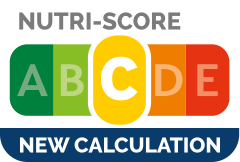 Average nutritional quality
Nutri-Score data warning
Nutrient levels
Fat in low quantity (1.75%)
Saturated fat in low quantity (0%)
Sugars in low quantity (1.75%)
Salt in moderate quantity (1.14%)
Nutrition facts
| Nutrition facts | As sold for 100 g / 100 ml | Compared to: Breads |
|---|---|---|
| Energy | ~ 1033.53 kJ (246 kcal) | 1,245.834 kJ (294 kcal) (-17%) |
| Fat | 1.75 g | 5.13 g (-66%) |
| Saturated fat | 0 g | 0.904 g (-100%) |
| Monounsaturated fat | 0 g | 1.195 g (-100%) |
| Polyunsaturated fat | 0 g | 1.39 g (-100%) |
| Trans fat | 0 g | 0 g |
| Cholesterol | 0 g | 1.312 mg (-100%) |
| Carbohydrates | 49.12 g | 50.553 g (-3%) |
| Sugars | 1.75 g | 3.59 g (-51%) |
| Dietary fiber | 1.8 g | ? |
| Proteins | 7.02 g | 9.282 g (-24%) |
| Salt | 1.14 g | 1.224 g (-7%) |
| Sodium | 0.456 g | 0.489 g (-7%) |
| Vitamin A | 0 g | 2.549 µg (-100%) |
| Vitamin C | 0 g | ? |
| Vitamin PP | 0.003509 g | ? |
| Potassium | 0.158 g | 216.151 mg (-27%) |
| Calcium | 0.263 g | 54.64 mg (+381%) |
| Iron | 0.00316 g | 2.196 mg (+44%) |
| Fruits, vegetables and legumes | ~ 0 % | ? |
Nutrition facts (Detailed data)
| Nutrition facts | As sold for 100 g / 100 ml | As sold Per 100 g (packaging) | As sold Per 100 g (estimate) |
|---|---|---|---|
| Energy | ~ 1033.53 kJ (246 kcal) | ? (246 kcal) | ? |
| Fat | 1.75 g | 1.75 g | ? |
| Saturated fat | 0 g | 0 g | ? |
| Monounsaturated fat | 0 g | 0 g | ? |
| Polyunsaturated fat | 0 g | 0 g | ? |
| Trans fat | 0 g | 0 g | ? |
| Cholesterol | 0 g | 0 g | ? |
| Carbohydrates | 49.12 g | 49.12 g | ? |
| Sugars | 1.75 g | 1.75 g | ? |
| Dietary fiber | 1.8 g | 1.8 g | ? |
| Proteins | 7.02 g | 7.02 g | ? |
| Salt | 1.14 g | 1.14 g | ? |
| Sodium | 0.456 g | 0.456 g | ? |
| Vitamin A | 0 g | 0 g | ? |
| Vitamin C | 0 g | 0 g | ? |
| Vitamin PP | 0.003509 g | 0.003509 g | ? |
| Potassium | 0.158 g | 0.158 g | ? |
| Calcium | 0.263 g | 0.263 g | ? |
| Iron | 0.00316 g | 0.00316 g | ? |
| Fruits, vegetables and legumes | ~ 0 % | ? | ~ 0 % |
Serving size
Ingredients
Ingredients list
Ingredient information
Added sugars
Allergens
Ingredients analysis
Palm oil content unknown
Vegan status unknown
Unrecognized: en:reduced-iron, en:degerminated-yellow-corn-flour, en:reduced-iron, en:degerminated-yellow-corn-meal
Vegetarian status unknown
Unrecognized: en:reduced-iron, en:degerminated-yellow-corn-flour, en:reduced-iron, en:degerminated-yellow-corn-meal
Food Processing
NOVA group
 Ultra-processed food and drink products
Elements that indicate the product is in NOVA group 4
How NOVA works
Additives
E481 - Sodium stearoyl-2-lactylate EFSA overexposure risk: highEmulsifierStabiliser
Sodium stearoyl-2-lactylate (sodium stearoyl lactylate or SSL) is a versatile, FDA approved food additive used to improve the mix tolerance and volume of processed foods. It is one type of a commercially available lactylate. SSL is non-toxic, biodegradable, and typically manufactured using biorenewable feedstocks. Because SSL is a safe and highly effective food additive, it is used in a wide variety of products ranging from baked goods and desserts to pet foods.As described by the Food Chemicals Codex 7th edition, SSL is a cream-colored powder or brittle solid. SSL is currently manufactured by the esterification of stearic acid with lactic acid and partially neutralized with either food-grade soda ash (sodium carbonate) or caustic soda (concentrated sodium hydroxide). Commercial grade SSL is a mixture of sodium salts of stearoyl lactylic acids and minor proportions of other sodium salts of related acids. The HLB for SSL is 10-12. SSL is slightly hygroscopic, soluble in ethanol and in hot oil or fat, and dispersible in warm water. These properties are the reason that SSL is an excellent emulsifier for fat-in-water emulsions and can also function as a humectant.
E905 - Synthetic wax
Microcrystalline waxes are a type of wax produced by de-oiling petrolatum, as part of the petroleum refining process. In contrast to the more familiar paraffin wax which contains mostly unbranched alkanes, microcrystalline wax contains a higher percentage of isoparaffinic (branched) hydrocarbons and naphthenic hydrocarbons. It is characterized by the fineness of its crystals in contrast to the larger crystal of paraffin wax. It consists of high molecular weight saturated aliphatic hydrocarbons. It is generally darker, more viscous, denser, tackier and more elastic than paraffin waxes, and has a higher molecular weight and melting point. The elastic and adhesive characteristics of microcrystalline waxes are related to the non-straight chain components which they contain. Typical microcrystalline wax crystal structure is small and thin, making them more flexible than paraffin wax. It is commonly used in cosmetic formulations. Microcrystalline waxes when produced by wax refiners are typically produced to meet a number of ASTM specifications. These include congeal point (ASTM D938), needle penetration (D1321), color (ASTM D6045), and viscosity (ASTM D445). Microcrystalline waxes can generally be put into two categories: "laminating" grades and "hardening" grades. The laminating grades typically have a melt point of 140-175 F (60 - 80 oC) and needle penetration of 25 or above. The hardening grades will range from about 175-200 F (80 - 93 oC), and have a needle penetration of 25 or below. Color in both grades can range from brown to white, depending on the degree of processing done at the refinery level. Microcrystalline waxes are derived from the refining of the heavy distillates from lubricant oil production. This by-product must then be de-oiled at a wax refinery. Depending on the end use and desired specification, the product may then have its odor removed and color removed (which typically starts as a brown or dark yellow). This is usually done by means of a filtration method or by hydro-treating the wax material.
E905a - mineral oil
Microcrystalline waxes are a type of wax produced by de-oiling petrolatum, as part of the petroleum refining process. In contrast to the more familiar paraffin wax which contains mostly unbranched alkanes, microcrystalline wax contains a higher percentage of isoparaffinic (branched) hydrocarbons and naphthenic hydrocarbons. It is characterized by the fineness of its crystals in contrast to the larger crystal of paraffin wax. It consists of high molecular weight saturated aliphatic hydrocarbons. It is generally darker, more viscous, denser, tackier and more elastic than paraffin waxes, and has a higher molecular weight and melting point. The elastic and adhesive characteristics of microcrystalline waxes are related to the non-straight chain components which they contain. Typical microcrystalline wax crystal structure is small and thin, making them more flexible than paraffin wax. It is commonly used in cosmetic formulations. Microcrystalline waxes when produced by wax refiners are typically produced to meet a number of ASTM specifications. These include congeal point (ASTM D938), needle penetration (D1321), color (ASTM D6045), and viscosity (ASTM D445). Microcrystalline waxes can generally be put into two categories: "laminating" grades and "hardening" grades. The laminating grades typically have a melt point of 140-175 F (60 - 80 oC) and needle penetration of 25 or above. The hardening grades will range from about 175-200 F (80 - 93 oC), and have a needle penetration of 25 or below. Color in both grades can range from brown to white, depending on the degree of processing done at the refinery level. Microcrystalline waxes are derived from the refining of the heavy distillates from lubricant oil production. This by-product must then be de-oiled at a wax refinery. Depending on the end use and desired specification, the product may then have its odor removed and color removed (which typically starts as a brown or dark yellow). This is usually done by means of a filtration method or by hydro-treating the wax material.
Environment
Green-Score, origins bonus, and transportation impact are shown for Worldwide .
Green Score
Overall grade
 Unknown environmental impact
About Green-Score
Current scope
Green-Score availability
Bonuses and maluses
Declared origins
Packaging impact
Packaging
Packaging impact
Data precision
Transportation
Declared origins
Data Source
Product data comes from Open Food Facts. Food Benchmark also adds translations, category comparisons and explanatory calculations.
The database is licensed under ODbL 1.0, individual contents under DbCL 1.0, and product photos under CC BY-SA 3.0.
Product added on March 9, 2017 at 9:44:45 AM UTC by usda-ndb-import .
Last edit on February 26, 2026 at 6:33:24 PM UTC by new-nutrition-bot .
Product page also edited by new-nutrition-bot, org-database-usda, usda-ndb-import.
Source List
- usda-ndb
- database-usda