

White Corn Tortillas
Health
Nutrition
Nutri-Score
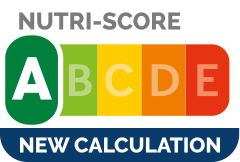 Very good nutritional quality
Nutri-Score data warning
Nutrient levels
Fat in low quantity (1.92%)
Saturated fat in low quantity (0%)
Sugars in low quantity (0%)
Salt in low quantity (0.024%)
Nutrition label

Nutrition facts
| Nutrition facts | As sold for 100 g / 100 ml | Compared to: Plant-based foods |
|---|---|---|
| Energy | ~ 788.461538461538 kJ (173 kcal) | 1,190.166 kJ (284 kcal) (-34%) |
| Fat | 1.92307692307692 g | 10.723 g (-82%) |
| Saturated fat | 0 g | 1.996 g (-100%) |
| Trans fat | 0 g | 0.000002 g (-100%) |
| Cholesterol | 0 g | 0.191 mg (-100%) |
| Carbohydrates | 36.5384615384615 g | 33.069 g (+10%) |
| Sugars | 0 g | 6.928 g (-100%) |
| Added sugars | 0 g | 2.055 g (-100%) |
| Dietary fiber | 3.84615384615385 g | ? |
| Proteins | 3.84615384615385 g | 6.505 g (-41%) |
| Salt | ~ 0.0240384615384615 g | 0.556 g (-96%) |
| Sodium | 0.00961538461538462 g | 0.222 g (-96%) |
| Vitamin D | 0 g | 0.045 µg (-100%) |
| Potassium | 0.146153846153846 g | 296.506 mg (-51%) |
| Calcium | 0.00576923076923077 g | 44.182 mg (-87%) |
| Iron | 0.00192307692307692 g | 1.687 mg (+14%) |
| Fruits, vegetables and legumes | ~ 0 % | ? |
| Carbohydrates total | 36.5384615384615 g | ? |
Nutrition facts (Detailed data)
| Nutrition facts | As sold for 100 g / 100 ml | As sold Per serving (52 g) (packaging) | As sold Per 100 g (estimate) |
|---|---|---|---|
| Energy | ~ 788.461538461538 kJ (173 kcal) | ? (90 kcal) | ? |
| Fat | 1.92307692307692 g | 1 g | ? |
| Saturated fat | 0 g | 0 g | ? |
| Trans fat | 0 g | 0 g | ? |
| Cholesterol | 0 g | 0 mg | ? |
| Carbohydrates | 36.5384615384615 g | 19 g | ? |
| Sugars | 0 g | 0 g | ? |
| Added sugars | 0 g | 0 g | ~ 0 g |
| Dietary fiber | 3.84615384615385 g | 2 g | ? |
| Proteins | 3.84615384615385 g | 2 g | ? |
| Salt | ~ 0.0240384615384615 g | ? | ? |
| Sodium | 0.00961538461538462 g | 5 mg | ? |
| Vitamin D | 0 g | 0 µg | ? |
| Potassium | 0.146153846153846 g | 76 mg | ? |
| Calcium | 0.00576923076923077 g | 3 mg | ? |
| Iron | 0.00192307692307692 g | 1 mg | ? |
| Fruits, vegetables and legumes | ~ 0 % | ? | ~ 0 % |
| Carbohydrates total | 36.5384615384615 g | 19 g | ? |
Serving size
Ingredients
Ingredients image

Ingredients list
Ingredient information
Ingredients analysis
No ingredients containing palm oil.
Vegan status unknown
Vegetarian status unknown
Food Processing
NOVA group
 Ultra-processed food and drink products
Elements that indicate the product is in NOVA group 4
How NOVA works
Additives
E200 - Sorbic acid EFSA overexposure risk: highPreservative
SORBIC ACID, or 2,4-hexadienoic acid, is a natural organic compound used as a food preservative. It has the chemical formula CH3(CH)4CO2H.
E210 - Benzoic acid EFSA overexposure risk: highPreservative
Benzoic acid , C7H6O2 (or C6H5COOH), is a colorless crystalline solid and a simple aromatic carboxylic acid. The name is derived from gum benzoin, which was for a long time its only known source. Benzoic acid occurs naturally in many plants and serves as an intermediate in the biosynthesis of many secondary metabolites. Salts of benzoic acid are used as food preservatives and benzoic acid is an important precursor for the industrial synthesis of many other organic substances. The salts and esters of benzoic acid are known as benzoates .
E280 - Propionic acidPreservative
Propionic acid (from the Greek words protos, meaning "first", and pion, meaning "fat"; also known as propanoic acid) is a naturally occurring carboxylic acid with chemical formula CH3CH2CO2H. It is a liquid with a pungent and unpleasant smell somewhat resembling body odor. The anion CH3CH2CO2− as well as the salts and esters of propionic acid are known as propionates (or propanoates).
E297 - Fumaric acid
Fumaric acid or trans-butenedioic acid is the chemical compound with the formula HO2CCH=CHCO2H. It is produced in eukaryotic organisms from succinate in complex 2 of the electron transport chain via the enzyme succinate dehydrogenase. It is one of two isomeric unsaturated dicarboxylic acids, the other being maleic acid. In fumaric acid the carboxylic acid groups are trans (E) and in maleic acid they are cis (Z). Fumaric acid has a fruit-like taste. The salts and esters are known as fumarates. Fumarate can also refer to the C4H2O2−4 ion (in solution).
E415 - Xanthan gumEmulsifierStabiliserThickener
Xanthan gum (E415) is a natural polysaccharide derived from fermented sugars, often used in the food industry as a thickening and stabilizing agent.
This versatile food additive enhances texture and prevents ingredient separation in a wide range of products, including salad dressings, sauces, and gluten-free baked goods.
It is considered safe for consumption even at high intake amounts.
E422 - GlycerolHumectantThickener
Glycerol (; also called glycerine or glycerin; see spelling differences) is a simple polyol compound. It is a colorless, odorless, viscous liquid that is sweet-tasting and non-toxic. The glycerol backbone is found in all lipids known as triglycerides. It is widely used in the food industry as a sweetener and humectant and in pharmaceutical formulations. Glycerol has three hydroxyl groups that are responsible for its solubility in water and its hygroscopic nature.
E524 - Sodium hydroxide
Sodium hydroxide, also known as lye and caustic soda, is an inorganic compound with the formula NaOH. It is a white solid ionic compound consisting of sodium cations Na+ and hydroxide anions OH−. Sodium hydroxide is a highly caustic base and alkali that decomposes proteins at ordinary ambient temperatures and may cause severe chemical burns. It is highly soluble in water, and readily absorbs moisture and carbon dioxide from the air. It forms a series of hydrates NaOH·nH2O. The monohydrate NaOH·H2O crystallizes from water solutions between 12.3 and 61.8 °C. The commercially available "sodium hydroxide" is often this monohydrate, and published data may refer to it instead of the anhydrous compound. As one of the simplest hydroxides, it is frequently utilized alongside neutral water and acidic hydrochloric acid to demonstrate the pH scale to chemistry students.Sodium hydroxide is used in many industries: in the manufacture of pulp and paper, textiles, drinking water, soaps and detergents, and as a drain cleaner. Worldwide production in 2004 was approximately 60 million tonnes, while demand was 51 million tonnes.
Environment
Green-Score, origins bonus, and transportation impact are shown for Worldwide .
Green Score
Overall grade
 Unknown environmental impact
About Green-Score
Current scope
Green-Score availability
Bonuses and maluses
Declared origins
Packaging impact
Packaging
Packaging impact
Data precision
Transportation
Declared origins
Data Source
Product data comes from Open Food Facts. Food Benchmark also adds translations, category comparisons and explanatory calculations.
The database is licensed under ODbL 1.0, individual contents under DbCL 1.0, and product photos under CC BY-SA 3.0.
Product added on March 9, 2017 at 9:12:36 PM UTC by usda-ndb-import .
Last edit on May 19, 2026 at 9:39:46 PM UTC by zlima12 .
Product page also edited by foodless, hungergames, kiliweb, macrofactor, municorn-calorie-counter-app, new-nutrition-bot, openfoodfacts-contributors, org-database-usda, usda-ndb-import, yuka.sY2b0xO6T85zoF3NwEKvlmlBc-j7_Q_BCz_lglCO4_6pN7vVXIF3vbD4Pas, zlima12.
Source List
- usda-ndb
- database-usda