

Santa Fe Style Salad
Health
Nutrition
Nutri-Score
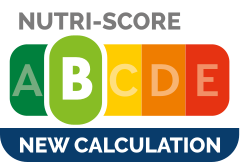 Good nutritional quality
Nutri-Score data warning
Nutrient levels
Fat in moderate quantity (10.2%)
Saturated fat in moderate quantity (2.54%)
Sugars in low quantity (2.26%)
Salt in moderate quantity (0.636%)
Nutrition label

Nutrition facts
| Nutrition facts | As sold for 100 g / 100 ml |
|---|---|
| Energy | ~ 629.943502824859 kJ (152 kcal) |
| Fat | 10.1694915254237 g |
| Saturated fat | 2.54237288135593 g |
| Trans fat | 0 g |
| Cholesterol | 0.019774011299435 g |
| Carbohydrates | 7.90960451977401 g |
| Sugars | 2.25988700564972 g |
| Added sugars | 0.564971751412429 g |
| Starch | 0 g |
| Dietary fiber | 1.69491525423729 g |
| Proteins | 6.21468926553672 g |
| Salt | 0.635593220338983 g |
| Sodium | 0.254237288135593 g |
| Fruits, vegetables and legumes | ~ 64.0795557449261 % |
| Choline | 0 g |
Nutrition facts (Detailed data)
| Nutrition facts | As sold for 100 g / 100 ml | As sold Per 100 g (packaging) | As sold Per serving (177 g) (packaging) | As sold Per 100 g (estimate) |
|---|---|---|---|---|
| Energy | ~ 629.943502824859 kJ (152 kcal) | ? (152 kcal) | ? (270 kcal) | ? |
| Fat | 10.1694915254237 g | ? | 18 g | ? |
| Saturated fat | 2.54237288135593 g | ? | 4.5 g | ? |
| Trans fat | 0 g | ? | 0 g | ? |
| Cholesterol | 0.019774011299435 g | ? | 0.035 g | ? |
| Carbohydrates | 7.90960451977401 g | ? | 14 g | ? |
| Sugars | 2.25988700564972 g | ? | 4 g | ? |
| Added sugars | 0.564971751412429 g | 0.564971751412429 g | 1 g | ~ 0.247324506441751 g |
| Starch | 0 g | ? | 0 g | ? |
| Dietary fiber | 1.69491525423729 g | ? | 3 g | ? |
| Proteins | 6.21468926553672 g | ? | 11 g | ? |
| Salt | 0.635593220338983 g | ? | 1.125 g | ? |
| Sodium | 0.254237288135593 g | ? | 0.45 g | ? |
| Fruits, vegetables and legumes | ~ 64.0795557449261 % | ? | ? | ~ 64.0795557449261 % |
| Choline | 0 g | ? | 0 g | ? |
Serving size
Ingredients
Ingredients list
Ingredient information
Added sugars
Allergens
Ingredients analysis
No ingredients containing palm oil.
Contains non-vegan ingredients.
Unrecognized: en:carrageenan-gum, en:mustard, en:chicken-breast-with-rib-meat, en:mesquite-smoke-flavor, en:asadero, en:vegetable-pigment, en:mold-inhibitor, en:stone-ground-white-corn, en:e339ii, en:trace-of-lime
Vegetarian status unknown
Unrecognized: en:carrageenan-gum, en:mustard, en:chicken-breast-with-rib-meat, en:mesquite-smoke-flavor, en:asadero, en:vegetable-pigment, en:mold-inhibitor, en:stone-ground-white-corn, en:e339ii, en:trace-of-lime
Food Processing
NOVA group
 Ultra-processed food and drink products
Elements that indicate the product is in NOVA group 4
How NOVA works
Additives
E160b - AnnattoColour
No additive description is available yet.
E235 - NatamycinPreservative
NATAMYCIN is used in the food industry as a preservative.
E262 - Sodium acetatesPreservativeSequestrant
SODIUM ACETATE, also abbreviated NaOAc,[8] is the sodium salt of acetic acid.
E262ii - Sodium diacetatePreservativeSequestrant
No additive description is available yet.
E270 - Lactic acid
LACTIC ACID is an organic compound with the formula CH3CH(OH)CO2H. In the form of its conjugate base called lactate (this is thus different and kept as a separate ingredient). Lactic acid is chiral, consisting of two optical isomers. One is known as L-(+)-lactic acid or (S)-lactic acid and the other, its mirror image, is D-(−)-lactic acid or (R)-lactic acid in food the L-variant is used
E326 - potassium lactateAntioxidantEmulsifierHumectant
POTASSIUM LACTATE is a compound with formula KC3H5O3. It is produced by neutralizing lactic acid which is fermented from a sugar source. Potassium lactate is commonly used in meat and poultry products to extend shelf life and increase food safety as it has a broad antimicrobial action. lactic acid and lactates can be consumed by all religious groups, vegans and vegetarians. Although the name refers to milk, it is not made from milk and thus suitable for people with milk allergy or lactose intolerance.
E330 - Citric acidAntioxidantSequestrant
Citric acid is a natural organic acid found in citrus fruits such as lemons, oranges, and limes.
It is widely used in the food industry as a flavor enhancer, acidulant, and preservative due to its tart and refreshing taste.
Citric acid is safe for consumption when used in moderation and is considered a generally recognized as safe (GRAS) food additive by regulatory agencies worldwide.
E339ii - Disodium phosphateEmulsifierHumectantPreservativeSequestrantStabiliserThickener
No additive description is available yet.
E410 - Locust bean gumEmulsifierStabiliserThickener
Locust bean gum (LBG, also known as carob gum, carob bean gum, carobin, E410) is a thickening agent and a gelling agent used in food technology.
E412 - Guar gumEmulsifierStabiliserThickener
Guar gum (E412) is a natural food additive derived from guar beans.
This white, odorless powder is valued for its remarkable thickening and stabilizing properties, making it a common ingredient in various food products, including sauces, dressings, and ice creams.
When used in moderation, guar gum is considered safe for consumption, with no known adverse health effects.
E414 - Acacia gumCarrierEmulsifierStabiliserThickener
Gum arabic, also known as acacia gum, arabic gum, gum acacia, acacia, Senegal gum and Indian gum, and by other names, is a natural gum consisting of the hardened sap of various species of the acacia tree. Originally, gum arabic was collected from Acacia nilotica which was called the "gum arabic tree"; in the present day, gum arabic is collected from acacia species, predominantly Acacia senegal and Vachellia (Acacia) seyal; the term "gum arabic" does not indicate a particular botanical source. In a few cases so‐called "gum arabic" may not even have been collected from Acacia species, but may originate from Combretum, Albizia or some other genus. Producers harvest the gum commercially from wild trees, mostly in Sudan (80%) and throughout the Sahel, from Senegal to Somalia—though it is historically cultivated in Arabia and West Asia. Gum arabic is a complex mixture of glycoproteins and polysaccharides. It is the original source of the sugars arabinose and ribose, both of which were first discovered and isolated from it, and are named after it. Gum arabic is soluble in water. It is edible, and used primarily in the food industry as a stabilizer, with EU E number E414. Gum arabic is a key ingredient in traditional lithography and is used in printing, paint production, glue, cosmetics and various industrial applications, including viscosity control in inks and in textile industries, though less expensive materials compete with it for many of these roles. While gum arabic is now produced throughout the African Sahel, it is still harvested and used in the Middle East.
E415 - Xanthan gumEmulsifierStabiliserThickener
Xanthan gum (E415) is a natural polysaccharide derived from fermented sugars, often used in the food industry as a thickening and stabilizing agent.
This versatile food additive enhances texture and prevents ingredient separation in a wide range of products, including salad dressings, sauces, and gluten-free baked goods.
It is considered safe for consumption even at high intake amounts.
E460 - CelluloseCarrierEmulsifierHumectantStabiliserThickener
CELLULOSE is an organic compound with the formula (C6H10O5)n, a polysaccharide consisting of a linear chain of several hundred to many thousands of linked D-glucose units. Cellulose is used as emulsifier, thickener and stabilizer in processed foods. Cellulose powder is, for example, used in processed cheese to prevent caking inside the package.
E460ii - Powdered celluloseCarrierEmulsifierHumectantStabiliserThickener
No additive description is available yet.
E551 - Silicon dioxideCarrier
Silicon dioxide, also known as silica, silicic acid or silicic acid anydride is an oxide of silicon with the chemical formula SiO2, most commonly found in nature as quartz and in various living organisms. In many parts of the world, silica is the major constituent of sand. Silica is one of the most complex and most abundant families of materials, existing as a compound of several minerals and as synthetic product. Notable examples include fused quartz, fumed silica, silica gel, and aerogels. It is used in structural materials, microelectronics (as an electrical insulator), and as components in the food and pharmaceutical industries. Inhaling finely divided crystalline silica is toxic and can lead to severe inflammation of the lung tissue, silicosis, bronchitis, lung cancer, and systemic autoimmune diseases, such as lupus and rheumatoid arthritis. Uptake of amorphous silicon dioxide, in high doses, leads to non-permanent short-term inflammation, where all effects heal.
E627 - Disodium guanylate
Disodium guanylate, also known as sodium 5'-guanylate and disodium 5'-guanylate, is a natural sodium salt of the flavor enhancing nucleotide guanosine monophosphate (GMP). Disodium guanylate is a food additive with the E number E627. It is commonly used in conjunction with glutamic acid. As it is a fairly expensive additive, it is not used independently of glutamic acid; if disodium guanylate is present in a list of ingredients but MSG does not appear to be, it is likely that glutamic acid is provided as part of another ingredient such as a processed soy protein complex. It is often added to foods in conjunction with disodium inosinate; the combination is known as disodium 5'-ribonucleotides. Disodium guanylate is produced from dried seaweed and is often added to instant noodles, potato chips and other snacks, savory rice, tinned vegetables, cured meats, and packaged soup.
E631 - Disodium inosinate
Disodium inosinate (E631) is the disodium salt of inosinic acid with the chemical formula C10H11N4Na2O8P. It is used as a food additive and often found in instant noodles, potato chips, and a variety of other snacks. Although it can be obtained from bacterial fermentation of sugars, it is often commercially prepared from animal sources.
Environment
Green-Score, origins bonus, and transportation impact are shown for Worldwide .
Green Score
Overall grade
 Unknown environmental impact
About Green-Score
Current scope
Green-Score availability
Bonuses and maluses
Declared origins
Packaging impact
Packaging
Packaging impact
Data precision
Transportation
Declared origins
Forest footprint
Forest footprint
Ingredients linked to forest pressure
| Ingredient | Type | Percent in product | Forest footprint |
|---|---|---|---|
| EGG Yolk | Oeufs Importés | 0.01 % | 0.00 |
Data Source
Product data comes from Open Food Facts. Food Benchmark also adds translations, category comparisons and explanatory calculations.
The database is licensed under ODbL 1.0, individual contents under DbCL 1.0, and product photos under CC BY-SA 3.0.
Product added on March 9, 2017 at 1:07:42 PM UTC by usda-ndb-import .
Last edit on May 10, 2026 at 4:39:23 AM UTC by municorn-calorie-counter-app .
Product page also edited by macrofactor, municorn-calorie-counter-app, org-database-usda, usda-ndb-import.
Source List
- usda-ndb
- database-usda