
Roundy's, select, carolina barbeque sauce
Health
Nutrition
Nutri-Score
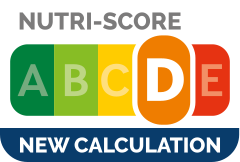 Lower nutritional quality
Nutri-Score data warning
Nutrient levels
Fat in low quantity (0%)
Saturated fat in low quantity (0%)
Sugars in high quantity (34.4%)
Salt in moderate quantity (0.703%)
Nutrition facts
| Nutrition facts | As sold for 100 g / 100 ml | Compared to: Barbecue sauces |
|---|---|---|
| Energy | 653 kcal (156 kcal) | 632.071 kJ (151 kcal) |
| Fat | 0 g | 0.667 g (-100%) |
| Saturated fat | 0 g | 0.121 g (-100%) |
| Trans fat | 0 g | 0 g |
| Cholesterol | 0 mg | 0.000015 mg (-100%) |
| Carbohydrates | 37.5 g | 32.139 g (+17%) |
| Sugars | 34.38 g | 26.731 g (+29%) |
| Dietary fiber | 0 g | ? |
| Proteins | 0 g | 1.026 g (-100%) |
| Salt | 0.7025 mg | 2.019 g (-100%) |
| Sodium | 0.281 mg | 0.805 g (-100%) |
| Vitamin A | 0 IU | 0.888 µg |
| Vitamin C | 0.0075 mg | ? |
| Calcium | 0 mg | 20.442 mg (-100%) |
| Iron | 0 mg | 0.5 mg (-100%) |
| Fruits, vegetables and legumes | ? | ? |
Nutrition facts (Detailed data)
| Nutrition facts | As sold for 100 g / 100 ml | As sold Per serving (legacy) |
|---|---|---|
| Energy | 653 kcal (156 kcal) | 209 kcal (49 kcal) |
| Fat | 0 g | 0 g |
| Saturated fat | 0 g | 0 g |
| Trans fat | 0 g | 0 g |
| Cholesterol | 0 mg | 0 mg |
| Carbohydrates | 37.5 g | 12 g |
| Sugars | 34.38 g | 11 g |
| Dietary fiber | 0 g | 0 g |
| Proteins | 0 g | 0 g |
| Salt | 0.7025 mg | 0.225 mg |
| Sodium | 0.281 mg | 0.0899 mg |
| Vitamin A | 0 IU | 0 IU |
| Vitamin C | 0.0075 mg | 0.0024 mg |
| Calcium | 0 mg | 0 mg |
| Iron | 0 mg | 0 mg |
| Fruits, vegetables and legumes | ? | ? |
Serving size
Ingredients
Ingredients list
Ingredient information
Added sugars
Allergens
Ingredients analysis
Palm oil content unknown
Contains non-vegan ingredients.
Unrecognized: en:mustard, en:worcestershire-sauce-base, en:spice-blend, en:carmel-color, en:gum-tragacanth-natural-flavors, en:catsup-seasoning
Vegetarian status unknown
Unrecognized: en:mustard, en:worcestershire-sauce-base, en:spice-blend, en:carmel-color, en:gum-tragacanth-natural-flavors, en:catsup-seasoning
Food Processing
NOVA group
 Ultra-processed food and drink products
Elements that indicate the product is in NOVA group 4
How NOVA works
Additives
E1520 - Propylene Glycol EFSA overexposure risk: noEmulsifierHumectant
No additive description is available yet.
E211 - Sodium benzoate EFSA overexposure risk: highPreservative
SODIUM BENZOATE is a substance which has the chemical formula NaC7H5O2
E324 - Ethoxyquin
Ethoxyquin is a quinoline-based antioxidant used as a food preservative in certain countries and originally to control scald on pears after harvest (under commercial names such as "Stop-Scald"). It is used as a preservative in some pet foods to slow the development of rancidity of fats. Ethoxyquin is also used in some spices to prevent color loss due to oxidation of the natural carotenoid pigments.
E338 - Phosphoric acid EFSA overexposure risk: highAntioxidantSequestrant
Phosphoric acid (also known as orthophosphoric acid or phosphoric(V) acid) is a weak acid with the chemical formula H3PO4. Orthophosphoric acid refers to phosphoric acid, which is the IUPAC name for this compound. The prefix ortho- is used to distinguish the acid from related phosphoric acids, called polyphosphoric acids. Orthophosphoric acid is a non-toxic acid, which, when pure, is a solid at room temperature and pressure. The conjugate base of phosphoric acid is the dihydrogen phosphate ion, H2PO−4, which in turn has a conjugate base of hydrogen phosphate, HPO2−4, which has a conjugate base of phosphate, PO3−4. Phosphates are essential for life.The most common source of phosphoric acid is an 85% aqueous solution; such solutions are colourless, odourless, and non-volatile. The 85% solution is a syrupy liquid, but still pourable. Although phosphoric acid does not meet the strict definition of a strong acid, the 85% solution is acidic enough to be corrosive. Because of the high percentage of phosphoric acid in this reagent, at least some of the orthophosphoric acid is condensed into polyphosphoric acids; for the sake of labeling and simplicity, the 85% represents H3PO4 as if it were all in the ortho form. Dilute aqueous solutions of phosphoric acid exist in the ortho form.
E432 - Polyoxyethylene sorbitan monolaurate EFSA overexposure risk: moderateEmulsifierStabiliser
Polysorbate 20 (common commercial brand names include Scattics, Alkest TW 20 and Tween 20) is a polysorbate-type nonionic surfactant formed by the ethoxylation of sorbitan before the addition of lauric acid. Its stability and relative nontoxicity allows it to be used as a detergent and emulsifier in a number of domestic, scientific, and pharmacological applications. As the name implies the ethoxylation process leaves the molecule with 20 repeat units of polyethylene glycol; in practice these are distributed across 4 different chains leading to a commercial product containing a range of chemical species.
Environment
Green-Score, origins bonus, and transportation impact are shown for Worldwide .
Green Score
Overall grade
 Low environmental impact
About Green-Score
Current scope
Life cycle analysis
Average impact of the category
 Barbecue sauce, prepacked • Score: 87/100
Life-cycle reference
Overall environmental impact by stage (PEF)
The overall environmental impact figure (PEF) comes from ADEME's Agribalyse database, for the category: Barbecue sauce, prepacked. Source: ADEME Agribalyse Database.
| Stage | Impact |
|---|---|
| Agriculture | 53.6 % |
| Processing | 19.1 % |
| Packaging | 12.6 % |
| Transportation | 9.4 % |
| Distribution | 4.1 % |
| Consumption | 1.1 % |
Bonuses and maluses
Declared origins
Packaging impact
Green-Score for this product
Green-Score for this product
Final score: 67/100Final score breakdown
Carbon footprint
Carbon footprint
Climate impact by stage (CO2e)
The carbon emission figure comes from ADEME's Agribalyse database, for the category: Barbecue sauce, prepacked. Source: ADEME Agribalyse Database.
| Stage | Impact |
|---|---|
| Agriculture | 38.2 % |
| Processing | 17.0 % |
| Packaging | 20.5 % |
| Transportation | 20.5 % |
| Distribution | 3.2 % |
| Consumption | 0.5 % |
Packaging
Packaging impact
Data precision
Transportation
Declared origins
Data Source
Product data comes from Open Food Facts. Food Benchmark also adds translations, category comparisons and explanatory calculations.
The database is licensed under ODbL 1.0, individual contents under DbCL 1.0, and product photos under CC BY-SA 3.0.
Product added on March 9, 2017 at 10:27:31 AM UTC by usda-ndb-import .
Last edit on April 22, 2020 at 4:30:58 PM UTC by org-database-usda .
Product page also edited by usda-ndb-import, org-database-usda, jumati.
Source List
- usda-ndb
- database-usda