
Kroger, lite nonfat yogurt, key lime
Health
Nutrition
Nutri-Score
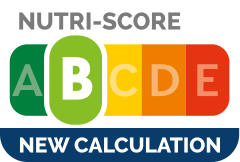 Good nutritional quality
Nutri-Score data warning
Nutrient levels
Fat in low quantity (0%)
Saturated fat in low quantity (0%)
Sugars in moderate quantity (5.29%)
Salt in low quantity (0.205%)
Nutrition facts
| Nutrition facts | As sold for 100 g / 100 ml | Compared to: Yogurts |
|---|---|---|
| Energy | ~ 194.86 kJ (47 kcal) | 362.75 kJ (86 kcal) (-46%) |
| Fat | 0 g | 2.73 g (-100%) |
| Saturated fat | 0 g | 1.716 g (-100%) |
| Trans fat | 0 g | 0 g |
| Cholesterol | 0.003 g | 8.362 mg (-64%) |
| Carbohydrates | 7.06 g | 10.392 g (-32%) |
| Sugars | 5.29 g | 9.183 g (-42%) |
| Dietary fiber | 0.6 g | ? |
| Proteins | 4.12 g | 4.343 g (-5%) |
| Salt | 0.205 g | 0.115 g (+78%) |
| Sodium | 0.082 g | 0.046 g (+78%) |
| Vitamin A | 0.0000528 g | 26.836 µg (+97%) |
| Vitamin D | 0.000000875 g | 0.515 µg (+70%) |
| Vitamin C | 0.0007 g | ? |
| Potassium | 0.153 g | 150.985 mg (+1%) |
| Calcium | 0.147 g | 119.582 mg (+23%) |
| Iron | 0 g | 0.097 mg (-100%) |
| Fruits, vegetables and legumes | ~ 17.7083333333333 % | ? |
Nutrition facts (Detailed data)
| Nutrition facts | As sold for 100 g / 100 ml | As sold Per 100 g (packaging) | As sold Per 100 g (estimate) |
|---|---|---|---|
| Energy | ~ 194.86 kJ (47 kcal) | ? (47 kcal) | ~ 478.990885416667 kJ (112 kcal) |
| Fat | 0 g | 0 g | ~ 0.186089409722222 g |
| Saturated fat | 0 g | 0 g | ~ 0.0611102430555556 g |
| Trans fat | 0 g | 0 g | ? |
| Cholesterol | 0.003 g | 0.003 g | ~ 0.00131944444444444 g |
| Carbohydrates | 7.06 g | 7.06 g | ~ 24.6650651041667 g |
| Sugars | 5.29 g | 5.29 g | ~ 3.34407118055556 g |
| Dietary fiber | 0.6 g | 0.6 g | ~ 0.954036458333334 g |
| Proteins | 4.12 g | 4.12 g | ~ 2.03672743055556 g |
| Salt | 0.205 g | 0.205 g | ~ 0.0653875434027778 g |
| Sodium | 0.082 g | 0.082 g | ~ 0.0263452452256944 g |
| Vitamin A | 0.0000528 g | 0.0000528 g | ~ 0.00000093944444444445 g |
| Vitamin D | 0.000000875 g | 0.000000875 g | ~ 0.00000003958333333333 g |
| Vitamin C | 0.0007 g | 0.0007 g | ~ 0.00587465277777778 g |
| Potassium | 0.153 g | 0.153 g | ~ 0.119168728298611 g |
| Calcium | 0.147 g | 0.147 g | ~ 0.0768391341145833 g |
| Iron | 0 g | 0 g | ~ 0.000154980251736111 g |
| Fruits, vegetables and legumes | ~ 17.7083333333333 % | ? | ~ 17.7083333333333 % |
Serving size
Ingredients
Ingredients list
Ingredient information
Added sugars
Allergens
Ingredients analysis
No ingredients containing palm oil.
Unrecognized: en:natural-flavor-gelatin-tricalcium-phosphate, en:sucralsoe, en:asesulfame-potassium, en:and-active-cultures-with-l, en:acidophilus-and-b, en:bifidum
Contains non-vegan ingredients.
Unrecognized: en:natural-flavor-gelatin-tricalcium-phosphate, en:sucralsoe, en:asesulfame-potassium, en:and-active-cultures-with-l, en:acidophilus-and-b, en:bifidum
Vegetarian status unknown
Unrecognized: en:natural-flavor-gelatin-tricalcium-phosphate, en:sucralsoe, en:asesulfame-potassium, en:and-active-cultures-with-l, en:acidophilus-and-b, en:bifidum
Food Processing
NOVA group
 Ultra-processed food and drink products
Elements that indicate the product is in NOVA group 4
How NOVA works
Additives
E100 - CurcuminColour
No additive description is available yet.
E133 - Brilliant blue FCF EFSA overexposure risk: moderateColour
BRILLIANT BLUE FCF (Blue 1) is an organic compound classified as a blue triarylmethane dye, reflecting its chemical structure. Known under various commercial names, it is a colorant for foods and other substances.
E406 - AgarCarrierEmulsifierHumectantStabiliserThickener
Agar (pronounced , sometimes ) or agar-agar is a jelly-like substance, obtained from red algae.Agar is a mixture of two components: the linear polysaccharide agarose, and a heterogeneous mixture of smaller molecules called agaropectin. It forms the supporting structure in the cell walls of certain species of algae, and is released on boiling. These algae are known as agarophytes, and belong to the Rhodophyta (red algae) phylum.Agar has been used as an ingredient in desserts throughout Asia, and also as a solid substrate to contain culture media for microbiological work. Agar can be used as a laxative, an appetite suppressant, a vegetarian substitute for gelatin, a thickener for soups, in fruit preserves, ice cream, and other desserts, as a clarifying agent in brewing, and for sizing paper and fabrics.The gelling agent in agar is an unbranched polysaccharide obtained from the cell walls of some species of red algae, primarily from tengusa (Gelidiaceae) and ogonori (Gracilaria). For commercial purposes, it is derived primarily from ogonori. In chemical terms, agar is a polymer made up of subunits of the sugar galactose.
E961 - NeotameSweetener
Neotame is an artificial sweetener made by NutraSweet that is between 7,000 and 13,000 times sweeter than sucrose (table sugar). In the European Union, it is known by the E number E961. It is moderately heat-stable, extremely potent, rapidly metabolized, completely eliminated, and does not appear to accumulate in the body.The major metabolic pathway is hydrolysis of the methyl ester by esterases that are present throughout the body, which yields de-esterified neotame and methanol. Because only trace amounts of neotame are needed to sweeten foods, the amount of methanol derived from neotame is much lower than that found in common foods.The product is attractive to food manufacturers, as its use greatly lowers the cost of production compared to using sugar or high fructose corn syrup (due to the lower quantities needed to achieve the same sweetening), while also benefitting the consumer by providing fewer "empty" sugar calories and a lower impact on blood sugar.
Environment
Green-Score, origins bonus, and transportation impact are shown for Worldwide .
Green Score
Overall grade
 Low environmental impact
About Green-Score
Current scope
Life cycle analysis
Average impact of the category
 Yogurt, fermented milk or dairy specialty, plain • Score: 91/100
Life-cycle reference
Overall environmental impact by stage (PEF)
The overall environmental impact figure (PEF) comes from ADEME's Agribalyse database, for the category: Yogurt, fermented milk or dairy specialty, plain. Source: ADEME Agribalyse Database.
| Stage | Impact |
|---|---|
| Agriculture | 51.4 % |
| Processing | 15.5 % |
| Packaging | 17.2 % |
| Transportation | 9.6 % |
| Distribution | 4.9 % |
| Consumption | 1.4 % |
Bonuses and maluses
Declared origins
Packaging impact
Green-Score for this product
Green-Score for this product
Final score: 71/100Final score breakdown
Carbon footprint
Carbon footprint
Climate impact by stage (CO2e)
The carbon emission figure comes from ADEME's Agribalyse database, for the category: Yogurt, fermented milk or dairy specialty, plain. Source: ADEME Agribalyse Database.
| Stage | Impact |
|---|---|
| Agriculture | 54.5 % |
| Processing | 8.0 % |
| Packaging | 22.3 % |
| Transportation | 13.1 % |
| Distribution | 2.0 % |
| Consumption | 0.4 % |
Packaging
Packaging impact
Data precision
Transportation
Declared origins
Data Source
Product data comes from Open Food Facts. Food Benchmark also adds translations, category comparisons and explanatory calculations.
The database is licensed under ODbL 1.0, individual contents under DbCL 1.0, and product photos under CC BY-SA 3.0.
Product added on March 9, 2017 at 2:04:45 PM UTC by usda-ndb-import .
Last edit on February 26, 2026 at 1:25:16 PM UTC by new-nutrition-bot .
Product page also edited by new-nutrition-bot, org-database-usda, teolemon, usda-ndb-import.
Source List
- usda-ndb
- database-usda