

Postre Toffe
Health
Nutrition
Nutri-Score
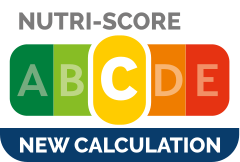 Average nutritional quality
Nutrient levels
Fat in moderate quantity (4.9%)
Saturated fat in moderate quantity (3.3%)
Sugars in high quantity (15%)
Salt in low quantity (0.13%)
Nutrition facts
| Nutrition facts | As sold for 100 g / 100 ml | Compared to: Desserts |
|---|---|---|
| Energy | 610 kJ (145 kcal) | 557.596 kJ (134 kcal) (+9%) |
| Fat | 4.9 g | 4.952 g (-1%) |
| Saturated fat | 3.3 g | 2.989 g (+10%) |
| Carbohydrates | 23 g | 17.193 g (+34%) |
| Sugars | 15 g | 14.047 g (+7%) |
| Dietary fiber | 0 g | ? |
| Proteins | 2.2 g | 3.716 g (-41%) |
| Salt | 0.13 g | 0.121 g (+7%) |
| Sodium | 0.052 g | 0.048 g (+8%) |
| Fruits, vegetables and legumes | ? | ? |
Nutrition facts (Detailed data)
| Nutrition facts | As sold for 100 g / 100 ml | As sold Per serving (legacy) |
|---|---|---|
| Energy | 610 kJ (145 kcal) | ? |
| Fat | 4.9 g | ? |
| Saturated fat | 3.3 g | ? |
| Carbohydrates | 23 g | ? |
| Sugars | 15 g | ? |
| Dietary fiber | 0 g | ? |
| Proteins | 2.2 g | ? |
| Salt | 0.13 g | ? |
| Sodium | 0.052 g | ? |
| Fruits, vegetables and legumes | ? | ? |
Ingredients
Ingredients list
Ingredient information
Added sugars
Allergens
Traces
Ingredients analysis
No ingredients containing palm oil.
Contains non-vegan ingredients.
Vegetarian status unknown
Food Processing
NOVA group
 Ultra-processed food and drink products
Elements that indicate the product is in NOVA group 4
How NOVA works
Additives
E14XX - Modified StarchEmulsifierStabiliserThickener
No additive description is available yet.
E407 - Carrageenan EFSA overexposure risk: highCarrierEmulsifierHumectantStabiliserThickener
Carrageenan (E407), derived from red seaweed, is widely employed in the food industry as a gelling, thickening, and stabilizing agent, notably in dairy and meat products.
It can exist in various forms, each imparting distinct textural properties to food.
However, its degraded form, often referred to as poligeenan, has raised health concerns due to its potential inflammatory effects and its classification as a possible human carcinogen (Group 2B) by the International Agency for Research on Cancer (IARC).
Nevertheless, food-grade carrageenan has been deemed safe by various regulatory bodies when consumed in amounts typically found in food.
E524 - Sodium hydroxide
Sodium hydroxide, also known as lye and caustic soda, is an inorganic compound with the formula NaOH. It is a white solid ionic compound consisting of sodium cations Na+ and hydroxide anions OH−. Sodium hydroxide is a highly caustic base and alkali that decomposes proteins at ordinary ambient temperatures and may cause severe chemical burns. It is highly soluble in water, and readily absorbs moisture and carbon dioxide from the air. It forms a series of hydrates NaOH·nH2O. The monohydrate NaOH·H2O crystallizes from water solutions between 12.3 and 61.8 °C. The commercially available "sodium hydroxide" is often this monohydrate, and published data may refer to it instead of the anhydrous compound. As one of the simplest hydroxides, it is frequently utilized alongside neutral water and acidic hydrochloric acid to demonstrate the pH scale to chemistry students.Sodium hydroxide is used in many industries: in the manufacture of pulp and paper, textiles, drinking water, soaps and detergents, and as a drain cleaner. Worldwide production in 2004 was approximately 60 million tonnes, while demand was 51 million tonnes.
Environment
Green-Score, origins bonus, and transportation impact are shown for Worldwide .
Green Score
Overall grade
 Unknown environmental impact
About Green-Score
Current scope
Green-Score availability
Bonuses and maluses
Declared origins
Packaging impact
Packaging
Packaging impact
Data precision
Transportation
Declared origins
Data Source
Product data comes from Open Food Facts. Food Benchmark also adds translations, category comparisons and explanatory calculations.
The database is licensed under ODbL 1.0, individual contents under DbCL 1.0, and product photos under CC BY-SA 3.0.
Product added on June 8, 2018 at 6:30:16 PM UTC by kiliweb .
Last edit on August 29, 2022 at 5:38:09 AM UTC by foodless .
Product page also edited by org-carrefour-espana, foodless, openfoodfacts-contributors, yuka.SHZnalRmNVJpZE5VdS9ZR3poLzBxKzRxbWJLdWZVcnZMdTR4SUE9PQ, roboto-app, kiliweb, teolemon, moon-rabbit, ecoscore-impact-estimator.
Source List
- carrefour-espana