

Escalopín de lomo marinado
Labels
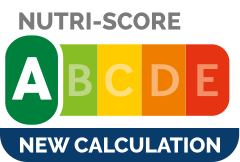 Very good nutritional quality
 Ultra-processed food and drink products
 Green-Score not computed
Health
Nutrition
Label
Very good nutritional qualityNutrient levels
Fat in moderate quantity (4%)
Saturated fat in low quantity (1.4%)
Sugars in low quantity (0.1%)
Salt in low quantity (0.00325%)
Nutrition label

Nutrition facts
| Nutrition facts | As sold for 100 g / 100 ml |
|---|---|
| Energy | ~ 496.5 kJ (118 kcal) |
| FAT | 4 g |
| Saturated fat | 1.4 g |
| Carbohydrates | 0.5 g |
| Sugars | 0.1 g |
| Added sugars | 0 g |
| Starch | 0 g |
| Dietary fiber | ~ 0 g |
| Proteins | 20 g |
| Salt | 0 g |
| Sodium | 0 g |
| Vitamins | |
| Vitamin A | 0 g |
| Vitamin E | 0 g |
| Vitamin K | 0 g |
| Vitamin C | 0 g |
| Minerals | |
| Phosphorus | 0 g |
| Iron | 0 g |
| Magnesium | 0 g |
| Zinc | 0 g |
| Copper | 0 g |
| Manganese | 0 g |
| Selenium | 0 g |
| Caffeine | 0 g |
| Fruits, vegetables and legumes | ~ 0 % |
| Choline | 0 g |
Nutrition facts (Detailed data)
| Nutrition facts | As sold for 100 g / 100 ml | As sold Per 100 g (packaging) | As sold Per 100 g (estimate) |
|---|---|---|---|
| Energy | ~ 496.5 kJ (118 kcal) | ? (118 kcal) | ~ 0 kJ (0 kcal) |
| FAT | 4 g | 4 g | ~ 7.91 g |
| Saturated fat | 1.4 g | 1.4 g | ~ 0 g |
| Cholesterol | ~ 0.05 g | ? | ~ 0.05 g |
| Carbohydrates | 0.5 g | 0.5 g | ~ 0.6 g |
| Sugars | 0.1 g | 0.1 g | ~ 0 g |
| Added sugars | 0 g | 0 g | ~ 0 g |
| Sucrose | ~ 0 g | ? | ~ 0 g |
| Glucose | ~ 0 g | ? | ~ 0 g |
| Fructose | ~ 0 g | ? | ~ 0 g |
| Galactose | ~ 0 g | ? | ~ 0 g |
| Lactose | ~ 0 g | ? | ~ 0 g |
| Maltose | ~ 0 g | ? | ~ 0 g |
| Starch | 0 g | 0 g | ~ 0 g |
| Polyols | ~ 0 g | ? | ~ 0 g |
| Dietary fiber | ~ 0 g | ? | ~ 0 g |
| Proteins | 20 g | 20 g | ~ 16.64 g |
| Salt | 0 g | 0 g | ~ 0.14 g |
| Sodium | 0 g | 0 g | ~ 0.05 g |
| Alcohol | ~ 0 % vol | ? | ~ 0 % vol |
| Vitamins | |||
| Vitamin A | 0 g | 0 g | ~ 0 g |
| Beta-carotene | ~ 0 g | ? | ~ 0 g |
| Vitamin D | ~ 0 g | ? | ~ 0 g |
| Vitamin E | 0 g | 0 g | ~ 0 g |
| Vitamin K | 0 g | 0 g | ? |
| Vitamin C | 0 g | 0 g | ~ 0 g |
| Vitamin B1 | ~ 0 g | ? | ~ 0 g |
| Vitamin B2 | ~ 0 g | ? | ~ 0 g |
| Vitamin PP | ~ 0 g | ? | ~ 0 g |
| Vitamin B6 | ~ 0 g | ? | ~ 0 g |
| Vitamin B9 | ~ 0 g | ? | ~ 0 g |
| Vitamin B12 | ~ 0 g | ? | ~ 0 g |
| Pantothenic acid | ~ 0 g | ? | ~ 0 g |
| Minerals | |||
| Potassium | ~ 0.27 g | ? | ~ 0.27 g |
| Calcium | ~ 0.01 g | ? | ~ 0.01 g |
| Phosphorus | 0 g | 0 g | ~ 0.15 g |
| Iron | 0 g | 0 g | ~ 0 g |
| Magnesium | 0 g | 0 g | ~ 0.02 g |
| Zinc | 0 g | 0 g | ~ 0 g |
| Copper | 0 g | 0 g | ~ 0 g |
| Manganese | 0 g | 0 g | ~ 0 g |
| Selenium | 0 g | 0 g | ~ 0 g |
| Iodine | ~ 0 g | ? | ~ 0 g |
| Caffeine | 0 g | 0 g | ? |
| Fruits, vegetables and legumes | ~ 0 % | ? | ~ 0 % |
| Choline | 0 g | 0 g | ? |
| Phylloquinone | ~ 0 g | ? | ~ 0 g |
| Water | ~ 74.15 g | ? | ~ 74.15 g |
Estimated Activity Time
Approximate time needed to burn the energy in 100 g / 100 ml: 497 kJ. Reference adult weight: 70 kg. Energy density: Low.
Ingredients
Ingredients image
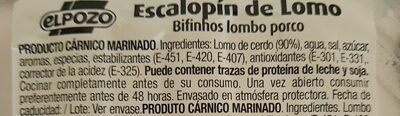
Ingredients list
Ingredient information
Traces
Ingredients analysis
No ingredients containing palm oil.
Contains non-vegan ingredients.
Contains non-vegetarian ingredients.
Food Processing
NOVA group
Ultra-processed food and drink productsElements that indicate the product is in NOVA group 4
How NOVA works
Additives
E301 - Sodium ascorbateAntioxidant
SODIUM ASCORBATE is one of a number of mineral salts of ascorbic acid (vitamin C).
E325 - sodium lactateAntioxidantEmulsifierHumectantThickener
SODIUM LACTATE is the sodium salt of lactic acid, and has a mild saline taste. It is produced by fermentation of a sugar source, such as corn or beets. It acts as a preservative, acidity regulator, and bulking agent.
E331 - Sodium citratesEmulsifierSequestrantStabiliser
DISODIUM CITRATE, more properly, disodium hydrogen citrate, is an acid salt of citric acid with the chemical formula Na2C6H6O7. It is used as an antioxidant in food and to improve the effects of other antioxidants. It is also used as an acidity regulator and sequestrant. Typical products include gelatin, jam, sweets, ice cream, carbonated beverages, milk powder, wine, and processed cheeses.
E407 - CarrageenanCarrierEmulsifierHumectantStabiliserThickener
Carrageenan (E407), derived from red seaweed, is widely employed in the food industry as a gelling, thickening, and stabilizing agent, notably in dairy and meat products.
It can exist in various forms, each imparting distinct textural properties to food.
However, its degraded form, often referred to as poligeenan, has raised health concerns due to its potential inflammatory effects and its classification as a possible human carcinogen (Group 2B) by the International Agency for Research on Cancer (IARC).
Nevertheless, food-grade carrageenan has been deemed safe by various regulatory bodies when consumed in amounts typically found in food.
E420 - SorbitolHumectantSequestrantStabiliserSweetenerThickener
Sorbitol (), less commonly known as glucitol (), is a sugar alcohol with a sweet taste which the human body metabolizes slowly. It can be obtained by reduction of glucose, which changes the aldehyde group to a hydroxyl group. Most sorbitol is made from corn syrup, but it is also found in nature, for example in apples, pears, peaches, and prunes. It is converted to fructose by sorbitol-6-phosphate 2-dehydrogenase. Sorbitol is an isomer of mannitol, another sugar alcohol; the two differ only in the orientation of the hydroxyl group on carbon 2. While similar, the two sugar alcohols have very different sources in nature, melting points, and uses.
E451 - TriphosphatesEmulsifierHumectantSequestrantStabiliserThickener
Sodium triphosphate (STP), also sodium tripolyphosphate (STPP), or tripolyphosphate (TPP),) is an inorganic compound with formula Na5P3O10. It is the sodium salt of the polyphosphate penta-anion, which is the conjugate base of triphosphoric acid. It is produced on a large scale as a component of many domestic and industrial products, especially detergents. Environmental problems associated with eutrophication are attributed to its widespread use.
Environment
Green-Score, origins bonus, and transportation impact are shown for Worldwide .
Green Score
Overall grade
Unknown environmental impactAbout Green-Score
Current scope
Green-Score availability
Bonuses and maluses
Declared origins
Packaging impact
Packaging
Packaging impact
Data precision
Transportation
Declared origins
Data Source
Data presented on this page is sourced from the Open Food Facts database. This platform does not alter the original dataset; its purpose is solely to enhance data visualization and user accessibility.
Product added on March 21, 2019 at 3:42:56 PM UTC by elcoco .
Last edit on March 18, 2026 at 8:56:46 AM UTC by foodless .
Product page also edited by elcoco, foodless, k-1, kiliweb, macrofactor, municorn-calorie-counter-app, roboto-app, thaialagata, yuka.H79-FsS5Au0TEvDj-qgJ_GPlBdvGMuVyGFUpog, yuka.UjV3eUVxUXp1YUlqd3NJZDhEanAyYzF3NTZmeFZ6THBETTVMSUE9PQ, yuka.WTZRT0xacFJ0UGdKeGNjLzNoR0twWWxFNDRXa1FWR3RNc2s4SVE9PQ, yuka.WTd4WUlmNGk5dklBdTgwbXdpMzh4Y3BWd0p5R2VGcXJPK0VCSWc9PQ, yuka.sY2b0xO6T85zoF3NwEKvlndZTsvFgD3dG0XgmBW5m8-sCqP0OehL2JfZGKo.