

Golia active plus
Health
Nutrition
Nutri-Score
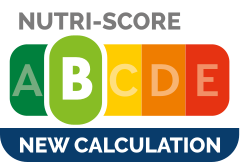 Good nutritional quality
Nutri-Score data warning
Nutrient levels
Fat in low quantity (0%)
Saturated fat in low quantity (0%)
Sugars in low quantity (0%)
Salt in low quantity (0%)
Nutrition label

Nutrition facts
| Nutrition facts | As sold for 100 g / 100 ml | Compared to: Candies |
|---|---|---|
| Energy | 956 kJ (230 kcal) | 1,498.562 kJ (350 kcal) (-36%) |
| Fat | 0 g | 1.572 g (-100%) |
| Saturated fat | 0 g | 0.879 g (-100%) |
| Carbohydrates | 93 g | 82.853 g (+12%) |
| Sugars | 0 g | 54.895 g (-100%) |
| Polyols | 93 g | ? |
| Dietary fiber | ? | ? |
| Proteins | 0 g | 2.159 g (-100%) |
| Salt | 0 g | 0.129 g (-100%) |
| Sodium | 0 g | 0.052 g (-100%) |
| Fruits, vegetables and legumes | ? | ? |
Nutrition facts (Detailed data)
| Nutrition facts | As sold for 100 g / 100 ml | As sold Per serving (legacy) |
|---|---|---|
| Energy | 956 kJ (230 kcal) | ? |
| Fat | 0 g | ? |
| Saturated fat | 0 g | ? |
| Carbohydrates | 93 g | ? |
| Sugars | 0 g | ? |
| Polyols | 93 g | ? |
| Dietary fiber | ? | ? |
| Proteins | 0 g | ? |
| Salt | 0 g | ? |
| Sodium | 0 g | ? |
| Fruits, vegetables and legumes | ? | ? |
Ingredients
Ingredients image

Ingredients list
Ingredient information
Traces
Ingredients analysis
No ingredients containing palm oil.
Vegan status unknown
Unrecognized: en:menthol, it:eucaliptolo
Vegetarian status unknown
Unrecognized: en:menthol, it:eucaliptolo
Food Processing
NOVA group
 Ultra-processed food and drink products
Elements that indicate the product is in NOVA group 4
How NOVA works
Additives
E1200 - PolydextroseHumectantStabiliserThickener
Polydextrose is a synthetic polymer of glucose. It is a food ingredient classified as soluble fiber by the U.S. Food and Drug Administration (FDA) as well as Health Canada, as of April 2013. It is frequently used to increase the dietary fiber content of food, to replace sugar, and to reduce calories and fat content. It is a multi-purpose food ingredient synthesized from dextrose (glucose), plus about 10 percent sorbitol and 1 percent citric acid. Its E number is E1200. The FDA approved it in 1981. It is 0.1 times as sweet as sugar.
E132 - Indigotine EFSA overexposure risk: noColour
Indigo carmine, or 5,5′-indigodisulfonic acid sodium salt, is an organic salt derived from indigo by sulfonation, which renders the compound soluble in water. It is approved for use as a food colorant in the U.S and E.U., It has the E number E132. It is also a pH indicator.
E270 - Lactic acid
LACTIC ACID is an organic compound with the formula CH3CH(OH)CO2H. In the form of its conjugate base called lactate (this is thus different and kept as a separate ingredient). Lactic acid is chiral, consisting of two optical isomers. One is known as L-(+)-lactic acid or (S)-lactic acid and the other, its mirror image, is D-(−)-lactic acid or (R)-lactic acid in food the L-variant is used
E422 - GlycerolHumectantThickener
Glycerol (; also called glycerine or glycerin; see spelling differences) is a simple polyol compound. It is a colorless, odorless, viscous liquid that is sweet-tasting and non-toxic. The glycerol backbone is found in all lipids known as triglycerides. It is widely used in the food industry as a sweetener and humectant and in pharmaceutical formulations. Glycerol has three hydroxyl groups that are responsible for its solubility in water and its hygroscopic nature.
E950 - Acesulfame kSweetener
Acesulfame potassium ( AY-see-SUL-faym), also known as acesulfame K (K is the symbol for potassium) or Ace K, is a calorie-free sugar substitute (artificial sweetener) often marketed under the trade names Sunett and Sweet One. In the European Union, it is known under the E number (additive code) E950. It was discovered accidentally in 1967 by German chemist Karl Clauss at Hoechst AG (now Nutrinova). In chemical structure, acesulfame potassium is the potassium salt of 6-methyl-1,2,3-oxathiazine-4(3H)-one 2,2-dioxide. It is a white crystalline powder with molecular formula C4H4KNO4S and a molecular weight of 201.24 g/mol.
E953 - isomaltStabiliserSweetenerThickener
ISOMALT is a sugar substitute, a type of sugar alcohol used primarily for its sugar-like physical properties. It has little to no impact on blood sugar levels, and does not stimulate the release of insulin. Isomalt is widely used for the production of sugar-free candy, especially hard-boiled candy.
E965 - maltitolEmulsifierHumectantStabiliserSweetenerThickener
MALTITOL is a sugar alcohol (a polyol) used as a sugar substitute. It has 75–90% of the sweetness of sucrose (table sugar) and nearly identical properties, except for browning. Maltitol's high sweetness allows it to be used without being mixed with other sweeteners. It is used in candy manufacture, particularly sugar-free hard candy, chewing gum, chocolates, baked goods, and ice cream.
E965ii - Maltitol syrupEmulsifierHumectantStabiliserSweetenerThickener
No additive description is available yet.
Environment
Green-Score, origins bonus, and transportation impact are shown for Worldwide .
Green Score
Overall grade
 Low environmental impact
About Green-Score
Current scope
Life cycle analysis
Average impact of the category
 Candies, all types • Score: 88/100
Life-cycle reference
Overall environmental impact by stage (PEF)
The overall environmental impact figure (PEF) comes from ADEME's Agribalyse database, for the category: Candies, all types. Source: ADEME Agribalyse Database.
| Stage | Impact |
|---|---|
| Agriculture | 47.6 % |
| Processing | 28.1 % |
| Packaging | 17.3 % |
| Transportation | 4.5 % |
| Distribution | 2.3 % |
| Consumption | 0.0 % |
Bonuses and maluses
Declared origins
Packaging impact
Green-Score for this product
Green-Score for this product
Final score: 72/100Final score breakdown
Carbon footprint
Carbon footprint
Climate impact by stage (CO2e)
The carbon emission figure comes from ADEME's Agribalyse database, for the category: Candies, all types. Source: ADEME Agribalyse Database.
| Stage | Impact |
|---|---|
| Agriculture | 46.7 % |
| Processing | 27.1 % |
| Packaging | 16.4 % |
| Transportation | 8.7 % |
| Distribution | 1.5 % |
| Consumption | 0.0 % |
Packaging

Packaging impact
Packaging components
| Shape | Material | Recycling | Impact |
|---|---|---|---|
| BOX | Plastic | Unknown | High |
| Unknown | Paper | Unknown | Low |
Declared packaging
Data precision
Transportation
Declared origins
Forest footprint
Forest footprint
Deforestation risk details
Data Source
Product data comes from Open Food Facts. Food Benchmark also adds translations, category comparisons and explanatory calculations.
The database is licensed under ODbL 1.0, individual contents under DbCL 1.0, and product photos under CC BY-SA 3.0.
Product added on March 29, 2018 at 6:56:36 PM UTC by kiliweb .
Last edit on February 5, 2026 at 3:52:11 PM UTC by off-replace-bot .
Product page also edited by benbenben, davidepio, ecoscore-impact-estimator, foodless, kiliweb, off-replace-bot, openfoodfacts-contributors, roboto-app, scanbot, shark80, stegabe, yuka.WkxndUVQdy8rdjhIbk1FRzNTTDUxc2dyMXNhaldIeXhPOGsrSVE9PQ, yuka.sY2b0xO6T85zoF3NwEKvlnVWQsLlhh76CDrfqW3Q_cmkI4OzPfNr7ZXFbqs.