

galletitas pepito
Health
Nutrition
Nutri-Score
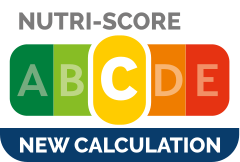 Average nutritional quality
Nutri-Score data warning
Nutrient levels
Fat in moderate quantity (5.7%)
Saturated fat in moderate quantity (1.5%)
Sugars in moderate quantity (10%)
Salt in low quantity (0.119%)
Nutrition facts
| Nutrition facts | As sold for 100 g / 100 ml |
|---|---|
| Energy | 640 kcal (153 kcal) |
| Fat | 5.7 g |
| Saturated fat | 1.5 g |
| Carbohydrates | 22 g |
| Sugars | 10 g |
| Dietary fiber | 0.9 g |
| Proteins | 2.2 g |
| Salt | 0.11938 mg |
| Sodium | 0.047752 mg |
| Fruits, vegetables and legumes | ? |
Nutrition facts (Detailed data)
| Nutrition facts | As sold for 100 g / 100 ml | As sold Per serving (legacy) |
|---|---|---|
| Energy | 640 kcal (153 kcal) | 211 kcal (50 kcal) |
| Fat | 5.7 g | 1.88 g |
| Saturated fat | 1.5 g | 0.495 g |
| Carbohydrates | 22 g | 7.26 g |
| Sugars | 10 g | 3.3 g |
| Dietary fiber | 0.9 g | 0.297 g |
| Proteins | 2.2 g | 0.726 g |
| Salt | 0.11938 mg | 0.0394 mg |
| Sodium | 0.047752 mg | 0.0158 mg |
| Fruits, vegetables and legumes | ? | ? |
Serving size
Ingredients
Ingredients list
Ingredient information
Allergens
Traces
Ingredients analysis
Palm oil content unknown
Vegan status unknown
Unrecognized: es:politico-olfato-de-poliglicerol, es:lecticina-de-soja, es:sorbitan-triesterato, es:contiene-derivados-de-trigo
Vegetarian status unknown
Unrecognized: es:politico-olfato-de-poliglicerol, es:lecticina-de-soja, es:sorbitan-triesterato, es:contiene-derivados-de-trigo
Food Processing
NOVA group
 Ultra-processed food and drink products
Elements that indicate the product is in NOVA group 4
How NOVA works
Additives
E160a - caroteneColour
β-Carotene is an organic, strongly colored red-orange pigment abundant in plants and fruits. It is a member of the carotenes, which are terpenoids (isoprenoids), synthesized biochemically from eight isoprene units and thus having 40 carbons. Among the carotenes, β-carotene is distinguished by having beta-rings at both ends of the molecule. β-Carotene is biosynthesized from geranylgeranyl pyrophosphate.β-Carotene is the most common form of carotene in plants. When used as a food coloring, it has the E number E160a. The structure was deduced by Karrer et al. in 1930. In nature, β-carotene is a precursor (inactive form) to vitamin A via the action of beta-carotene 15,15'-monooxygenase.Isolation of β-carotene from fruits abundant in carotenoids is commonly done using column chromatography. It can also be extracted from the beta-carotene rich algae, Dunaliella salina. The separation of β-carotene from the mixture of other carotenoids is based on the polarity of a compound. β-Carotene is a non-polar compound, so it is separated with a non-polar solvent such as hexane. Being highly conjugated, it is deeply colored, and as a hydrocarbon lacking functional groups, it is very lipophilic.
E160ai - Beta-caroteneColour
No additive description is available yet.
E481 - Sodium stearoyl-2-lactylate EFSA overexposure risk: highEmulsifierStabiliser
Sodium stearoyl-2-lactylate (sodium stearoyl lactylate or SSL) is a versatile, FDA approved food additive used to improve the mix tolerance and volume of processed foods. It is one type of a commercially available lactylate. SSL is non-toxic, biodegradable, and typically manufactured using biorenewable feedstocks. Because SSL is a safe and highly effective food additive, it is used in a wide variety of products ranging from baked goods and desserts to pet foods.As described by the Food Chemicals Codex 7th edition, SSL is a cream-colored powder or brittle solid. SSL is currently manufactured by the esterification of stearic acid with lactic acid and partially neutralized with either food-grade soda ash (sodium carbonate) or caustic soda (concentrated sodium hydroxide). Commercial grade SSL is a mixture of sodium salts of stearoyl lactylic acids and minor proportions of other sodium salts of related acids. The HLB for SSL is 10-12. SSL is slightly hygroscopic, soluble in ethanol and in hot oil or fat, and dispersible in warm water. These properties are the reason that SSL is an excellent emulsifier for fat-in-water emulsions and can also function as a humectant.
E500 - Sodium carbonatesStabiliserThickener
Sodium carbonates (E500) are compounds commonly used in food preparation as leavening agents, helping baked goods rise by releasing carbon dioxide when they interact with acids.
Often found in baking soda, they regulate the pH of food, preventing it from becoming too acidic or too alkaline. In the culinary world, sodium carbonates can also enhance the texture and structure of foods, such as noodles, by modifying the gluten network.
Generally recognized as safe, sodium carbonates are non-toxic when consumed in typical amounts found in food.
E500ii - Sodium hydrogen carbonateStabiliserThickener
Sodium hydrogen carbonate, also known as E500ii, is a food additive commonly used as a leavening agent.
When added to recipes, it releases carbon dioxide gas upon exposure to heat or acids, causing dough to rise and resulting in a light, fluffy texture in baked goods.
It is generally recognized as safe (GRAS) by regulatory authorities when used in appropriate quantities and poses no significant health risks when consumed in typical food applications.
E503 - Ammonium carbonates
AMMONIUM BICARBONATE is an inorganic compound with formula (NH4)HCO3, simplified to NH5CO3. Ammonium bicarbonate is used in the food industry as a raising agent for flat baked goods, such as cookies and crackers, and in China in steamed buns and Chinese almond cookies. It was commonly used in the home before modern day baking powder was made available.
E503ii - Ammonium hydrogen carbonate
No additive description is available yet.
Environment
Green-Score, origins bonus, and transportation impact are shown for Worldwide .
Green Score
Overall grade
 Moderate environmental impact
About Green-Score
Current scope
Life cycle analysis
Average impact of the category
 Biscuit (cookie) • Score: 70/100
Life-cycle reference
Overall environmental impact by stage (PEF)
The overall environmental impact figure (PEF) comes from ADEME's Agribalyse database, for the category: Biscuit (cookie). Source: ADEME Agribalyse Database.
| Stage | Impact |
|---|---|
| Agriculture | 80.2 % |
| Processing | 12.0 % |
| Packaging | 3.2 % |
| Transportation | 3.2 % |
| Distribution | 1.4 % |
| Consumption | 0.0 % |
Bonuses and maluses
Declared origins
Packaging impact
Green-Score for this product
Green-Score for this product
Final score: 50/100Final score breakdown
Carbon footprint
Carbon footprint
Climate impact by stage (CO2e)
The carbon emission figure comes from ADEME's Agribalyse database, for the category: Biscuit (cookie). Source: ADEME Agribalyse Database.
| Stage | Impact |
|---|---|
| Agriculture | 82.7 % |
| Processing | 8.0 % |
| Packaging | 3.8 % |
| Transportation | 4.7 % |
| Distribution | 0.7 % |
| Consumption | 0.0 % |
Packaging
Packaging impact
Data precision
Transportation
Declared origins
Data Source
Product data comes from Open Food Facts. Food Benchmark also adds translations, category comparisons and explanatory calculations.
The database is licensed under ODbL 1.0, individual contents under DbCL 1.0, and product photos under CC BY-SA 3.0.
Product added on August 4, 2017 at 10:48:37 AM UTC by openfoodfacts-contributors .
Last edit on April 28, 2023 at 12:53:44 PM UTC by roboto-app .
Product page also edited by emmaelda, francabral1, openfoodfacts-contributors, roboto-app, vegetarian-app-chakib.