
Dekoration bla glimmer
Health
Nutrition
Nutri-Score
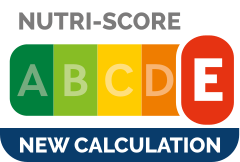 Lower nutritional quality
Nutri-Score data warning
Nutrient levels
Fat in low quantity (0.1%)
Saturated fat in low quantity (0%)
Sugars in high quantity (97%)
Salt in low quantity (0.003%)
Nutrition facts
| Nutrition facts | As sold for 100 g / 100 ml | Compared to: Sugars |
|---|---|---|
| Energy | 1662 kJ (397 kcal) | 1,632.859 kJ (380 kcal) (+2%) |
| Fat | 0.1 g | 0.093 g (+8%) |
| Saturated fat | 0 g | 0.023 g (-100%) |
| Carbohydrates | 98 g | 96.219 g (+2%) |
| Sugars | 97 g | 84.96 g (+14%) |
| Dietary fiber | ? | ? |
| Proteins | 0 g | 0.202 g (-100%) |
| Salt | 0.003 g | 0.033 g (-91%) |
| Sodium | 0.0012 g | 0.013 g (-91%) |
| Fruits, vegetables and legumes | ? | ? |
Nutrition facts (Detailed data)
| Nutrition facts | As sold for 100 g / 100 ml | As sold Per serving (legacy) |
|---|---|---|
| Energy | 1662 kJ (397 kcal) | ? |
| Fat | 0.1 g | ? |
| Saturated fat | 0 g | ? |
| Carbohydrates | 98 g | ? |
| Sugars | 97 g | ? |
| Dietary fiber | ? | ? |
| Proteins | 0 g | ? |
| Salt | 0.003 g | ? |
| Sodium | 0.0012 g | ? |
| Fruits, vegetables and legumes | ? | ? |
Ingredients
Ingredients list
Ingredient information
Added sugars
Ingredients analysis
Contains ingredients containing palm oil.
Contains non-vegan ingredients.
Unrecognized: fr:agent-de-brillance
Contains non-vegetarian ingredients.
Unrecognized: fr:agent-de-brillance
Food Processing
NOVA group
 Ultra-processed food and drink products
Elements that indicate the product is in NOVA group 4
How NOVA works
Additives
E163 - AnthocyaninsColour
Anthocyanins (also anthocyans; from Greek: ἄνθος (anthos) "flower" and κυάνεος/κυανοῦς kyaneos/kyanous "dark blue") are water-soluble vacuolar pigments that, depending on their pH, may appear red, purple, or blue. Food plants rich in anthocyanins include the blueberry, raspberry, black rice, and black soybean, among many others that are red, blue, purple, or black. Some of the colors of autumn leaves are derived from anthocyanins.Anthocyanins belong to a parent class of molecules called flavonoids synthesized via the phenylpropanoid pathway. They occur in all tissues of higher plants, including leaves, stems, roots, flowers, and fruits. Anthocyanins are derived from anthocyanidins by adding sugars. They are odorless and moderately astringent. Although approved to color foods and beverages in the European Union, anthocyanins are not approved for use as a food additive because they have not been verified as safe when used as food or supplement ingredients. There is no conclusive evidence anthocyanins have any effect on human biology or diseases.
E171 - Titanium dioxideColour
Titanium dioxide, also known as titanium(IV) oxide or titania, is the naturally occurring oxide of titanium, chemical formula TiO2. When used as a pigment, it is called titanium white, Pigment White 6 (PW6), or CI 77891. Generally, it is sourced from ilmenite, rutile and anatase. It has a wide range of applications, including paint, sunscreen and food coloring. When used as a food coloring, it has E number E171. World production in 2014 exceeded 9 million metric tons. It has been estimated that titanium dioxide is used in two-thirds of all pigments, and the oxide has been valued at $13.2 billion.
E904 - Shellac
Shellac is a resin secreted by the female lac bug, on trees in the forests of India and Thailand. It is processed and sold as dry flakes (pictured) and dissolved in alcohol to make liquid shellac, which is used as a brush-on colorant, food glaze and wood finish. Shellac functions as a tough natural primer, sanding sealant, tannin-blocker, odour-blocker, stain, and high-gloss varnish. Shellac was once used in electrical applications as it possesses good insulation qualities and it seals out moisture. Phonograph and 78 rpm gramophone records were made of it until they were replaced by vinyl long-playing records from the 1950s onwards. From the time it replaced oil and wax finishes in the 19th century, shellac was one of the dominant wood finishes in the western world until it was largely replaced by nitrocellulose lacquer in the 1920s and 1930s.
Environment
Green-Score, origins bonus, and transportation impact are shown for Worldwide .
Green Score
Overall grade
 Very low environmental impact
About Green-Score
Current scope
Life cycle analysis
Average impact of the category
 Sugar, white • Score: 96/100
Life-cycle reference
Overall environmental impact by stage (PEF)
The overall environmental impact figure (PEF) comes from ADEME's Agribalyse database, for the category: Sugar, white. Source: ADEME Agribalyse Database.
| Stage | Impact |
|---|---|
| Agriculture | 75.3 % |
| Processing | 11.9 % |
| Packaging | 0.9 % |
| Transportation | 8.1 % |
| Distribution | 3.8 % |
| Consumption | 0.0 % |
Bonuses and maluses
Declared origins
Threatened species risk
Packaging impact
Green-Score for this product
Green-Score for this product
Final score: 79/100Final score breakdown
Carbon footprint
Carbon footprint
Climate impact by stage (CO2e)
The carbon emission figure comes from ADEME's Agribalyse database, for the category: Sugar, white. Source: ADEME Agribalyse Database.
| Stage | Impact |
|---|---|
| Agriculture | 46.5 % |
| Processing | 30.3 % |
| Packaging | 1.0 % |
| Transportation | 19.4 % |
| Distribution | 2.8 % |
| Consumption | 0.0 % |
Packaging
Packaging impact
Packaging components
| Shape | Material | Recycling | Impact |
|---|---|---|---|
| Vial | Glass | Unknown | Low |
Declared packaging
Transportation
Declared origins
Forest footprint
Forest footprint
Deforestation risk details
Data Source
Product data comes from Open Food Facts. Food Benchmark also adds translations, category comparisons and explanatory calculations.
The database is licensed under ODbL 1.0, individual contents under DbCL 1.0, and product photos under CC BY-SA 3.0.
Product added on February 8, 2017 at 8:33:59 AM UTC by loverock .
Last edit on February 11, 2022 at 7:42:05 AM UTC by packbot .
Product page also edited by loverock, packbot.