

3 Cœurs de filet Cabillaud
Health
Nutrition
Nutri-Score
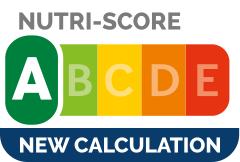 Very good nutritional quality
Nutri-Score data warning
Nutrient levels
Fat in low quantity (0.7%)
Saturated fat in low quantity (0%)
Sugars in low quantity (0%)
Salt in low quantity (0.17%)
Nutrition label

Nutrition facts
| Nutrition facts | As sold for 100 g / 100 ml |
|---|---|
| Energy | 332 kJ (78 kcal) |
| Fat | 0.7 g |
| Saturated fat | 0 g |
| Carbohydrates | 0 g |
| Sugars | 0 g |
| Dietary fiber | ~ 0.1 g |
| Proteins | 18 g |
| Salt | 0.17 g |
| Sodium | 0.068 g |
| Fruits, vegetables and legumes | ~ 0 % |
Nutrition facts (Detailed data)
| Nutrition facts | As sold for 100 g / 100 ml | As sold Per 100 g (packaging) | As sold Per 100 g (estimate) |
|---|---|---|---|
| Energy | 332 kJ (78 kcal) | 332 kJ (78 kcal) | ~ 329 kJ (77 kcal) |
| Fat | 0.7 g | 0.7 g | ~ 0.57 g |
| Saturated fat | 0 g | 0 g | ~ 0.1 g |
| Carbohydrates | 0 g | 0 g | ~ 0 g |
| Sugars | 0 g | 0 g | ~ 0 g |
| Dietary fiber | ~ 0.1 g | ? | ~ 0.1 g |
| Proteins | 18 g | 18 g | ~ 18.1 g |
| Salt | 0.17 g | 0.17 g | ~ 0.23 g |
| Sodium | 0.068 g | 0.068 g | ~ 0.0652 g |
| Fruits, vegetables and legumes | ~ 0 % | ? | ~ 0 % |
Ingredients
Ingredients image

Ingredients list
Ingredient information
Allergens
Ingredients analysis
No ingredients containing palm oil.
Contains non-vegan ingredients.
Contains non-vegetarian ingredients.
Food Processing
NOVA group
 Unprocessed or minimally processed foods
How NOVA works
Additives
Environment
Green-Score, origins bonus, and transportation impact are shown for Worldwide .
Green Score
Overall grade
 Very high environmental impact
About Green-Score
Current scope
Life cycle analysis
Average impact of the category
Cod, raw • Score: 12/100Life-cycle reference
Overall environmental impact by stage (PEF)
The overall environmental impact figure (PEF) comes from ADEME's Agribalyse database, for the category: Cod, raw. Source: ADEME Agribalyse Database.
| Stage | Impact |
|---|---|
| Agriculture | 90.4 % |
| Processing | 0.0 % |
| Packaging | 3.8 % |
| Transportation | 5.3 % |
| Distribution | 0.5 % |
| Consumption | 0.1 % |
Bonuses and maluses
Production system
Origins of ingredients
Packaging impact
Green-Score for this product
Green-Score for this product
Final score: 11/100Final score breakdown
Carbon footprint
Carbon footprint
Climate impact by stage (CO2e)
The carbon emission figure comes from ADEME's Agribalyse database, for the category: Cod, raw. Source: ADEME Agribalyse Database.
| Stage | Impact |
|---|---|
| Agriculture | 85.8 % |
| Processing | 0.0 % |
| Packaging | 3.9 % |
| Transportation | 10.6 % |
| Distribution | 0.3 % |
| Consumption | 0.1 % |
Packaging

Packaging impact
Packaging components
| Shape | Material | Recycling | Impact |
|---|---|---|---|
| 1 Sleeve | Cardboard | Recycle | Low |
| 3 BAG | Plastic | Discard | High |
Transportation
Origins of ingredients
Origins breakdown
| Origin | Percent of ingredients | Impact |
|---|---|---|
| Iceland | 100 % | High |
Additional information
- Preparation
- Sans décongélation préalable. Au four traditionnel : Placez les cœurs sans leur sachet dans un plat adapté. Faites cuire pendant 20 à 25 minutes à 180°C. À la poêle : Faites dorer chaque face 4 à 5 minutes dans une poêle chaude beurrée ou huilée. Au court-bouillon : Placez le poisson dans un court-bouillon. Portez à ébullition et laissez cuire dans une eau frémissante pendant 8 minutes puis égouttez. Vous pouvez aussi décongeler les cœurs 8 à 10 heures au réfrigérateur et les utiliser comme un produit frais. À consommer après cuisson.
- Warnings
- *Qualité sans arête : Malgré toutes les précautions prises et nos contrôles très stricts, il se peut qu'exceptionnellement une arête subsiste dans nos produits. Nous vous prions de vérifier les bouchées destinées aux enfants en bas âge.
- Conservation conditions
- À consommer de préférence avant la date indiquée sur le côté de l'emballage. À conserver 24h dans un réfrigérateur, 3 jours dans le compartiment à glace du réfrigérateur et jusqu'à la date de durabilité minimale dans un congélateur*** à -18°C. ATTENTION : NE PAS RECONGELER APRÈS DÉCONGÉLATION.
- Customer service
- Interdis - TSA 91431 - 91343 MASSY Cedex - France
Data Source
Product data comes from Open Food Facts. Food Benchmark also adds translations, category comparisons and explanatory calculations.
The database is licensed under ODbL 1.0, individual contents under DbCL 1.0, and product photos under CC BY-SA 3.0.
Product added on October 29, 2019 at 5:18:22 PM UTC by kiliweb .
Last edit on March 17, 2026 at 2:24:43 PM UTC by new-nutrition-bot .
Product page also edited by chevalstar, driveoff, kiliweb, new-nutrition-bot, org-carrefour, quentinbrd, roboto-app, teolemon, yuka.ZlBBTVQ0TW91ZWNBcWZCbDd3THd3T05KeE1Dd1IyR01GKzRLSVE9PQ.
Source List
- carrefour