

Brochettes poulet yakitori
Health
Nutrition
Nutri-Score
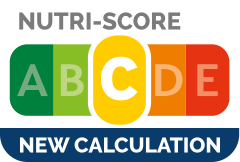 Average nutritional quality
Nutri-Score data warning
Nutrient levels
Fat in low quantity (1%)
Saturated fat in low quantity (0.3%)
Sugars in moderate quantity (9.2%)
Salt in moderate quantity (1.5%)
Nutrition label

Nutrition facts
| Nutrition facts | As sold for 100 g / 100 ml | Compared to: Yakitori chicken skewers |
|---|---|---|
| Energy | ~ 540.4 kJ (136 kcal) | 678.015 kJ (159 kcal) (-20%) |
| Fat | 1 g | 5.079 g (-80%) |
| Saturated fat | 0.3 g | 1.473 g (-80%) |
| Carbohydrates | 15 g | 11.562 g (+30%) |
| Sugars | 9.2 g | 7.468 g (+23%) |
| Dietary fiber | 1.3 g | ? |
| Proteins | 14 g | 16.445 g (-15%) |
| Salt | 1.5 g | 1.358 g (+10%) |
| Sodium | 0.6 g | 0.543 g (+10%) |
| Fruits, vegetables and legumes | ~ 0 % | ? |
Nutrition facts (Detailed data)
| Nutrition facts | As sold for 100 g / 100 ml | As sold Per 100 g (packaging) | As sold Per 100 g (estimate) |
|---|---|---|---|
| Energy | ~ 540.4 kJ (136 kcal) | ? (136 kcal) | ? |
| Fat | 1 g | 1 g | ? |
| Saturated fat | 0.3 g | 0.3 g | ? |
| Carbohydrates | 15 g | 15 g | ? |
| Sugars | 9.2 g | 9.2 g | ? |
| Dietary fiber | 1.3 g | 1.3 g | ? |
| Proteins | 14 g | 14 g | ? |
| Salt | 1.5 g | 1.5 g | ? |
| Sodium | 0.6 g | 0.6 g | ? |
| Fruits, vegetables and legumes | ~ 0 % | ? | ~ 0 % |
Ingredients
Ingredients image

Ingredients list
Ingredient information
Added sugars
Allergens
Ingredients analysis
Palm oil content unknown
Vegan status unknown
Unrecognized: fr:brochette-de-poulet-yakitori-blanc-de-poulet, fr:feve-de-seig, fr:moisissure, fr:el-420, fr:d-xylose, fr:el-50a, fr:el-60c, fr:sont-des-ingredients-allergenes
Vegetarian status unknown
Unrecognized: fr:brochette-de-poulet-yakitori-blanc-de-poulet, fr:feve-de-seig, fr:moisissure, fr:el-420, fr:d-xylose, fr:el-50a, fr:el-60c, fr:sont-des-ingredients-allergenes
Food Processing
NOVA group
 Ultra-processed food and drink products
Elements that indicate the product is in NOVA group 4
How NOVA works
Additives
E1414 - Acetylated distarch phosphateEmulsifierStabiliserThickener
No additive description is available yet.
E222 - Sodium bisulphite EFSA overexposure risk: highAntioxidantPreservative
SODIUM BISULFITE is a chemical compound with the chemical formula NaHSO3.
E223 - Sodium metabisulphite EFSA overexposure risk: highAntioxidantPreservative
SODIUM METABISULFITE or sodium pyrosulfite (IUPAC spelling; Br. E. sodium metabisulphite or sodium pyrosulphite) is an inorganic compound of chemical formula Na2S2O5.
E330 - Citric acidAntioxidantSequestrant
Citric acid is a natural organic acid found in citrus fruits such as lemons, oranges, and limes.
It is widely used in the food industry as a flavor enhancer, acidulant, and preservative due to its tart and refreshing taste.
Citric acid is safe for consumption when used in moderation and is considered a generally recognized as safe (GRAS) food additive by regulatory agencies worldwide.
E331 - Sodium citratesEmulsifierSequestrantStabiliser
DISODIUM CITRATE, more properly, disodium hydrogen citrate, is an acid salt of citric acid with the chemical formula Na2C6H6O7. It is used as an antioxidant in food and to improve the effects of other antioxidants. It is also used as an acidity regulator and sequestrant. Typical products include gelatin, jam, sweets, ice cream, carbonated beverages, milk powder, wine, and processed cheeses.
E331iii - Trisodium citrate
No additive description is available yet.
E433 - Polyoxyethylene sorbitan monooleate EFSA overexposure risk: moderateEmulsifierStabiliser
Polysorbate 80 is a nonionic surfactant and emulsifier often used in foods and cosmetics. This synthetic compound is a viscous, water-soluble yellow liquid.
E500 - Sodium carbonatesStabiliserThickener
Sodium carbonates (E500) are compounds commonly used in food preparation as leavening agents, helping baked goods rise by releasing carbon dioxide when they interact with acids.
Often found in baking soda, they regulate the pH of food, preventing it from becoming too acidic or too alkaline. In the culinary world, sodium carbonates can also enhance the texture and structure of foods, such as noodles, by modifying the gluten network.
Generally recognized as safe, sodium carbonates are non-toxic when consumed in typical amounts found in food.
E500i - Sodium carbonateStabiliserThickener
No additive description is available yet.
E500ii - Sodium hydrogen carbonateStabiliserThickener
Sodium hydrogen carbonate, also known as E500ii, is a food additive commonly used as a leavening agent.
When added to recipes, it releases carbon dioxide gas upon exposure to heat or acids, causing dough to rise and resulting in a light, fluffy texture in baked goods.
It is generally recognized as safe (GRAS) by regulatory authorities when used in appropriate quantities and poses no significant health risks when consumed in typical food applications.
E507 - Hydrochloric acid EFSA overexposure risk: moderate
Hydrochloric acid is a colorless inorganic chemical system with the formula H2O:HCl. Hydrochloric acid has a distinctive pungent smell. It is mainly produced as a precursor to vinyl chloride for PVC. It is classified as strongly acidic and can attack the skin over a wide composition range, since the hydrogen chloride practically dissociates completely in solution. Hydrochloric acid is the simplest chlorine-based acid system containing water. It consists of hydrogen chloride and water, and a variety of other chemical species, including hydronium and chloride ions. It is an important chemical reagent and industrial chemical, used primarily in the production of polyvinyl chloride for plastic. In households, diluted hydrochloric acid is often used as a descaling agent. In the food industry, hydrochloric acid used as a food additive and in the production of gelatin. Hydrochloric acid is also used in leather processing. Hydrochloric acid was discovered by the alchemist Jabir ibn Hayyan around the year 800 AD. Hydrochloric acid was historically called acidum salis, muriatic acid, and spirits of salt because it was produced from rock salt and "green vitriol" (Iron(II) sulfate) (by Basilius Valentinus in the 15th century) and later from the chemically similar common salt and sulfuric acid (by Johann Rudolph Glauber in the 17th century). Free hydrochloric acid was first formally described in the 16th century by Libavius. Later, it was used by chemists such as Glauber, Priestley, and Davy in their scientific research. Unless pressurized or cooled, hydrochloric acid will turn into a gas if there is around 60% or less of water. Hydrochloric acid is also known as hydronium chloride.
E524 - Sodium hydroxide
Sodium hydroxide, also known as lye and caustic soda, is an inorganic compound with the formula NaOH. It is a white solid ionic compound consisting of sodium cations Na+ and hydroxide anions OH−. Sodium hydroxide is a highly caustic base and alkali that decomposes proteins at ordinary ambient temperatures and may cause severe chemical burns. It is highly soluble in water, and readily absorbs moisture and carbon dioxide from the air. It forms a series of hydrates NaOH·nH2O. The monohydrate NaOH·H2O crystallizes from water solutions between 12.3 and 61.8 °C. The commercially available "sodium hydroxide" is often this monohydrate, and published data may refer to it instead of the anhydrous compound. As one of the simplest hydroxides, it is frequently utilized alongside neutral water and acidic hydrochloric acid to demonstrate the pH scale to chemistry students.Sodium hydroxide is used in many industries: in the manufacture of pulp and paper, textiles, drinking water, soaps and detergents, and as a drain cleaner. Worldwide production in 2004 was approximately 60 million tonnes, while demand was 51 million tonnes.
Environment
Green-Score, origins bonus, and transportation impact are shown for Worldwide .
Green Score
Overall grade
 Very high environmental impact
About Green-Score
Current scope
Life cycle analysis
Average impact of the category
 Yakitori (grilled meat on skewers, Japanese-style, with sauce) • Score: 47/100
Life-cycle reference
Overall environmental impact by stage (PEF)
The overall environmental impact figure (PEF) comes from ADEME's Agribalyse database, for the category: Yakitori (grilled meat on skewers, Japanese-style, with sauce). Source: ADEME Agribalyse Database.
| Stage | Impact |
|---|---|
| Agriculture | 87.7 % |
| Processing | 0.2 % |
| Packaging | 5.4 % |
| Transportation | 3.9 % |
| Distribution | 1.6 % |
| Consumption | 1.2 % |
Bonuses and maluses
Declared origins
Packaging impact
Green-Score for this product
Green-Score for this product
Final score: 27/100Final score breakdown
Carbon footprint
Carbon footprint
Climate impact by stage (CO2e)
The carbon emission figure comes from ADEME's Agribalyse database, for the category: Yakitori (grilled meat on skewers, Japanese-style, with sauce). Source: ADEME Agribalyse Database.
| Stage | Impact |
|---|---|
| Agriculture | 83.2 % |
| Processing | 0.2 % |
| Packaging | 8.6 % |
| Transportation | 6.6 % |
| Distribution | 0.9 % |
| Consumption | 0.4 % |
Packaging
Packaging impact
Data precision
Transportation
Declared origins
Forest footprint
Forest footprint
Deforestation risk details
Data Source
Product data comes from Open Food Facts. Food Benchmark also adds translations, category comparisons and explanatory calculations.
The database is licensed under ODbL 1.0, individual contents under DbCL 1.0, and product photos under CC BY-SA 3.0.
Product added on December 3, 2017 at 6:49:09 PM UTC by kiliweb .
Last edit on March 17, 2026 at 6:06:16 AM UTC by new-nutrition-bot .
Product page also edited by desan, kiliweb, moon-rabbit, new-nutrition-bot, openfoodfacts-contributors, roboto-app, yuka.I5VoEMbbR-8LH8rDjdk34zqiHvbcU_5dNUNUow, yuka.V4lZGPyKQPYjI8fP64A4wGimTuXDP8EHO0QJoQ, yuka.YjZzZ1Rad29vT1lteE1JZXdnMzBwTnN1K1o2T1VqaWxDdGRCSVE9PQ.