ProductsAlter EcoThé Earl Grey bergamote
Thé Earl Grey bergamote
Barcode 3700214610176
Alter Eco

Thé Earl Grey bergamote

40 g
BARCODE:3700214610176
PACKAGER CODE:FSC-C012293
CATEGORIES:Plant Based Foods And Beverages, Beverages, Hot Beverages, Plant Based Beverages, Teas, Herbal Teas, Black Teas, Flavored Teas, Unsweetened Beverages, Flavored Black Teas, Teas With Bergamot, Bergamot Flavored Black Teas
LABELS:Fair Trade, Organic, Eu Organic, Fairtrade International, Carbon Compensated Product, Carbon Footprint, Fsc, Fsc Mix, Gb Org 05, Max Havelaar, Max Havelaar France, Ab Agriculture Biologique, Fsc C012293, Carbon Footprint, Carbon Footprint, Carbon Footprint, Carbon Footprint, Carbon Footprint, Carbon Footprint, Carbon Footprint, Carbon Footprint, Carbon Footprint, Carbon Footprint, Carbon Footprint, Carbon Footprint, Carbon Footprint
PACKAGING:Plastic, Bag, Cardboard
ORIGIN:Sri Lanka
COUNTRIES:France

Health

Nutrition

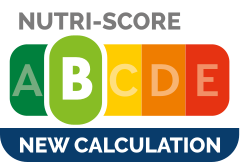
Nutri-Score

BGood nutritional quality

Nutri-Score data warning

Warning: the amount of fruits, vegetables and nuts is not specified on the label, it was estimated from the list of ingredients: 0

Nutrition facts

Nutrition factsAs sold for 100 g / 100 mlCompared to: Bergamot flavored black teas
Energy~ 5.092 kJ (1 kcal)5.207 kJ (1 kcal) (-2%)
Fat~ 0.00665 g0.004 g (+66%)
Saturated fat~ 0.0019 g0.001 g (+90%)
Carbohydrates~ 0.285 g0.235 g (+21%)
Sugars~ 0 g0.05 g (-100%)
Dietary fiber~ 0 g?
Proteins~ 0 g0.035 g (-100%)
Salt~ 0.007125 g0.005 g (+43%)
Fruits, vegetables and legumes~ 0 %?

Nutrition facts (Detailed data)

Nutrition factsAs sold for 100 g / 100 mlAs sold Per 100 g (estimate)
Energy~ 5.092 kJ (1 kcal)~ 5.092 kJ (1 kcal)
Fat~ 0.00665 g~ 0.00665 g
Saturated fat~ 0.0019 g~ 0.0019 g
Carbohydrates~ 0.285 g~ 0.285 g
Sugars~ 0 g~ 0 g
Dietary fiber~ 0 g~ 0 g
Proteins~ 0 g~ 0 g
Salt~ 0.007125 g~ 0.007125 g
Fruits, vegetables and legumes~ 0 %~ 0 %

Ingredients

Ingredients image

Thé Earl Grey bergamote ingredients image

Ingredients list

Thé noir Ceylan, arôme naturel de bergamote (5 %).

Ingredient information

Ceylon Black Tea
95% (estimate)
Natural Bergamot Orange Flavouring
5.0%

Ingredients analysis

Palm oil free
Yes

No ingredients containing palm oil.

Vegan
Unknown

Vegan status unknown

Vegetarian
Unknown

Vegetarian status unknown


Food Processing

NOVA group

4Ultra-processed food and drink products

Elements that indicate the product is in NOVA group 4

Ingredients
Flavouring

How NOVA works

The NOVA classification assigns food products into 4 groups based on their degree of processing: 1. Unprocessed or minimally processed foods 2. Processed culinary ingredients 3. Processed foods 4. Ultra-processed food and drink products

Additives

No additives detected or data is missing.

Environment

Green-Score, origins bonus, and transportation impact are shown for Worldwide .

Green Score

Overall grade

A+Very low environmental impact

About Green-Score

The Green-Score is an experimental score that summarizes the environmental impacts of food products.

Current scope

The Green-Score was initially developed for France and it is being extended to other European countries. The Green-Score formula is subject to change as it is regularly improved to make it more precise and better suited to each country. Select a country to include the full impact of transportation in the final score.

Life cycle analysis

Average impact of the category

A+Tea, brewed, without sugar • Score: 100/100

Life-cycle reference

Category: Tea, brewed, without sugar PEF environmental score: 0.01 Climate change impact: 0.04 kg CO2 eq / kg product The overall environmental impact figure (PEF) comes from ADEME's Agribalyse database, for the category: Tea, brewed, without sugar. Source: ADEME Agribalyse Database.

Overall environmental impact by stage (PEF)

The overall environmental impact figure (PEF) comes from ADEME's Agribalyse database, for the category: Tea, brewed, without sugar. Source: ADEME Agribalyse Database.

StageImpact
Agriculture64.1 %
Processing0.0 %
Packaging4.1 %
Transportation1.9 %
Distribution0.3 %
Consumption29.3 %

Bonuses and maluses

Production system

Bonus: +20 This bonus comes from environmental labels recognized by Open Food Facts.

Origins of ingredients

Declared origins: Sri Lanka Origins malus: 0 Transportation (Worldwide): 0 Environmental policy adjustment: 0 Select a country to include the full impact of transportation.

Packaging impact

Packaging with a medium impact Malus: -11 Packaging score: -8

Green-Score for this product

Green-Score for this product

A+Final score: 100/100

Final score breakdown

Life cycle analysis score: 100 Sum of bonuses and maluses: +9 Final score: 100/100

Carbon footprint

Carbon footprint

Equivalent to driving 0.0 km in a petrol car. 4 g CO2e per 100g of product. Reference category: Tea, brewed, without sugar. The carbon emission figure comes from ADEME's Agribalyse database, for the category: Tea, brewed, without sugar. Source: ADEME Agribalyse Database.

Climate impact by stage (CO2e)

The carbon emission figure comes from ADEME's Agribalyse database, for the category: Tea, brewed, without sugar. Source: ADEME Agribalyse Database.

StageImpact
Agriculture51.4 %
Processing0.0 %
Packaging14.7 %
Transportation7.2 %
Distribution0.4 %
Consumption26.4 %

Packaging

Packaging impact

Packaging with a medium impact Malus: -11 Packaging score: -8

Packaging components

ShapeMaterialRecyclingImpact
BAGPlasticUnknownHigh
UnknownCardboardUnknownLow

Declared packaging

Plastic, Bag, Cardboard

Data precision

The packaging information is not sufficiently precise to compute the most accurate packaging impact. Exact shapes and materials of all packaging components help improve the Green-Score.

Transportation

Origins of ingredients

Declared origins: Sri Lanka Origins malus: 0 Transportation (Worldwide): 0 Environmental policy adjustment: 0 Select a country to include the full impact of transportation.

Origins breakdown

OriginPercent of ingredientsImpact
SRI Lanka100 %High

Forest footprint

Forest footprint

No deforestation risk No ingredient associated with a deforestation risk. Forest Footprint The Forest Footprint is a methodology developed by the association Envol Vert to estimate the risk of deforestation related to our consumption. → More information on the methodology Forest Footprint grade: A No ingredient associated with a deforestation risk. Total Forest Footprint: 0.000 m² per kg of food

Deforestation risk details

Labels The presence of certain labels can greatly help reduce the risk of deforestation, through the presence of environmental criteria and/or through better remuneration of producers.

Data Source

Product data comes from Open Food Facts. Food Benchmark also adds translations, category comparisons and explanatory calculations.

The database is licensed under ODbL 1.0, individual contents under DbCL 1.0, and product photos under CC BY-SA 3.0.

Product added on October 14, 2016 at 8:30:38 PM UTC by sebleouf .

Last edit on March 17, 2026 at 10:45:34 PM UTC by new-nutrition-bot .

Product page also edited by new-nutrition-bot, packbot, pamputt, roboto-app, sebleouf.