

Pamplemousse
Labels
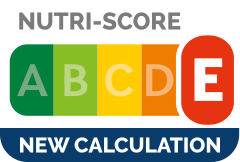 Bad nutritional quality
 Ultra-processed food and drink products
 Moderate environmental impact
Health
Nutrition
Label
Bad nutritional qualityNutrient levels
Fat in low quantity (0.5%)
Saturated fat in low quantity (0.1%)
Sugars in high quantity (9.4%)
Salt in low quantity (0.005%)
Nutrition label

Nutrition facts
| Nutrition facts | As sold for 100 ml |
|---|---|
| Energy | 168 kJ (40 kcal) |
| FAT | 0.5 g |
| Saturated fat | 0.1 g |
| Carbohydrates | 9.4 g |
| Sugars | 9.4 g |
| Dietary fiber | 0.5 g |
| Proteins | 0.5 g |
| Salt | 0.01 g |
| Sodium | 0 g |
| Minerals | |
| Fruits, vegetables and legumes | ~ 30 % |
Nutrition facts (Detailed data)
| Nutrition facts | As sold for 100 ml | As sold Per 100 ml (packaging) | As sold Per 100 g (estimate) |
|---|---|---|---|
| Energy | 168 kJ (40 kcal) | 168 kJ (40 kcal) | ~ 467.25 kJ (110 kcal) |
| FAT | 0.5 g | 0.5 g | ~ 0.06 g |
| Saturated fat | 0.1 g | 0.1 g | ~ 0 g |
| Cholesterol | ~ 0 g | ? | ~ 0 g |
| Carbohydrates | 9.4 g | 9.4 g | ~ 26.96 g |
| Sugars | 9.4 g | 9.4 g | ~ 26.6 g |
| Added sugars | ~ 25 g | ? | ~ 25 g |
| Sucrose | ~ 25.65 g | ? | ~ 25.65 g |
| Glucose | ~ 0.48 g | ? | ~ 0.48 g |
| Fructose | ~ 0.48 g | ? | ~ 0.48 g |
| Galactose | ~ 0 g | ? | ~ 0 g |
| Lactose | ~ 0.03 g | ? | ~ 0.03 g |
| Maltose | ~ 0.03 g | ? | ~ 0.03 g |
| Starch | ~ 0.05 g | ? | ~ 0.05 g |
| Polyols | ~ 0.06 g | ? | ~ 0.06 g |
| Dietary fiber | 0.5 g | 0.5 g | ~ 0.2 g |
| Proteins | 0.5 g | 0.5 g | ~ 0.06 g |
| Salt | 0.01 g | 0.01 g | ~ 0.01 g |
| Sodium | 0 g | 0 g | ~ 0 g |
| Alcohol | ~ 0 % vol | ? | ~ 0 % vol |
| Vitamins | |||
| Vitamin A | ~ 0 g | ? | ~ 0 g |
| Beta-carotene | ~ 0 g | ? | ~ 0 g |
| Vitamin D | ~ 0 g | ? | ~ 0 g |
| Vitamin E | ~ 0 g | ? | ~ 0 g |
| Vitamin C | ~ 0.01 g | ? | ~ 0.01 g |
| Vitamin B1 | ~ 0 g | ? | ~ 0 g |
| Vitamin B2 | ~ 0 g | ? | ~ 0 g |
| Vitamin PP | ~ 0 g | ? | ~ 0 g |
| Vitamin B6 | ~ 0 g | ? | ~ 0 g |
| Vitamin B9 | ~ 0 g | ? | ~ 0 g |
| Vitamin B12 | ~ 0 g | ? | ~ 0 g |
| Pantothenic acid | ~ 0 g | ? | ~ 0 g |
| Minerals | |||
| Potassium | ~ 0.04 g | ? | ~ 0.04 g |
| Calcium | ~ 0.01 g | ? | ~ 0.01 g |
| Phosphorus | ~ 0 g | ? | ~ 0 g |
| Iron | ~ 0 g | ? | ~ 0 g |
| Magnesium | ~ 0 g | ? | ~ 0 g |
| Zinc | ~ 0 g | ? | ~ 0 g |
| Copper | ~ 0 g | ? | ~ 0 g |
| Manganese | ~ 0 g | ? | ~ 0 g |
| Selenium | ~ 0 g | ? | ~ 0 g |
| Iodine | ~ 0 g | ? | ~ 0 g |
| Fruits, vegetables and legumes | ~ 30 % | ? | ~ 30 % |
| Phylloquinone | ~ 0 g | ? | ~ 0 g |
| Water | ~ 72.37 g | ? | ~ 72.37 g |
Serving size
Estimated Activity Time
Approximate time needed to burn the energy in 100 g / 100 ml: 168 kJ. Reference adult weight: 70 kg. Energy density: Moderate.
Ingredients
Ingredients image

Ingredients list
Ingredient information
Ingredients analysis
No ingredients containing palm oil.
Vegan status unknown
Unrecognized: fr:dont-pamplemousse-de-moorea
Vegetarian status unknown
Unrecognized: fr:dont-pamplemousse-de-moorea
Food Processing
NOVA group
Ultra-processed food and drink productsElements that indicate the product is in NOVA group 4
How NOVA works
Additives
E330 - Citric acidAntioxidantSequestrant
Citric acid is a natural organic acid found in citrus fruits such as lemons, oranges, and limes.
It is widely used in the food industry as a flavor enhancer, acidulant, and preservative due to its tart and refreshing taste.
Citric acid is safe for consumption when used in moderation and is considered a generally recognized as safe (GRAS) food additive by regulatory agencies worldwide.
Environment
Green-Score, origins bonus, and transportation impact are shown for Worldwide .
Green Score
Overall grade
Moderate environmental impactAbout Green-Score
Current scope
Life cycle analysis
Average impact of the category
 Fruit soft drink, still (fruit juice content unspecified), with sugar • Score: 69/100
Life-cycle reference
Overall environmental impact by stage (PEF)
The overall environmental impact figure (PEF) comes from ADEME's Agribalyse database, for the category: Fruit soft drink, still (fruit juice content unspecified), with sugar. Source: ADEME Agribalyse Database.
| Stage | Impact |
|---|---|
| Agriculture | 41.7 % |
| Processing | 0.1 % |
| Packaging | 27.0 % |
| Transportation | 17.1 % |
| Distribution | 11.0 % |
| Consumption | 3.1 % |
Bonuses and maluses
Origins of ingredients
Packaging impact
Green-Score for this product
Green-Score for this product
Final score: 59/100Final score breakdown
Carbon footprint
Carbon footprint
Climate impact by stage (CO2e)
The carbon emission figure comes from ADEME's Agribalyse database, for the category: Fruit soft drink, still (fruit juice content unspecified), with sugar. Source: ADEME Agribalyse Database.
| Stage | Impact |
|---|---|
| Agriculture | 33.6 % |
| Processing | 0.0 % |
| Packaging | 24.4 % |
| Transportation | 34.5 % |
| Distribution | 6.4 % |
| Consumption | 1.2 % |
Packaging
Packaging impact
Packaging materials
| Material | % | Packaging weight | Packaging weight per 100 g of product |
|---|---|---|---|
| Unknown | |||
| Total |
Declared packaging
Data precision
Transportation
Manufacturing locations
Origins of ingredients
Origins breakdown
| Origin | Percent of ingredients | Impact |
|---|---|---|
| French Polynesia | 100 % | High |
Data Source
Data presented on this page is sourced from the Open Food Facts database. This platform does not alter the original dataset; its purpose is solely to enhance data visualization and user accessibility.
Product added on January 3, 2018 at 9:31:14 PM UTC by amc1961 .
Last edit on March 17, 2026 at 8:58:47 PM UTC by new-nutrition-bot .
Product page also edited by amc1961, moon-rabbit, n1coc4cola, new-nutrition-bot, packbot.