ProductsSnaktasticWasabi mix rice snacks
Wasabi mix rice snacks
Barcode 20977757
Snaktastic

Wasabi mix rice snacks

150 g
BARCODE:20977757
COMMON NAME:Wasabi flavoured rice snacks and coated peanuts
CATEGORIES:Snacks
LABELS:Vegetarian, Natural Colorings, Natural Flavors
COUNTRIES:Belgium, United Kingdom
STORES:Lidl

Health

Nutrition

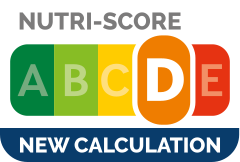
Nutri-Score

DLower nutritional quality

Nutri-Score data warning

Warning: the amount of fruits, vegetables and nuts is not specified on the label, it was estimated from the list of ingredients: 17

Nutrient levels

Fat in moderate quantity (17.7%)
What you need to know • A high consumption of fat, especially saturated fats, can raise cholesterol, which increases the risk of heart diseases. Recommendation: Limit the consumption of fat and saturated fat • Choose products with lower fat and saturated fat content. Source: National Health Service UK (NHS) - Fat: the facts
Saturated fat in moderate quantity (4%)
What you need to know • A high consumption of fat, especially saturated fats, can raise cholesterol, which increases the risk of heart diseases. Recommendation: Limit the consumption of fat and saturated fat • Choose products with lower fat and saturated fat content. Source: National Health Service UK (NHS) - Fat: the facts
Sugars in high quantity (14.9%)
What you need to know • A high consumption of sugar can cause weight gain and tooth decay. It also augments the risk of type 2 diabetes and cardio-vascular diseases. Recommendation: Limit the consumption of sugar and sugary drinks • Sugary drinks (such as sodas, fruit beverages, and fruit juices and nectars) should be limited as much as possible (no more than 1 glass a day). • Choose products with lower sugar content and reduce the consumption of products with added sugars. Source: National Health Service UK (NHS) - Sugar: the facts
Salt in moderate quantity (1.05%)
What you need to know • A high consumption of salt (or sodium) can cause raised blood pressure, which can increase the risk of heart disease and stroke. • Many people who have high blood pressure do not know it, as there are often no symptoms. • Most people consume too much salt (on average 9 to 12 grams per day), around twice the recommended maximum level of intake. Recommendation: Limit the consumption of salt and salted food • Reduce the quantity of salt used when cooking, and don't salt again at the table. • Limit the consumption of salty snacks and choose products with lower salt content. Source: World Health Organization (WHO) - Fact sheet - Salt reduction Source: National Health Service UK (NHS) - Salt: the facts

Nutrition label

Wasabi mix rice snacks nutrition label

Nutrition facts

Nutrition factsAs sold for 100 g / 100 mlCompared to: Snacks
Energy1954 kJ (465 kcal)1,863.91 kJ (445 kcal) (+5%)
Fat17.7 g20.367 g (-13%)
Saturated fat4 g8.163 g (-51%)
Monounsaturated fat8.5 g8.476 g (~0%)
Polyunsaturated fat4.6 g2.99 g (+54%)
Carbohydrates68.1 g55.722 g (+22%)
Sugars14.9 g27.38 g (-46%)
Dietary fiber2.2 g?
Proteins7.3 g6.502 g (+12%)
Salt1.05 g0.557 g (+89%)
Sodium0.42 g0.223 g (+88%)
Fruits, vegetables and legumes??

Nutrition facts (Detailed data)

Nutrition factsAs sold for 100 g / 100 mlAs sold Per serving (legacy)
Energy1954 kJ (465 kcal)586 kJ (140 kcal)
Fat17.7 g5.31 g
Saturated fat4 g1.2 g
Monounsaturated fat8.5 g2.55 g
Polyunsaturated fat4.6 g1.38 g
Carbohydrates68.1 g20.4 g
Sugars14.9 g4.47 g
Dietary fiber2.2 g0.66 g
Proteins7.3 g2.19 g
Salt1.05 g0.315 g
Sodium0.42 g0.126 g
Fruits, vegetables and legumes??

Serving size

30g

Ingredients

Ingredients image

Wasabi mix rice snacks ingredients image

Ingredients list

Rice 26%, Peanuts 16%, Vegetable Oil (Sunflower, Rice, Coconut), Modified Corn Starch, Starch (Corn, Tapioca), Sugar, - Wheat_ Flour, Maltodextrin, Wasabi Seasoning (Dextrose, Flavouring (contains Mustard), Onion Powder, Spices (contain Mustard), Wasabi Powder 0.1%, Glucose, Acid (Citric Acid)), Salt, Dextrin, Soy Sauce (Soya Beans, Wheat, Water, Salt), Lactose (Milk), Potassium Chloride, Seaweed, Colours (Curcumin, Copper Complexes of Chlorophyll, Plain Caramel, Paprika Extract), Yeast Extract, Antioxidant (Tocopherol-Rich Extract), Capsicum Extract, Soy Sauce Powder (Soya Beans, Wheat, Salt, Maltodextrin).

Ingredient information

Rice
26.0%
Peanut
16.0%
Vegetable Oil
9.61% (estimate)
Sunflower Oil
5.34% (estimate)
Rice
2.13% (estimate)
Coconut Oil
2.13% (estimate)
Modified Corn Starch
9.24% (estimate)
Starch
8.81% (estimate)
Corn Starch
4.81% (estimate)
Tapioca
4% (estimate)
Sugar
7.07% (estimate)
Wheat Flour
5.57% (estimate)
Maltodextrin
4.69% (estimate)
Wasabi Seasoning
3.98% (estimate)
Dextrose
2.04% (estimate)
Flavouring
1.02% (estimate)
Onion
0.51% (estimate)
Spice
0.26% (estimate)
Mustard
0.26% (estimate)
Wasabi
0.1%
Glucose
0.03% (estimate)
Acid
0.03% (estimate)
E330
0.03% (estimate)
Salt
0.53% (estimate)
E1400
0.53% (estimate)
Soy Sauce
0.53% (estimate)
Soya Bean
0.26% (estimate)
Wheat
0.13% (estimate)
Water
0.07% (estimate)
Salt
0.07% (estimate)
Lactose
0.53% (estimate)
E508
0.53% (estimate)
Seaweed
0.53% (estimate)
Colour
0.53% (estimate)
E100
0.26% (estimate)
Copper Complexes Of Chlorophyll
0.13% (estimate)
E150a
0.07% (estimate)
E160c
0.07% (estimate)
Yeast Extract
0.53% (estimate)
Antioxidant
0.53% (estimate)
E306
0.53% (estimate)
Capsicum Extract
0.53% (estimate)
Soy Sauce
3.78% (estimate)
Soya Bean
0.53% (estimate)
Wheat
0.26% (estimate)
Salt
0.18% (estimate)
Maltodextrin
2.82% (estimate)

Added sugars

Contains added sugars (5%) Added sugars: sugar, dextrose, glucose Quantity of added sugars: 5%

Allergens

GlutenMilkMustardPeanutsSoybeans

Traces

NutsSesame Seeds

Ingredients analysis

Palm oil free
Yes

No ingredients containing palm oil.

Unrecognized: en:wasabi-seasoning, en:copper-complexes-of-chlorophyll

Vegan
No

Contains non-vegan ingredients.

Unrecognized: en:wasabi-seasoning, en:mustard, en:copper-complexes-of-chlorophyll

Vegetarian
Yes

No non-vegetarian ingredients.

Unrecognized: en:wasabi-seasoning, en:mustard, en:copper-complexes-of-chlorophyll


Food Processing

NOVA group

4Ultra-processed food and drink products

Elements that indicate the product is in NOVA group 4

Additives
E100 - Curcumin
Additives
E1400 - Dextrin
Additives
E141 - Copper complexes of chlorophylls and chlorophyllins
Additives
E150a - Plain caramel
Additives
E160c - Paprika extract
Ingredients
Colour
Ingredients
Dextrose
Ingredients
Flavouring
Ingredients
Glucose
Ingredients
Lactose
Ingredients
Maltodextrin
Ingredients
Modified Starch

How NOVA works

The NOVA classification assigns food products into 4 groups based on their degree of processing: 1. Unprocessed or minimally processed foods 2. Processed culinary ingredients 3. Processed foods 4. Ultra-processed food and drink products

Additives

E100 - CurcuminColour

No additive description is available yet.

E1400 - DextrinCarrierEmulsifierStabiliserThickener

Dextrins are a group of low-molecular-weight carbohydrates produced by the hydrolysis of starch or glycogen. Dextrins are mixtures of polymers of D-glucose units linked by α-(1→4) or α-(1→6) glycosidic bonds. Dextrins can be produced from starch using enzymes like amylases, as during digestion in the human body and during malting and mashing, or by applying dry heat under acidic conditions (pyrolysis or roasting). The latter process is used industrially, and also occurs on the surface of bread during the baking process, contributing to flavor, color and crispness. Dextrins produced by heat are also known as pyrodextrins. The starch hydrolyses during roasting under acidic conditions, and short-chained starch parts partially rebranch with α-(1,6) bonds to the degraded starch molecule. See also Maillard Reaction. Dextrins are white, yellow, or brown powders that are partially or fully water-soluble, yielding optically active solutions of low viscosity. Most of them can be detected with iodine solution, giving a red coloration; one distinguishes erythrodextrin (dextrin that colours red) and achrodextrin (giving no colour). White and yellow dextrins from starch roasted with little or no acid are called British gum.

E141 - Copper complexes of chlorophylls and chlorophyllinsColour

No additive description is available yet.

E141i - Copper complexes of chlorophyllsColour

No additive description is available yet.

E150a - Plain caramel EFSA overexposure risk: noColour

Caramel color or caramel coloring is a water-soluble food coloring.

E160c - Paprika extractColour

No additive description is available yet.

E306 - Tocopherol-rich extract

No additive description is available yet.

E330 - Citric acidAntioxidantSequestrant

Citric acid is a natural organic acid found in citrus fruits such as lemons, oranges, and limes.

It is widely used in the food industry as a flavor enhancer, acidulant, and preservative due to its tart and refreshing taste.

Citric acid is safe for consumption when used in moderation and is considered a generally recognized as safe (GRAS) food additive by regulatory agencies worldwide.

Environment

Green-Score, origins bonus, and transportation impact are shown for Worldwide .

Green Score

Overall grade

UnknownUnknown environmental impact

About Green-Score

The Green-Score is an experimental score that summarizes the environmental impacts of food products.

Current scope

The Green-Score was initially developed for France and it is being extended to other European countries. The Green-Score formula is subject to change as it is regularly improved to make it more precise and better suited to each country. Select a country to include the full impact of transportation in the final score.

Green-Score availability

We could not compute the Green-Score of this product because some data is missing. A more precise category, ingredients list, origins or packaging data can unlock the computation.

Bonuses and maluses

Declared origins

Origins of ingredients are missing for this product. Ingredients need to be completed before the transportation bonus can be computed precisely.

Packaging impact

Packaging with a high impact Malus: -15 The information about the packaging of this product is not filled in.

Packaging

Wasabi mix rice snacks packaging image

Packaging impact

Packaging with a high impact Malus: -15 The information about the packaging of this product is not filled in.

Data precision

The packaging information is not sufficiently precise to compute the most accurate packaging impact. Exact shapes and materials of all packaging components help improve the Green-Score.

Transportation

Declared origins

Origins of ingredients are missing for this product. Ingredients need to be completed before the transportation bonus can be computed precisely.

Forest footprint

Forest footprint

Forest Footprint not computed Potential deforestation risk but not yet computed. Forest Footprint The Forest Footprint is a methodology developed by the association Envol Vert to estimate the risk of deforestation related to our consumption. → More information on the methodology Forest Footprint not computed Potential deforestation risk but not yet computed.

Deforestation risk details

Other risky ingredients These ingredients are not yet assessed for deforestation risk: rice rice soya bean soya bean

Data Source

Product data comes from Open Food Facts. Food Benchmark also adds translations, category comparisons and explanatory calculations.

The database is licensed under ODbL 1.0, individual contents under DbCL 1.0, and product photos under CC BY-SA 3.0.

Product added on June 1, 2019 at 4:15:13 PM UTC by kiliweb .

Last edit on July 7, 2025 at 11:03:03 AM UTC by foodless .

Product page also edited by alia, foodless, kiliweb, openfoodfacts-contributors, roboto-app, teolemon, yuka.Vkw0d0tvRVRqTUVNZy9BYXhCWGY0Y04wekxTMWQzbTdCZkF4SVE9PQ.