
Walgreen Co., Gummy Hearts
Health
Nutrition
Nutri-Score
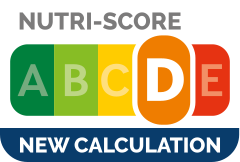 Lower nutritional quality
Nutri-Score data warning
Nutrient levels
Fat in low quantity (0%)
Saturated fat in low quantity (0%)
Sugars in high quantity (34%)
Salt in low quantity (0.05%)
Nutrition facts
| Nutrition facts | As sold for 100 g / 100 ml | Compared to: Confectioneries |
|---|---|---|
| Energy | 1423 kcal (340 kcal) | 1,789.014 kJ (424 kcal) |
| Fat | 0 g | 15.442 g (-100%) |
| Saturated fat | 0 g | 7.14 g (-100%) |
| Trans fat | 0 g | 0.026 g (-100%) |
| Cholesterol | 0 mg | 5.952 mg (-100%) |
| Carbohydrates | 78 g | 65.574 g (+19%) |
| Sugars | 34 g | 47.004 g (-28%) |
| Dietary fiber | 0 g | ? |
| Proteins | 6 g | 4.398 g (+36%) |
| Salt | 0.05 mg | 0.162 g (-100%) |
| Sodium | 0.02 mg | 0.065 g (-100%) |
| Vitamin A | 0 IU | 13.016 µg |
| Vitamin C | 0 mg | ? |
| Calcium | 0 mg | 79.363 mg (-100%) |
| Iron | 0 mg | 1.28 mg (-100%) |
| Fruits, vegetables and legumes | ? | ? |
Nutrition facts (Detailed data)
| Nutrition facts | As sold for 100 g / 100 ml | As sold Per serving (legacy) |
|---|---|---|
| Energy | 1423 kcal (340 kcal) | 712 kcal (170 kcal) |
| Fat | 0 g | 0 g |
| Saturated fat | 0 g | 0 g |
| Trans fat | 0 g | 0 g |
| Cholesterol | 0 mg | 0 mg |
| Carbohydrates | 78 g | 39 g |
| Sugars | 34 g | 17 g |
| Dietary fiber | 0 g | 0 g |
| Proteins | 6 g | 3 g |
| Salt | 0.05 mg | 0.025 mg |
| Sodium | 0.02 mg | 0.01 mg |
| Vitamin A | 0 IU | 0 IU |
| Vitamin C | 0 mg | 0 mg |
| Calcium | 0 mg | 0 mg |
| Iron | 0 mg | 0 mg |
| Fruits, vegetables and legumes | ? | ? |
Serving size
Ingredients
Ingredients list
Ingredient information
Added sugars
Allergens
Ingredients analysis
Palm oil content unknown
Contains non-vegan ingredients.
Unrecognized: en:fd-c-red-no, en:40
Contains non-vegetarian ingredients.
Unrecognized: en:fd-c-red-no, en:40
Food Processing
NOVA group
 Ultra-processed food and drink products
Elements that indicate the product is in NOVA group 4
How NOVA works
Additives
E171 - Titanium dioxideColour
Titanium dioxide, also known as titanium(IV) oxide or titania, is the naturally occurring oxide of titanium, chemical formula TiO2. When used as a pigment, it is called titanium white, Pigment White 6 (PW6), or CI 77891. Generally, it is sourced from ilmenite, rutile and anatase. It has a wide range of applications, including paint, sunscreen and food coloring. When used as a food coloring, it has E number E171. World production in 2014 exceeded 9 million metric tons. It has been estimated that titanium dioxide is used in two-thirds of all pigments, and the oxide has been valued at $13.2 billion.
E296 - Malic acid
MALIC ACID is an organic compound with the molecular formula C4H6O5. Malic acid has two stereoisomeric forms (L- and D-enantiomers), though only the L-isomer exists naturally.
E330 - Citric acidAntioxidantSequestrant
Citric acid is a natural organic acid found in citrus fruits such as lemons, oranges, and limes.
It is widely used in the food industry as a flavor enhancer, acidulant, and preservative due to its tart and refreshing taste.
Citric acid is safe for consumption when used in moderation and is considered a generally recognized as safe (GRAS) food additive by regulatory agencies worldwide.
E420 - SorbitolHumectantSequestrantStabiliserSweetenerThickener
Sorbitol (), less commonly known as glucitol (), is a sugar alcohol with a sweet taste which the human body metabolizes slowly. It can be obtained by reduction of glucose, which changes the aldehyde group to a hydroxyl group. Most sorbitol is made from corn syrup, but it is also found in nature, for example in apples, pears, peaches, and prunes. It is converted to fructose by sorbitol-6-phosphate 2-dehydrogenase. Sorbitol is an isomer of mannitol, another sugar alcohol; the two differ only in the orientation of the hydroxyl group on carbon 2. While similar, the two sugar alcohols have very different sources in nature, melting points, and uses.
E428 - Gelatine
No additive description is available yet.
E440 - PectinsEmulsifierStabiliserThickener
Pectins (E440) are natural carbohydrates, predominantly found in fruits, that act as gelling agents in the food industry, creating the desirable jelly-like texture in jams, jellies, and marmalades.
Pectins stabilize and thicken various food products, such as desserts, confectioneries, and beverages, ensuring a uniform consistency and quality.
Recognized as safe by various health authorities, pectins have been widely used without notable adverse effects when consumed in typical dietary amounts.
E903 - Carnauba waxCarrier
Carnauba (; Portuguese: carnaúba [kaʁnɐˈubɐ]), also called Brazil wax and palm wax, is a wax of the leaves of the palm Copernicia prunifera (Synonym: Copernicia cerifera), a plant native to and grown only in the northeastern Brazilian states of Piauí, Ceará, Maranhão, Bahia, and Rio Grande do Norte. It is known as "queen of waxes" and in its pure state, usually comes in the form of hard yellow-brown flakes. It is obtained from the leaves of the carnauba palm by collecting and drying them, beating them to loosen the wax, then refining and bleaching the wax.
Environment
Green-Score, origins bonus, and transportation impact are shown for Worldwide .
Green Score
Overall grade
 Unknown environmental impact
About Green-Score
Current scope
Green-Score availability
Bonuses and maluses
Declared origins
Packaging impact
Packaging
Packaging impact
Data precision
Transportation
Declared origins
Data Source
Product data comes from Open Food Facts. Food Benchmark also adds translations, category comparisons and explanatory calculations.
The database is licensed under ODbL 1.0, individual contents under DbCL 1.0, and product photos under CC BY-SA 3.0.
Product added on March 9, 2017 at 3:52:56 PM UTC by usda-ndb-import .
Last edit on April 22, 2020 at 8:26:06 PM UTC by org-database-usda .
Product page also edited by usda-ndb-import, org-database-usda.
Source List
- usda-ndb
- database-usda