
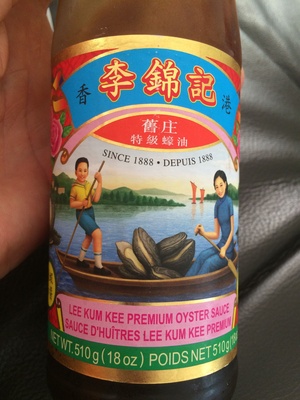
Premium oyster sauce
Labels
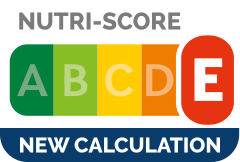 Bad nutritional quality
 Ultra-processed food and drink products
 Not computed
Health
Nutrition
Label
Bad nutritional qualityNutrient levels
Fat in low quantity (0%)
Saturated fat in low quantity (0%)
Sugars in high quantity (21.1%)
Salt in high quantity (10.9%)
Nutrition label

Nutrition facts
| Nutrition facts | As sold for 100 g / 100 ml |
|---|---|
| Energy | ~ 626.32 kJ (158 kcal) |
| FAT | 0 g |
| Saturated fat | 0 g |
| Carbohydrates | 31.58 g |
| Sugars | 21.05 g |
| Added sugars | 21.05 g |
| Dietary fiber | ~ 0.08 g |
| Proteins | 5.26 g |
| Salt | 10.92 g |
| Sodium | 4.37 g |
| Minerals | |
| Fruits, vegetables and legumes | ~ 0 % |
Nutrition facts (Detailed data)
| Nutrition facts | As sold for 100 g / 100 ml | As sold Per serving (19 g) (packaging) | As sold Per 100 g (estimate) |
|---|---|---|---|
| Energy | ~ 626.32 kJ (158 kcal) | ? (30 kcal) | ~ 319.19 kJ (76 kcal) |
| FAT | 0 g | 0 g | ~ 1.73 g |
| Saturated fat | 0 g | 0 g | ~ 0.31 g |
| Cholesterol | ~ 0.02 g | ? | ~ 0.02 g |
| Carbohydrates | 31.58 g | 6 g | ~ 7.1 g |
| Sugars | 21.05 g | 4 g | ~ 2.01 g |
| Added sugars | 21.05 g | 4 g | ~ 2 g |
| Sucrose | ~ 2 g | ? | ~ 2 g |
| Glucose | ~ 0 g | ? | ~ 0 g |
| Fructose | ~ 0 g | ? | ~ 0 g |
| Galactose | ~ 0 g | ? | ~ 0 g |
| Lactose | ~ 0 g | ? | ~ 0 g |
| Maltose | ~ 0.01 g | ? | ~ 0.01 g |
| Starch | ~ 1.52 g | ? | ~ 1.52 g |
| Polyols | ~ 0 g | ? | ~ 0 g |
| Dietary fiber | ~ 0.08 g | ? | ~ 0.08 g |
| Proteins | 5.26 g | 1 g | ~ 7.87 g |
| Salt | 10.92 g | 2.08 g | ~ 2.32 g |
| Sodium | 4.37 g | 0.83 g | ~ 0.93 g |
| Alcohol | ~ 0 % vol | ? | ~ 0 % vol |
| Vitamins | |||
| Vitamin A | ~ 0 g | ? | ~ 0 g |
| Beta-carotene | ~ 0 g | ? | ~ 0 g |
| Vitamin D | ~ 0 g | ? | ~ 0 g |
| Vitamin E | ~ 0 g | ? | ~ 0 g |
| Vitamin C | ~ 0 g | ? | ~ 0 g |
| Vitamin B1 | ~ 0 g | ? | ~ 0 g |
| Vitamin B2 | ~ 0 g | ? | ~ 0 g |
| Vitamin PP | ~ 0 g | ? | ~ 0 g |
| Vitamin B6 | ~ 0 g | ? | ~ 0 g |
| Vitamin B9 | ~ 0 g | ? | ~ 0 g |
| Vitamin B12 | ~ 0 g | ? | ~ 0 g |
| Pantothenic acid | ~ 0 g | ? | ~ 0 g |
| Minerals | |||
| Potassium | ~ 0.16 g | ? | ~ 0.16 g |
| Calcium | ~ 0.08 g | ? | ~ 0.08 g |
| Phosphorus | ~ 0.09 g | ? | ~ 0.09 g |
| Iron | ~ 0 g | ? | ~ 0 g |
| Magnesium | ~ 0.08 g | ? | ~ 0.08 g |
| Zinc | ~ 0.02 g | ? | ~ 0.02 g |
| Copper | ~ 0 g | ? | ~ 0 g |
| Manganese | ~ 0 g | ? | ~ 0 g |
| Selenium | ~ 0 g | ? | ~ 0 g |
| Iodine | ~ 0 g | ? | ~ 0 g |
| Fruits, vegetables and legumes | ~ 0 % | ? | ~ 0 % |
| Phylloquinone | ~ 0 g | ? | ~ 0 g |
| Water | ~ 77.07 g | ? | ~ 77.07 g |
Serving size
Estimated Activity Time
Approximate time needed to burn the energy in 100 g / 100 ml: 626 kJ. Reference adult weight: 70 kg. Energy density: Low.
Ingredients
Ingredients image
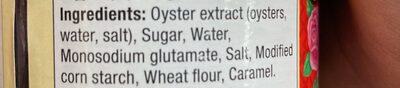
Ingredients list
Ingredient information
Allergens
Ingredients analysis
No ingredients containing palm oil.
Contains non-vegan ingredients.
Contains non-vegetarian ingredients.
Food Processing
NOVA group
Ultra-processed food and drink productsElements that indicate the product is in NOVA group 4
How NOVA works
Additives
E621 - Monosodium glutamateFlavour Enhancer
Monosodium glutamate (MSG), or E621, is the sodium salt of glutamic acid, an amino acid found naturally in many foods.
It is widely used as a flavor enhancer to provide an "umami" or savory taste to a variety of processed foods, including soups, snack chips, and frozen meals.
MSG is generally recognized as safe (GRAS) by food authorities. However, some people report sensitivity to MSG, experiencing short-term symptoms like headaches and flushing, though scientific studies have not shown a consistent link.
Environment
Carbon footprint
Packaging
Data Source
Data presented on this page is sourced from the Open Food Facts database. This platform does not alter the original dataset; its purpose is solely to enhance data visualization and user accessibility.
Product added on November 4, 2014 at 2:49:01 AM UTC by openfoodfacts-contributors .
Last edit on March 17, 2026 at 12:11:12 PM UTC by new-nutrition-bot .
Product page also edited by aleene, date-limite-app, eatshalal, foodless, inf, kiliweb, lsin, macrofactor, marilyn, naruyoko, new-nutrition-bot, openfoodfacts-contributors, packbot, teolemon, tmbe7, upcbot, usda-ndb-import, yuka.V0lFT0NmMHptUGtCaXNNTXh6UGV5dEpOMnFTTFFVYnBJY05NSVE9PQ, yuka.V1k0YkRLNE1pcU16dXZNaXJoNzFwZk1xd01XSmNrenZCOGROSUE9PQ, yuka.sY2b0xO6T85zoF3NwEKvln1nUYWAgBj6NDzmnUm25Oy_C5XvcMwjyKGgGqs, yukafix.
Source List