
Old dutch, arriba tortilla chips
Health
Nutrition
Nutri-Score
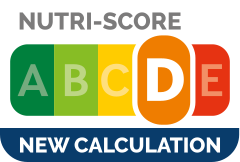 Lower nutritional quality
Nutrient levels
Fat in high quantity (28.6%)
Saturated fat in moderate quantity (3.57%)
Sugars in low quantity (3.57%)
Salt in high quantity (1.78%)
Nutrition facts
| Nutrition facts | As sold for 100 g / 100 ml | Compared to: Corns and their products |
|---|---|---|
| Energy | 2243 kcal (536 kcal) | 1,686.527 kJ (396 kcal) |
| Fat | 28.57 g | 14.899 g (+92%) |
| Saturated fat | 3.57 g | 1.95 g (+83%) |
| Trans fat | 0 g | ? |
| Cholesterol | 0 mg | 0 mg |
| Carbohydrates | 60.71 g | 54.964 g (+10%) |
| Sugars | 3.57 g | 2.236 g (+60%) |
| Dietary fiber | 7.1 g | ? |
| Proteins | 7.14 g | 6.812 g (+5%) |
| Salt | 1.785 mg | 0.941 g (-100%) |
| Sodium | 0.714 mg | 0.376 g (-100%) |
| Vitamin A | 0 IU | ? |
| Vitamin C | 0 mg | ? |
| Calcium | 0.143 mg | 33.5 mg (-100%) |
| Iron | 0.00129 mg | 1.841 mg (-100%) |
| Fruits, vegetables and legumes | ? | ? |
Nutrition facts (Detailed data)
| Nutrition facts | As sold for 100 g / 100 ml | As sold Per serving (legacy) |
|---|---|---|
| Energy | 2243 kcal (536 kcal) | 628 kcal (150 kcal) |
| Fat | 28.57 g | 8 g |
| Saturated fat | 3.57 g | 1 g |
| Trans fat | 0 g | 0 g |
| Cholesterol | 0 mg | 0 mg |
| Carbohydrates | 60.71 g | 17 g |
| Sugars | 3.57 g | 1 g |
| Dietary fiber | 7.1 g | 1.99 g |
| Proteins | 7.14 g | 2 g |
| Salt | 1.785 mg | 0.5 mg |
| Sodium | 0.714 mg | 0.2 mg |
| Vitamin A | 0 IU | 0 IU |
| Vitamin C | 0 mg | 0 mg |
| Calcium | 0.143 mg | 0.04 mg |
| Iron | 0.00129 mg | 0.000361 mg |
| Fruits, vegetables and legumes | ? | ? |
Serving size
Ingredients
Ingredients list
Ingredient information
Added sugars
Allergens
Ingredients analysis
Palm oil content unknown
Contains non-vegan ingredients.
Unrecognized: en:contains-two-percent-and-less-of, en:bacterial-culture, en:tricalcium, en:phosphate, en:annatto-color, en:e339ii
Vegetarian status unknown
Unrecognized: en:contains-two-percent-and-less-of, en:bacterial-culture, en:tricalcium, en:phosphate, en:annatto-color, en:e339ii
Food Processing
NOVA group
 Ultra-processed food and drink products
Elements that indicate the product is in NOVA group 4
How NOVA works
Additives
E1104 - lipase
A LIPASE is any enzyme that catalyzes the hydrolysis of fats (lipids). Lipases serve important roles in human practices as ancient as yogurt and cheese fermentation. Lipases are generally animal sourced, but can also be sourced microbially.
E160c - Paprika extractColour
No additive description is available yet.
E262 - Sodium acetatesPreservativeSequestrant
SODIUM ACETATE, also abbreviated NaOAc,[8] is the sodium salt of acetic acid.
E262ii - Sodium diacetatePreservativeSequestrant
No additive description is available yet.
E270 - Lactic acid
LACTIC ACID is an organic compound with the formula CH3CH(OH)CO2H. In the form of its conjugate base called lactate (this is thus different and kept as a separate ingredient). Lactic acid is chiral, consisting of two optical isomers. One is known as L-(+)-lactic acid or (S)-lactic acid and the other, its mirror image, is D-(−)-lactic acid or (R)-lactic acid in food the L-variant is used
E320 - Butylated hydroxyanisole (bha)Antioxidant
Butylated hydroxyanisole (BHA) is an antioxidant consisting of a mixture of two isomeric organic compounds, 2-tert-butyl-4-hydroxyanisole and 3-tert-butyl-4-hydroxyanisole. It is prepared from 4-methoxyphenol and isobutylene. It is a waxy solid used as a food additive with the E number E320. The primary use for BHA is as an antioxidant and preservative in food, food packaging, animal feed, cosmetics, rubber, and petroleum products. BHA also is commonly used in medicines, such as isotretinoin, lovastatin, and simvastatin, among others.
E321 - Butylated hydroxytolueneAntioxidant
Butylated hydroxytoluene (BHT), also known as dibutylhydroxytoluene, is a lipophilic organic compound, chemically a derivative of phenol, that is useful for its antioxidant properties. European and U.S. regulations allow small amounts to be used as a food additive. In addition to this use, BHT is widely used to prevent oxidation in fluids (e.g. fuel, oil) and other materials where free radicals must be controlled.
E330 - Citric acidAntioxidantSequestrant
Citric acid is a natural organic acid found in citrus fruits such as lemons, oranges, and limes.
It is widely used in the food industry as a flavor enhancer, acidulant, and preservative due to its tart and refreshing taste.
Citric acid is safe for consumption when used in moderation and is considered a generally recognized as safe (GRAS) food additive by regulatory agencies worldwide.
E339ii - Disodium phosphateEmulsifierHumectantPreservativeSequestrantStabiliserThickener
No additive description is available yet.
E471 - Mono- and diglycerides of fatty acidsEmulsifierStabiliser
Mono- and diglycerides of fatty acids (E471), are food additives commonly used as emulsifiers in various processed foods.
These compounds consist of glycerol molecules linked to one or two fatty acid chains, which help stabilize and blend water and oil-based ingredients. E471 enhances the texture and shelf life of products like margarine, baked goods, and ice cream, ensuring a smooth and consistent texture.
It is generally considered safe for consumption within established regulatory limits.
E621 - Monosodium glutamate EFSA overexposure risk: highFlavour Enhancer
Monosodium glutamate (MSG), or E621, is the sodium salt of glutamic acid, an amino acid found naturally in many foods.
It is widely used as a flavor enhancer to provide an "umami" or savory taste to a variety of processed foods, including soups, snack chips, and frozen meals.
MSG is generally recognized as safe (GRAS) by food authorities. However, some people report sensitivity to MSG, experiencing short-term symptoms like headaches and flushing, though scientific studies have not shown a consistent link.
Environment
Green-Score, origins bonus, and transportation impact are shown for Worldwide .
Green Score
Overall grade
 Low environmental impact
About Green-Score
Current scope
Life cycle analysis
Average impact of the category
 Corn chips or tortilla chips • Score: 88/100
Life-cycle reference
Overall environmental impact by stage (PEF)
The overall environmental impact figure (PEF) comes from ADEME's Agribalyse database, for the category: Corn chips or tortilla chips. Source: ADEME Agribalyse Database.
| Stage | Impact |
|---|---|
| Agriculture | 61.9 % |
| Processing | 17.8 % |
| Packaging | 10.9 % |
| Transportation | 7.2 % |
| Distribution | 2.2 % |
| Consumption | 0.0 % |
Bonuses and maluses
Declared origins
Packaging impact
Green-Score for this product
Green-Score for this product
Final score: 68/100Final score breakdown
Carbon footprint
Carbon footprint
Climate impact by stage (CO2e)
The carbon emission figure comes from ADEME's Agribalyse database, for the category: Corn chips or tortilla chips. Source: ADEME Agribalyse Database.
| Stage | Impact |
|---|---|
| Agriculture | 53.6 % |
| Processing | 15.0 % |
| Packaging | 18.2 % |
| Transportation | 11.9 % |
| Distribution | 1.3 % |
| Consumption | 0.0 % |
Packaging
Packaging impact
Data precision
Transportation
Declared origins
Data Source
Product data comes from Open Food Facts. Food Benchmark also adds translations, category comparisons and explanatory calculations.
The database is licensed under ODbL 1.0, individual contents under DbCL 1.0, and product photos under CC BY-SA 3.0.
Product added on March 9, 2017 at 3:16:56 PM UTC by usda-ndb-import .
Last edit on April 22, 2020 at 8:01:23 PM UTC by org-database-usda .
Product page also edited by org-database-usda, usda-ndb-import, teolemon.
Source List
- usda-ndb
- database-usda