
Puck, Filled Creme, Honey
Health
Nutrition
Nutri-Score
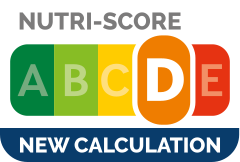 Lower nutritional quality
Nutri-Score data warning
Nutrient levels
Fat in high quantity (21.4%)
Saturated fat in high quantity (10.7%)
Sugars in moderate quantity (7.14%)
Salt in low quantity (0.135%)
Nutrition facts
| Nutrition facts | As sold for 100 g / 100 ml | Compared to: Dairies |
|---|---|---|
| Energy | 1046 kcal (250 kcal) | 863.714 kJ (208 kcal) |
| Fat | 21.43 g | 14.617 g (+47%) |
| Saturated fat | 10.71 g | 9.575 g (+12%) |
| Trans fat | 0 g | 0.023 g (-100%) |
| Cholesterol | 0 mg | 20.249 mg (-100%) |
| Carbohydrates | 10.71 g | 5.459 g (+96%) |
| Sugars | 7.14 g | 4.43 g (+61%) |
| Dietary fiber | 0 g | ? |
| Proteins | 3.57 g | 10.914 g (-67%) |
| Salt | 0.135 mg | 0.681 g (-100%) |
| Sodium | 0.054 mg | 0.272 g (-100%) |
| Vitamin A | 0 IU | 46.55 µg |
| Vitamin C | 0 mg | ? |
| Calcium | 0.071 mg | 171.866 mg (-100%) |
| Iron | 0 mg | 0.109 mg (-100%) |
| Fruits, vegetables and legumes | ? | ? |
Nutrition facts (Detailed data)
| Nutrition facts | As sold for 100 g / 100 ml | As sold Per serving (legacy) |
|---|---|---|
| Energy | 1046 kcal (250 kcal) | 293 kcal (70 kcal) |
| Fat | 21.43 g | 6 g |
| Saturated fat | 10.71 g | 3 g |
| Trans fat | 0 g | 0 g |
| Cholesterol | 0 mg | 0 mg |
| Carbohydrates | 10.71 g | 3 g |
| Sugars | 7.14 g | 2 g |
| Dietary fiber | 0 g | 0 g |
| Proteins | 3.57 g | 1 g |
| Salt | 0.135 mg | 0.0378 mg |
| Sodium | 0.054 mg | 0.0151 mg |
| Vitamin A | 0 IU | 0 IU |
| Vitamin C | 0 mg | 0 mg |
| Calcium | 0.071 mg | 0.0199 mg |
| Iron | 0 mg | 0 mg |
| Fruits, vegetables and legumes | ? | ? |
Serving size
Ingredients
Ingredients list
Ingredient information
Added sugars
Allergens
Ingredients analysis
Contains ingredients containing palm oil.
Contains non-vegan ingredients.
Unrecognized: en:mono-and-diglycerides-of-edible-fatty-acids, en:made-from-palm, en:honey-flavor
Vegetarian status unknown
Unrecognized: en:mono-and-diglycerides-of-edible-fatty-acids, en:made-from-palm, en:honey-flavor
Food Processing
NOVA group
 Ultra-processed food and drink products
Elements that indicate the product is in NOVA group 4
How NOVA works
Additives
E401 - sodium alginateCarrierEmulsifierHumectantSequestrantStabiliserThickener
No additive description is available yet.
E410 - Locust bean gumEmulsifierStabiliserThickener
Locust bean gum (LBG, also known as carob gum, carob bean gum, carobin, E410) is a thickening agent and a gelling agent used in food technology.
E415 - Xanthan gumEmulsifierStabiliserThickener
Xanthan gum (E415) is a natural polysaccharide derived from fermented sugars, often used in the food industry as a thickening and stabilizing agent.
This versatile food additive enhances texture and prevents ingredient separation in a wide range of products, including salad dressings, sauces, and gluten-free baked goods.
It is considered safe for consumption even at high intake amounts.
E570 - Fatty acids
In chemistry, particularly in biochemistry, a fatty acid is a carboxylic acid with a long aliphatic chain, which is either saturated or unsaturated. Most naturally occurring fatty acids have an unbranched chain of an even number of carbon atoms, from 4 to 28. Fatty acids are usually not found per se in organisms, but instead as three main classes of esters: triglycerides, phospholipids, and cholesterol esters. In any of these forms, fatty acids are both important dietary sources of fuel for animals and they are important structural components for cells.
Environment
Green-Score, origins bonus, and transportation impact are shown for Worldwide .
Green Score
Overall grade
 Unknown environmental impact
About Green-Score
Current scope
Green-Score availability
Bonuses and maluses
Declared origins
Threatened species risk
Packaging impact
Packaging
Packaging impact
Data precision
Transportation
Declared origins
Data Source
Product data comes from Open Food Facts. Food Benchmark also adds translations, category comparisons and explanatory calculations.
The database is licensed under ODbL 1.0, individual contents under DbCL 1.0, and product photos under CC BY-SA 3.0.
Product added on March 9, 2017 at 5:02:22 PM UTC by usda-ndb-import .
Last edit on August 17, 2024 at 2:07:31 PM UTC by moon-rabbit .
Product page also edited by moon-rabbit, org-database-usda, usda-ndb-import.
Source List
- usda-ndb
- database-usda