

Mission Carb Balance Flour Tortilla Wraps
Health
Nutrition
Nutri-Score
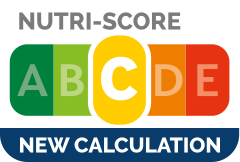 Average nutritional quality
Nutri-Score data warning
Nutrient levels
Fat in moderate quantity (8.14%)
Saturated fat in moderate quantity (3.49%)
Sugars in low quantity (0%)
Salt in high quantity (1.95%)
Nutrition label

Nutrition facts
| Nutrition facts | As sold for 100 g / 100 ml | Compared to: Panes |
|---|---|---|
| Energy | ~ 933.720930232558 kJ (162 kcal) | 1,139.088 kJ (255 kcal) (-18%) |
| Fat | 8.13953488372093 g | 4.846 g (+68%) |
| Saturated fat | 3.48837209302326 g | 1.433 g (+143%) |
| Monounsaturated fat | 1.16 g | 1.346 g (-14%) |
| Polyunsaturated fat | 3.49 g | 1.34 g (+160%) |
| Trans fat | 0 g | 0.03 g (-100%) |
| Cholesterol | 0 g | 0.711 mg (-100%) |
| Carbohydrates | 4.65116279069767 g | 44.449 g (-90%) |
| Sugars | 0 g | 3.631 g (-100%) |
| Added sugars | 0 g | 1.008 g (-100%) |
| Starch | 0 g | ? |
| Dietary fiber | 39.5348837209302 g | ? |
| Proteins | 13.953488372093 g | 8.891 g (+57%) |
| Salt | 1.95 g | 0.698 g (+179%) |
| Sodium | 0.33 g | 0.297 g (+11%) |
| Vitamin D | 0 g | ? |
| Vitamin E | 0 g | ? |
| Vitamin C | 0 g | ? |
| Vitamin B1 | 0 g | ? |
| Vitamin B2 | 0 g | ? |
| Vitamin B6 | 0 g | ? |
| Potassium | 0.01 g | ? |
| Calcium | 0.07 g | ? |
| Phosphorus | 0 g | ? |
| Iron | 0 g | ? |
| Magnesium | 0 g | ? |
| Zinc | 0 g | ? |
| Copper | 0 g | ? |
| Manganese | 0 g | ? |
| Fruits, vegetables and legumes | ~ 0 % | ? |
| Choline | 0 g | ? |
Nutrition facts (Detailed data)
| Nutrition facts | As sold for 100 g / 100 ml | As sold Per 100 g (packaging) | As sold Per serving (43 g) (packaging) | As sold Per 100 g (estimate) |
|---|---|---|---|---|
| Energy | ~ 933.720930232558 kJ (162 kcal) | ? (162 kcal) | ? (70 kcal) | ? |
| Fat | 8.13953488372093 g | 8.13953488372093 g | 3.5 g | ? |
| Saturated fat | 3.48837209302326 g | 3.48837209302326 g | 1.5 g | ? |
| Monounsaturated fat | 1.16 g | 1.16 g | ? | ? |
| Polyunsaturated fat | 3.49 g | 3.49 g | ? | ? |
| Trans fat | 0 g | 0 g | 0 g | ? |
| Cholesterol | 0 g | 0 mg | 0 g | ? |
| Carbohydrates | 4.65116279069767 g | 4.65116279069767 g | 19 g | ? |
| Sugars | 0 g | 0 g | 0 g | ? |
| Added sugars | 0 g | ? | 0 g | ~ 0 g |
| Starch | 0 g | ? | 0 g | ? |
| Dietary fiber | 39.5348837209302 g | 39.5348837209302 g | 17 g | ? |
| Proteins | 13.953488372093 g | 13.953488372093 g | 6 g | ? |
| Salt | 1.95 g | 1.95 g | 0.875 g | ? |
| Sodium | 0.33 g | 330 mg | 0.35 g | ? |
| Vitamin D | 0 g | ? | 0 g | ? |
| Vitamin E | 0 g | 0 mg | ? | ? |
| Vitamin C | 0 g | 0 mg | ? | ? |
| Vitamin B1 | 0 g | 0 mg | ? | ? |
| Vitamin B2 | 0 g | 0 mg | ? | ? |
| Vitamin B6 | 0 g | 0 mg | ? | ? |
| Potassium | 0.01 g | 10 mg | 0.01 g | ? |
| Calcium | 0.07 g | 70 mg | 0.07 g | ? |
| Phosphorus | 0 g | 0 mg | ? | ? |
| Iron | 0 g | 0 mg | 0 g | ? |
| Magnesium | 0 g | 0 mg | ? | ? |
| Zinc | 0 g | 0 mg | ? | ? |
| Copper | 0 g | 0 mg | ? | ? |
| Manganese | 0 g | 0 mg | ? | ? |
| Fruits, vegetables and legumes | ~ 0 % | ? | ? | ~ 0 % |
| Choline | 0 g | 0 mg | 0 g | ? |
Serving size
Ingredients
Ingredients image
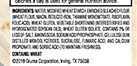
Ingredients list
Ingredient information
Allergens
Ingredients analysis
Palm oil content unknown
Unrecognized: es:ingredients, es:water, es:modified-wheat-gluten, es:wheat-flour, es:vital-wheat-gluten-isolate, es:vegetable-shortening, es:interesterified-and-hydrogenated-soybean-oils, es:salt, es:calcium-propionate, es:to-maintain-freshness, es:distilled-monoglycerides, es:sodium-acid-pyrophosphate, es:baking-soda, es:sorbic-acid, es:to-maintain-freshness, es:fumaric-acid, es:cellulose-gum, es:steviol-glycosides
Vegan status unknown
Unrecognized: es:water, es:modified-wheat-gluten, es:wheat-flour, es:vital-wheat-gluten-isolate, es:interesterified-and-hydrogenated-soybean-oils, es:salt, es:to-maintain-freshness, es:distilled-monoglycerides, es:sodium-acid-pyrophosphate, es:baking-soda, es:to-maintain-freshness, es:fumaric-acid, es:cellulose-gum, es:steviol-glycosides
Vegetarian status unknown
Unrecognized: es:water, es:modified-wheat-gluten, es:wheat-flour, es:vital-wheat-gluten-isolate, es:interesterified-and-hydrogenated-soybean-oils, es:salt, es:to-maintain-freshness, es:distilled-monoglycerides, es:sodium-acid-pyrophosphate, es:baking-soda, es:to-maintain-freshness, es:fumaric-acid, es:cellulose-gum, es:steviol-glycosides
Food Processing
NOVA group
 Ultra-processed food and drink products
Elements that indicate the product is in NOVA group 4
How NOVA works
Additives
E200 - Sorbic acid EFSA overexposure risk: highPreservative
SORBIC ACID, or 2,4-hexadienoic acid, is a natural organic compound used as a food preservative. It has the chemical formula CH3(CH)4CO2H.
E282 - calcium propionatePreservative
CALCIUM PROPIONATE has the formula Ca(C2H5COO)2. Calcium propionate is used as a preservative in a wide variety of products, including but not limited to:bread, other baked goods, processed meat, whey, and other dairy products.
E297 - Fumaric acid
Fumaric acid or trans-butenedioic acid is the chemical compound with the formula HO2CCH=CHCO2H. It is produced in eukaryotic organisms from succinate in complex 2 of the electron transport chain via the enzyme succinate dehydrogenase. It is one of two isomeric unsaturated dicarboxylic acids, the other being maleic acid. In fumaric acid the carboxylic acid groups are trans (E) and in maleic acid they are cis (Z). Fumaric acid has a fruit-like taste. The salts and esters are known as fumarates. Fumarate can also refer to the C4H2O2−4 ion (in solution).
E450 - Diphosphates EFSA overexposure risk: highEmulsifierHumectantSequestrantStabiliserThickener
Diphosphates (E450) are food additives often utilized to modify the texture of products, acting as leavening agents in baking and preventing the coagulation of canned food.
These salts can stabilize whipped cream and are also found in powdered products to maintain their flow properties. They are commonly present in baked goods, processed meats, and soft drinks.
Derived from phosphoric acid, they're part of our daily phosphate intake, which often surpasses recommended levels due to the prevalence of phosphates in processed foods and drinks.
Excessive phosphate consumption is linked to health issues, such as impaired kidney function and weakened bone health. Though diphosphates are generally regarded as safe when consumed within established acceptable daily intakes, it's imperative to monitor overall phosphate consumption to maintain optimal health.
E450i - Disodium diphosphateEmulsifierHumectantSequestrantStabiliserThickener
No additive description is available yet.
E466 - Sodium carboxy methyl celluloseEmulsifierHumectantStabiliserThickener
Carboxymethyl cellulose (CMC) or cellulose gum or tylose powder is a cellulose derivative with carboxymethyl groups (-CH2-COOH) bound to some of the hydroxyl groups of the glucopyranose monomers that make up the cellulose backbone. It is often used as its sodium salt, sodium carboxymethyl cellulose.
E500 - Sodium carbonatesStabiliserThickener
Sodium carbonates (E500) are compounds commonly used in food preparation as leavening agents, helping baked goods rise by releasing carbon dioxide when they interact with acids.
Often found in baking soda, they regulate the pH of food, preventing it from becoming too acidic or too alkaline. In the culinary world, sodium carbonates can also enhance the texture and structure of foods, such as noodles, by modifying the gluten network.
Generally recognized as safe, sodium carbonates are non-toxic when consumed in typical amounts found in food.
E500ii - Sodium hydrogen carbonateStabiliserThickener
Sodium hydrogen carbonate, also known as E500ii, is a food additive commonly used as a leavening agent.
When added to recipes, it releases carbon dioxide gas upon exposure to heat or acids, causing dough to rise and resulting in a light, fluffy texture in baked goods.
It is generally recognized as safe (GRAS) by regulatory authorities when used in appropriate quantities and poses no significant health risks when consumed in typical food applications.
E960 - Steviol glycosides EFSA overexposure risk: moderateSweetener
Steviol glycosides are the chemical compounds responsible for the sweet taste of the leaves of the South American plant Stevia rebaudiana (Asteraceae) and the main ingredients (or precursors) of many sweeteners marketed under the generic name stevia and several trade names. They also occur in the related species Stevia phlebophylla (but in no other species of Stevia) and in the plant Rubus chingii (Rosaceae).Steviol glycosides from Stevia rebaudiana have been reported to be between 30 and 320 times sweeter than sucrose, although there is some disagreement in the technical literature about these numbers. They are heat-stable, pH-stable, and do not ferment. Additionally, they do not induce a glycemic response when ingested, because humans can not metabolize stevia. This makes them attractive as natural sugar substitutes for diabetics and other people on carbohydrate-controlled diets. Steviol glycosides stimulate the insulin secretion through potentiation of the β-cell, preventing high blood glucose after a meal. The acceptable daily intake (ADI) for steviol glycosides, expressed as steviol equivalents, has been established to be 4 mg/kg body weight/day, and is based on no observed effects of a 100 fold higher dose in a rat study.
Environment
Green-Score, origins bonus, and transportation impact are shown for Worldwide .
Green Score
Overall grade
 Unknown environmental impact
About Green-Score
Current scope
Green-Score availability
Bonuses and maluses
Declared origins
Packaging impact
Packaging
Packaging impact
Declared packaging
Data precision
Transportation
Declared origins
Data Source
Product data comes from Open Food Facts. Food Benchmark also adds translations, category comparisons and explanatory calculations.
The database is licensed under ODbL 1.0, individual contents under DbCL 1.0, and product photos under CC BY-SA 3.0.
Product added on March 9, 2017 at 11:20:33 AM UTC by usda-ndb-import .
Last edit on March 18, 2026 at 12:33:33 AM UTC by municorn-calorie-counter-app .
Product page also edited by 5m4u9, baslad01, bizhan, chevalstar, foodiq, foodless, inf, kiliweb, macrofactor, municorn-calorie-counter-app, nutria-chile, openfoodfacts-contributors, org-database-usda, packbot, qalzy, roboto-app, sebleouf, studistuttgart, tmbe7, usda-ndb-import, wjr6556, yuka.sY2b0xO6T85zoF3NwEKvlhdcDIrxqA_ADwHvmBKazdmLFsO0btNf2JPDEKs, yuka.sY2b0xO6T85zoF3NwEKvllBDD_funSvLZjDmvXWJxNe1JIX0W89v8I-nPas, yuka.sY2b0xO6T85zoF3NwEKvlmptT-DcuWvEMQHTgkLXz42vLMXjau9fxabcLag.
Source List
- usda-ndb
- database-usda