
Self Rising Four Cheese Pizza
Health
Nutrition
Nutri-Score
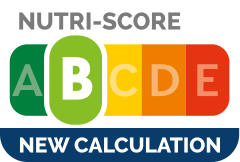 Good nutritional quality
Nutri-Score data warning
Nutrient levels
Fat in moderate quantity (5.09%)
Saturated fat in moderate quantity (2.26%)
Sugars in low quantity (2.26%)
Salt in low quantity (0.000976%)
Nutrition facts
| Nutrition facts | As sold for 100 g / 100 ml |
|---|---|
| Energy | 693 kcal (166 kcal) |
| Fat | 5.09 g |
| Saturated fat | 2.26 g |
| Monounsaturated fat | 0 g |
| Polyunsaturated fat | 0 g |
| Omega 3 fat | 0 g |
| Omega 6 fat | 0 g |
| Trans fat | 0 g |
| Cholesterol | 0.0113 mg |
| Carbohydrates | 22.6 g |
| Sugars | 2.26 g |
| Glucose | 0 g |
| Fructose | 0 g |
| Lactose | 0 g |
| Dietary fiber | 1.13 g |
| Proteins | 7.35 g |
| Salt | 0.000976 mg |
| Sodium | 0.00039 mg |
| Alcohol | 0 % vol |
| Vitamin A | 0.000000000051 µg |
| Vitamin D | 0 µg |
| Vitamin E | 0 mg |
| Vitamin K | 0 µg |
| Vitamin C | 0.00000135 mg |
| Vitamin B1 | 0 mg |
| Vitamin B2 | 0 mg |
| Vitamin PP | 0 mg |
| Vitamin B6 | 0 mg |
| Vitamin B9 | 0 µg |
| Vitamin B12 | 0 µg |
| Pantothenic acid | 0 mg |
| Potassium | 0 mg |
| Calcium | 0.000113 mg |
| Phosphorus | 0 mg |
| Iron | 0.000000609 mg |
| Magnesium | 0 mg |
| Zinc | 0 mg |
| Copper | 0 mg |
| Manganese | 0 mg |
| Fluoride | 0 µg |
| Selenium | 0 µg |
| Iodine | 0 µg |
| Caffeine | 0 mg |
| Fruits, vegetables and legumes | ? |
Nutrition facts (Detailed data)
| Nutrition facts | As sold for 100 g / 100 ml | As sold Per serving (legacy) |
|---|---|---|
| Energy | 693 kcal (166 kcal) | 922 kcal (220 kcal) |
| Fat | 5.09 g | 6.77 g |
| Saturated fat | 2.26 g | 3.01 g |
| Monounsaturated fat | 0 g | 0 g |
| Polyunsaturated fat | 0 g | 0 g |
| Omega 3 fat | 0 g | 0 g |
| Omega 6 fat | 0 g | 0 g |
| Trans fat | 0 g | 0 g |
| Cholesterol | 0.0113 mg | 0.015 mg |
| Carbohydrates | 22.6 g | 30.08 g |
| Sugars | 2.26 g | 3.01 g |
| Glucose | 0 g | 0 g |
| Fructose | 0 g | 0 g |
| Lactose | 0 g | 0 g |
| Dietary fiber | 1.13 g | 1.5 g |
| Proteins | 7.35 g | 9.77 g |
| Salt | 0.000976 mg | 0.0012975 mg |
| Sodium | 0.00039 mg | 0.000519 mg |
| Alcohol | 0 % vol | 0 % vol |
| Vitamin A | 0.000000000051 µg | 0.0000000000678 µg |
| Vitamin D | 0 µg | 0 µg |
| Vitamin E | 0 mg | 0 mg |
| Vitamin K | 0 µg | 0 µg |
| Vitamin C | 0.00000135 mg | 0.0000018 mg |
| Vitamin B1 | 0 mg | 0 mg |
| Vitamin B2 | 0 mg | 0 mg |
| Vitamin PP | 0 mg | 0 mg |
| Vitamin B6 | 0 mg | 0 mg |
| Vitamin B9 | 0 µg | 0 µg |
| Vitamin B12 | 0 µg | 0 µg |
| Pantothenic acid | 0 mg | 0 mg |
| Potassium | 0 mg | 0 mg |
| Calcium | 0.000113 mg | 0.00015 mg |
| Phosphorus | 0 mg | 0 mg |
| Iron | 0.000000609 mg | 0.00000081 mg |
| Magnesium | 0 mg | 0 mg |
| Zinc | 0 mg | 0 mg |
| Copper | 0 mg | 0 mg |
| Manganese | 0 mg | 0 mg |
| Fluoride | 0 µg | 0 µg |
| Selenium | 0 µg | 0 µg |
| Iodine | 0 µg | 0 µg |
| Caffeine | 0 mg | 0 mg |
| Fruits, vegetables and legumes | ? | ? |
Serving size
Ingredients
Ingredients list
Ingredient information
Added sugars
Allergens
Ingredients analysis
No ingredients containing palm oil.
Unrecognized: en:toppings, en:romano-made-from-cow-s-milk
Contains non-vegan ingredients.
Unrecognized: en:toppings, en:romano-made-from-cow-s-milk
Vegetarian status unknown
Unrecognized: en:toppings, en:romano-made-from-cow-s-milk
Food Processing
NOVA group
 Ultra-processed food and drink products
Elements that indicate the product is in NOVA group 4
How NOVA works
Additives
E500 - Sodium carbonatesStabiliserThickener
Sodium carbonates (E500) are compounds commonly used in food preparation as leavening agents, helping baked goods rise by releasing carbon dioxide when they interact with acids.
Often found in baking soda, they regulate the pH of food, preventing it from becoming too acidic or too alkaline. In the culinary world, sodium carbonates can also enhance the texture and structure of foods, such as noodles, by modifying the gluten network.
Generally recognized as safe, sodium carbonates are non-toxic when consumed in typical amounts found in food.
E500ii - Sodium hydrogen carbonateStabiliserThickener
Sodium hydrogen carbonate, also known as E500ii, is a food additive commonly used as a leavening agent.
When added to recipes, it releases carbon dioxide gas upon exposure to heat or acids, causing dough to rise and resulting in a light, fluffy texture in baked goods.
It is generally recognized as safe (GRAS) by regulatory authorities when used in appropriate quantities and poses no significant health risks when consumed in typical food applications.
E541 - Sodium aluminium phosphateEmulsifierStabiliserThickener
Sodium aluminium phosphate (SAlP) describes the inorganic compounds consisting of sodium salts of aluminium phosphates. The most common SAlP has the formulas NaH14Al3(PO4)8·4H2O and Na3H15Al2(PO4)8. These materials are prepared by combining alumina, phosphoric acid, and sodium hydroxide.In addition to the usual hydrate, an anhydrous SAlP is also known, Na3H15Al2(PO4)8 (CAS#10279-59-1), referred to as 8:2:3, reflecting the ratio of phosphate to aluminium to sodium. Additionally an SAlP of ill-defined stoichiometry is used (NaxAly(PO4)z (CAS# 7785-88-8).The acidic sodium aluminium phosphates are used as acids for baking powders for the chemical leavening of baked goods. Upon heating, SAlP combines with the baking soda to give carbon dioxide. Most of its action occurs at baking temperatures, rather than when the dough or batter is mixed at room temperature. SAlPs are advantageous because they impart a neutral flavor. As a food additive, it has the E number E541. Basic sodium aluminium phosphates are also known, e.g., Na15Al3(PO4)8. These species are useful in cheese making.
E920 - l-cysteine
Cysteine (symbol Cys or C; ) is a semi-essential proteinogenic amino acid with the formula HO2CCH(NH2)CH2SH. The thiol side chain in cysteine often participates in enzymatic reactions, as a nucleophile. The thiol is susceptible to oxidation to give the disulfide derivative cystine, which serves an important structural role in many proteins. When used as a food additive, it has the E number E920. It is encoded by the codons UGU and UGC. Cysteine has the same structure as serine, but with one of its oxygen atoms replaced by sulfur; replacing it with selenium gives selenocysteine. (Like other natural proteinogenic amino acids cysteine has (L) chirality in the older D/L notation based on homology to D and L glyceraldehyde. In the newer R/S system of designating chirality, based on the atomic numbers of atoms near the asymmetric carbon, cysteine (and selenocysteine) have R chirality, because of the presence of sulfur (resp. selenium) as a second neighbor to the asymmetric carbon. The remaining chiral amino acids, having lighter atoms in that position, have S chirality.)
Environment
Green-Score, origins bonus, and transportation impact are shown for Worldwide .
Green Score
Overall grade
 Unknown environmental impact
About Green-Score
Current scope
Green-Score availability
Bonuses and maluses
Declared origins
Packaging impact
Packaging
Packaging impact
Data precision
Transportation
Declared origins
Data Source
Product data comes from Open Food Facts. Food Benchmark also adds translations, category comparisons and explanatory calculations.
The database is licensed under ODbL 1.0, individual contents under DbCL 1.0, and product photos under CC BY-SA 3.0.
Product added on March 9, 2017 at 11:56:29 AM UTC by usda-ndb-import .
Product page also edited by openfoodfacts-contributors, org-database-usda, usda-ndb-import.
Source List
- usda-ndb
- database-usda