

Protein Ultra Thin Pizza Crust
Health
Nutrition
Nutri-Score
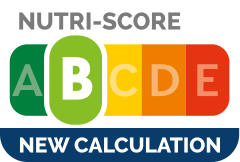 Good nutritional quality
Nutri-Score data warning
Nutrient levels
Fat in moderate quantity (3%)
Saturated fat in low quantity (1%)
Sugars in low quantity (0%)
Salt in moderate quantity (1.45%)
Nutrition label

Nutrition facts
| Nutrition facts | As sold for 100 g / 100 ml |
|---|---|
| Energy | 1000 kcal (240 kcal) |
| Fat | 3 g |
| Saturated fat | 1 g |
| Trans fat | 1 g |
| Cholesterol | 0 g |
| Carbohydrates | 18 g |
| Sugars | 0 g |
| Added sugars | 0 g |
| Starch | 0 g |
| Dietary fiber | 2 g |
| Proteins | 36 g |
| Salt | 1.45 g |
| Sodium | 0.58 g |
| Vitamin D | 0 g |
| Potassium | 0.084 g |
| Calcium | 0.24 g |
| Iron | 0.008 g |
| Fruits, vegetables and legumes | ? |
| Choline | 0 mg |
Nutrition facts (Detailed data)
| Nutrition facts | As sold for 100 g / 100 ml | As sold Per serving (legacy) |
|---|---|---|
| Energy | 1000 kcal (240 kcal) | 502 kcal (120 kcal) |
| Fat | 3 g | 1.5 g |
| Saturated fat | 1 g | 0.5 g |
| Trans fat | 1 g | 0.5 g |
| Cholesterol | 0 g | 0 g |
| Carbohydrates | 18 g | 9 g |
| Sugars | 0 g | 0 g |
| Added sugars | 0 g | 0 g |
| Starch | 0 g | 0 g |
| Dietary fiber | 2 g | 1 g |
| Proteins | 36 g | 18 g |
| Salt | 1.45 g | 0.725 g |
| Sodium | 0.58 g | 0.29 g |
| Vitamin D | 0 g | 0 g |
| Potassium | 0.084 g | 0.042 g |
| Calcium | 0.24 g | 0.12 g |
| Iron | 0.008 g | 0.004 g |
| Fruits, vegetables and legumes | ? | ? |
| Choline | 0 mg | 0 mg |
Serving size
Ingredients
Ingredients list
Ingredient information
Added sugars
Allergens
Ingredients analysis
Contains ingredients containing palm oil.
Contains non-vegan ingredients.
Unrecognized: en:reduced-iron, en:mononitrate, en:contains-less-than-2-of-each-of, en:yeast-salt, en:sodium-acid-pyrophoshate, en:ethoxylated-mono-and-diglycerides, en:sulfite
Vegetarian status unknown
Unrecognized: en:reduced-iron, en:mononitrate, en:contains-less-than-2-of-each-of, en:yeast-salt, en:sodium-acid-pyrophoshate, en:ethoxylated-mono-and-diglycerides, en:sulfite
Food Processing
NOVA group
 Ultra-processed food and drink products
Elements that indicate the product is in NOVA group 4
How NOVA works
Additives
E280 - Propionic acidPreservative
Propionic acid (from the Greek words protos, meaning "first", and pion, meaning "fat"; also known as propanoic acid) is a naturally occurring carboxylic acid with chemical formula CH3CH2CO2H. It is a liquid with a pungent and unpleasant smell somewhat resembling body odor. The anion CH3CH2CO2− as well as the salts and esters of propionic acid are known as propionates (or propanoates).
E281 - Sodium propionatePreservative
Sodium propanoate or SODIUM PROPIONATE is the sodium salt of propionic acid.
E297 - Fumaric acid
Fumaric acid or trans-butenedioic acid is the chemical compound with the formula HO2CCH=CHCO2H. It is produced in eukaryotic organisms from succinate in complex 2 of the electron transport chain via the enzyme succinate dehydrogenase. It is one of two isomeric unsaturated dicarboxylic acids, the other being maleic acid. In fumaric acid the carboxylic acid groups are trans (E) and in maleic acid they are cis (Z). Fumaric acid has a fruit-like taste. The salts and esters are known as fumarates. Fumarate can also refer to the C4H2O2−4 ion (in solution).
E338 - Phosphoric acid EFSA overexposure risk: highAntioxidantSequestrant
Phosphoric acid (also known as orthophosphoric acid or phosphoric(V) acid) is a weak acid with the chemical formula H3PO4. Orthophosphoric acid refers to phosphoric acid, which is the IUPAC name for this compound. The prefix ortho- is used to distinguish the acid from related phosphoric acids, called polyphosphoric acids. Orthophosphoric acid is a non-toxic acid, which, when pure, is a solid at room temperature and pressure. The conjugate base of phosphoric acid is the dihydrogen phosphate ion, H2PO−4, which in turn has a conjugate base of hydrogen phosphate, HPO2−4, which has a conjugate base of phosphate, PO3−4. Phosphates are essential for life.The most common source of phosphoric acid is an 85% aqueous solution; such solutions are colourless, odourless, and non-volatile. The 85% solution is a syrupy liquid, but still pourable. Although phosphoric acid does not meet the strict definition of a strong acid, the 85% solution is acidic enough to be corrosive. Because of the high percentage of phosphoric acid in this reagent, at least some of the orthophosphoric acid is condensed into polyphosphoric acids; for the sake of labeling and simplicity, the 85% represents H3PO4 as if it were all in the ortho form. Dilute aqueous solutions of phosphoric acid exist in the ortho form.
E341 - Calcium phosphates EFSA overexposure risk: highEmulsifierHumectantSequestrantStabiliserThickener
Calcium phosphate is a family of materials and minerals containing calcium ions (Ca2+) together with inorganic phosphate anions. Some so-called calcium phosphates contain oxide and hydroxide as well. They are white solids of nutritious value.
E341i - Monocalcium phosphateEmulsifierHumectantSequestrantStabiliserThickener
No additive description is available yet.
E435 - Polyoxyethylene sorbitan monostearate EFSA overexposure risk: moderateEmulsifierStabiliser
No additive description is available yet.
E471 - Mono- and diglycerides of fatty acidsEmulsifierStabiliser
Mono- and diglycerides of fatty acids (E471), are food additives commonly used as emulsifiers in various processed foods.
These compounds consist of glycerol molecules linked to one or two fatty acid chains, which help stabilize and blend water and oil-based ingredients. E471 enhances the texture and shelf life of products like margarine, baked goods, and ice cream, ensuring a smooth and consistent texture.
It is generally considered safe for consumption within established regulatory limits.
Environment
Green-Score, origins bonus, and transportation impact are shown for Worldwide .
Green Score
Overall grade
 Unknown environmental impact
About Green-Score
Current scope
Green-Score availability
Bonuses and maluses
Declared origins
Threatened species risk
Packaging impact
Packaging
Packaging impact
Data precision
Transportation
Declared origins
Data Source
Product data comes from Open Food Facts. Food Benchmark also adds translations, category comparisons and explanatory calculations.
The database is licensed under ODbL 1.0, individual contents under DbCL 1.0, and product photos under CC BY-SA 3.0.
Product added on March 9, 2017 at 12:56:35 PM UTC by usda-ndb-import .
Last edit on September 1, 2025 at 10:48:38 PM UTC by macrofactor .
Product page also edited by foodless, macrofactor, municorn-calorie-counter-app, openfoodfacts-contributors, org-database-usda, org-label-non-gmo-project, roboto-app, usda-ndb-import, yuka.sY2b0xO6T85zoF3NwEKvllRIUsTspBvYHTbmyUOA_f3XN6TxPetrsqjqMKg.
Source List
- usda-ndb
- database-usda
- label-non-gmo-project